

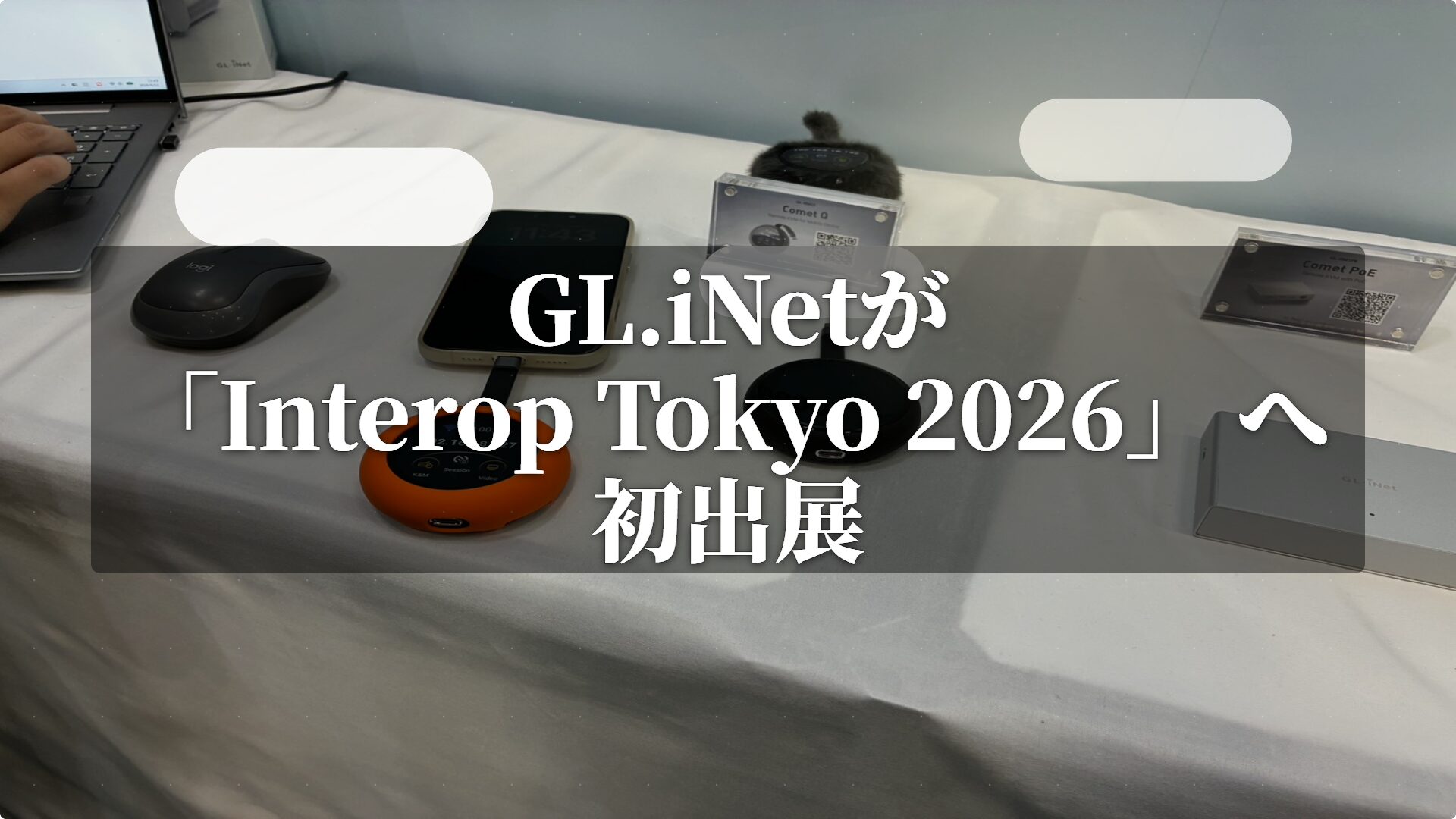
GL.iNet, a network equipment manufacturer from Hong Kong, made its first appearance at “Interop Tokyo 2026,” Japan’s largest internet technology event held at Makuhari Messe from June 10 to 12, 2026.
This time, we visited the GL.iNet booth there and reported on new products, including remote KVM solutions and Wi-Fi 7 compatible travel routers, some of which were unveiled in Japan for the first time. We will introduce their features and specifications, along with official information.
What you’ll learn in this article!
GL.iNet Makes First Appearance at “Interop Tokyo 2026”

GL.iNet is a network solution manufacturer headquartered in Hong Kong. The official company name is GL Technologies (Hong Kong) Limited., and its COO is Mr. Alfie Zhao. It develops OpenWrt-based travel routers, security gateways, and remote KVM solutions, and its products are already distributed in over 100 countries and regions worldwide.
Is GL.iNet quite a famous manufacturer overseas?
Yes. It’s a strong player that advocates “Secure Networking. Boundless Possibilities.” as its brand message and has won international design awards such as the Red Dot Design Award and MUSE Design Award.
This Interop Tokyo 2026 marks GL.iNet’s first exhibition at a Japanese event. The company positions this exhibition as a crucial milestone for its full-scale entry into the Japanese market.
The backdrop for this exhibition is the evolution of IT infrastructure. In recent years, infrastructure has been dispersed to data centers and remote locations, and “headless environments” where no monitors or personnel are present on-site have become more common. However, conventional remote management tools rely on the OS and network functioning properly, so they become unusable if the system freezes or communication fails, sometimes requiring on-site visits.
Indeed, it’s problematic when you can’t intervene remotely, especially during troubleshooting.
What solves that problem is the remote KVM displayed this time. With the establishment of remote work and the spread of VPN usage, demand for secure and flexible networks is also growing in Japan.
At the booth, live demonstrations and technical consultations were held, focusing on remote KVM solutions and Wi-Fi 7 travel routers.
Remote KVM “Comet Series” (B2B) — Remote Management at BIOS Level Even During Failures
What GL.iNet is particularly focusing on in the Japanese market is its remote KVM solutions. KVM stands for Keyboard, Video, and Mouse, referring to a device that allows you to operate servers and workstations remotely as if they were right in front of you.
A major feature of GL.iNet’s Comet series is its support for next-generation Out-of-Band Management (OOBM). Even during failures where the OS won’t boot, it enables BIOS-level access, remote OS installation, diagnostics, and power control, reducing the need for on-site visits.
So it can be operated even if the OS isn’t running, which is different from regular remote operation.
That’s the crucial point. General remote tools operate on top of the OS, so they are powerless if the OS itself freezes. The Comet series can access at the BIOS level, making it, so to speak, the last line of defense.
Four models were lined up at the booth, allowing selection based on application and cost.
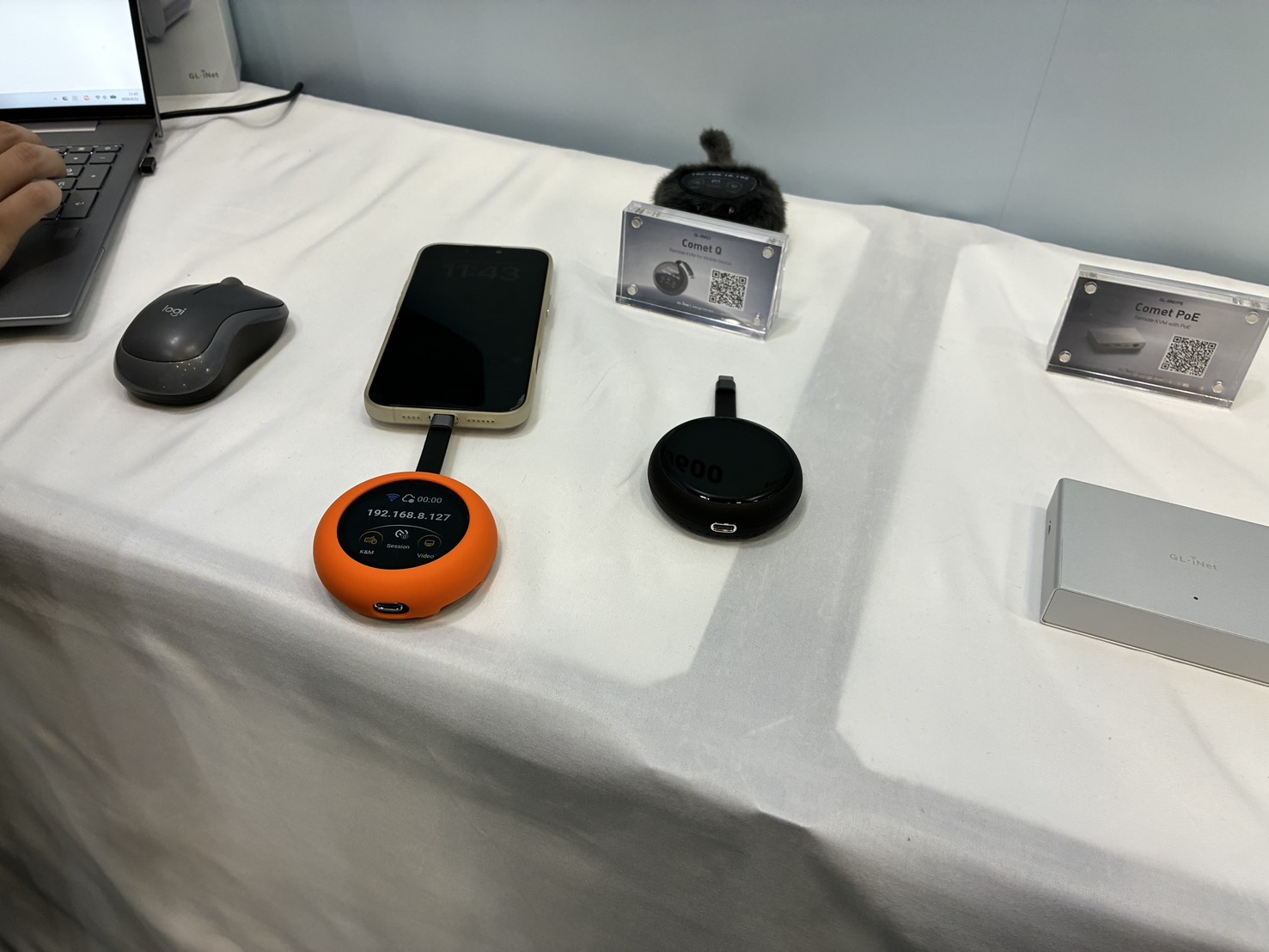
Comet Q (GL-RMQ1) — Palm-Sized New KVM
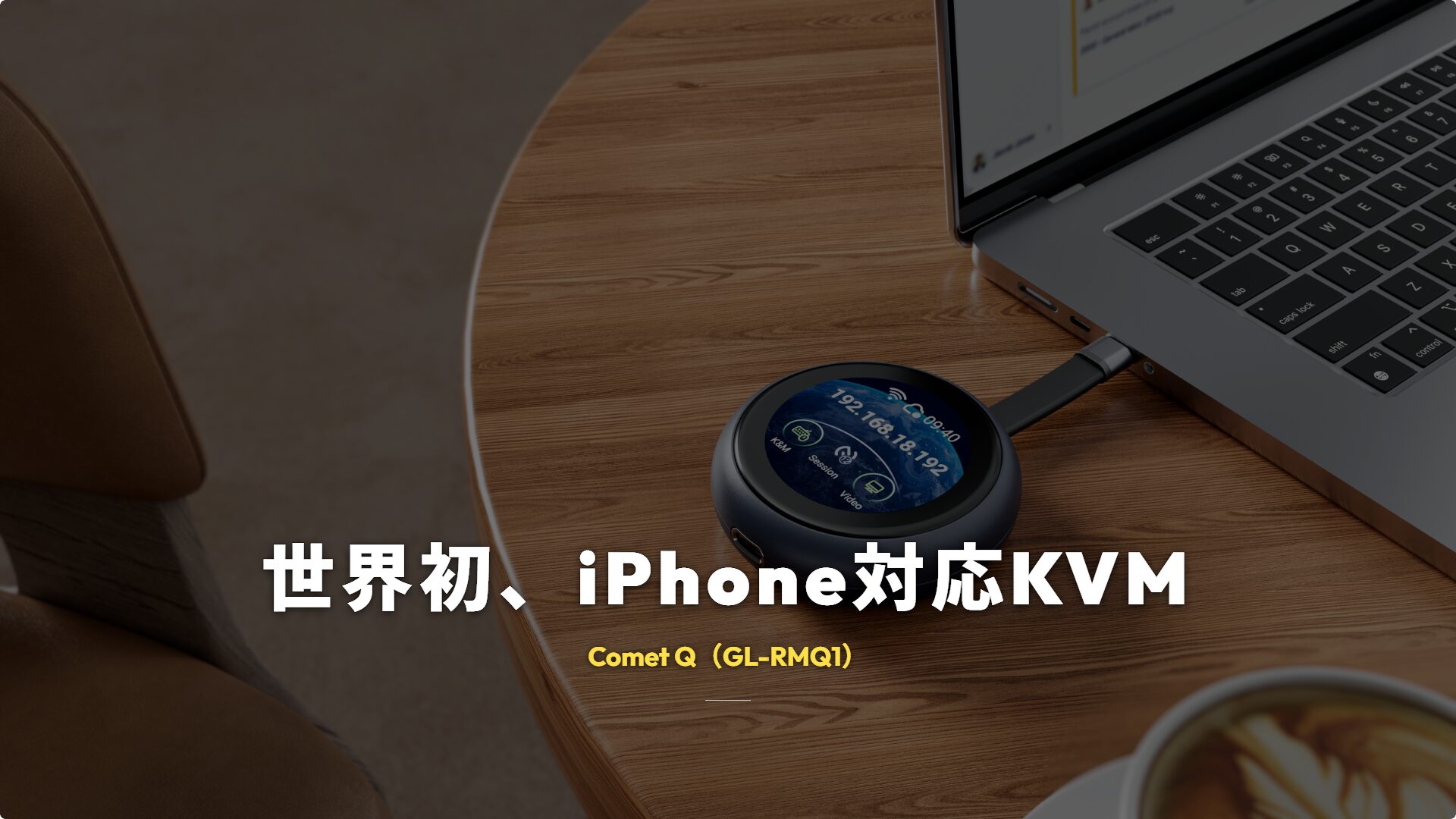
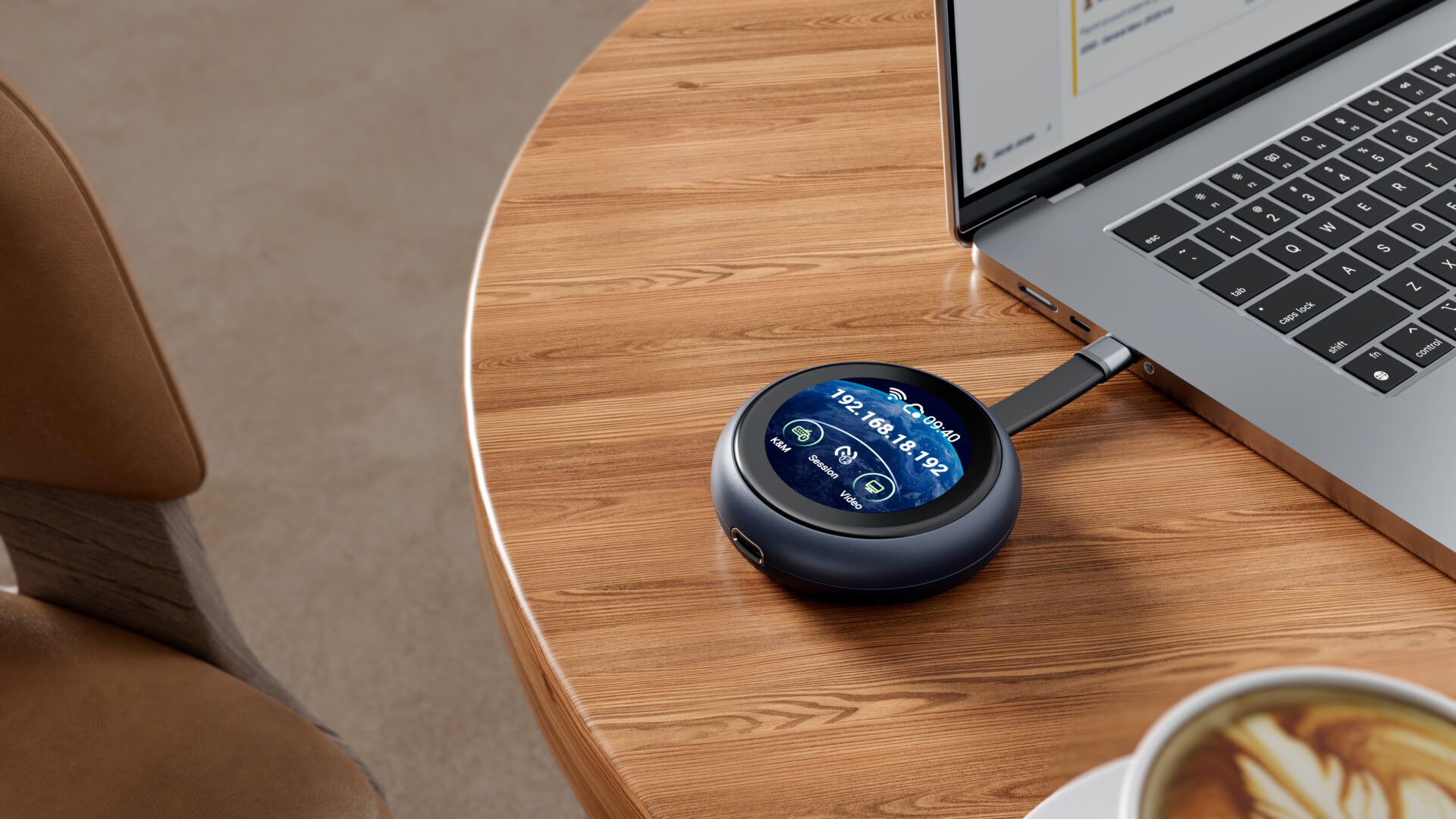
What interested me most at this booth was the new product “Comet Q,” which is currently undergoing crowdfunding. Weighing only 78.5g and fitting in the palm of your hand, it connects to the target device with a single Type-C cable, enabling full remote operation.
A major talking point for Comet Q is that it’s the world’s first KVM to support iPhone operation. It captures video using DisplayPort Alt Mode over USB Type-C, allowing remote control of compatible smartphones, tablets, and laptops. The device itself features a 1.8-inch touchscreen, enabling settings, status checks, and operations to be completed directly on the unit.
A KVM that can remotely control smartphones and tablets is something I haven’t heard much about.
The novelty lies in its ease of use for personal and on-site applications. Its power consumption is also low, less than 2.5W, so you don’t have to worry about where to place it.
Comet Q (GL-RMQ1) Key Specifications
| Processor | ARM Cortex Processor |
| Memory | LPDDR4 512MB / NAND 512MB |
| Wi-Fi | Wi-Fi 6 (2.4GHz 286Mbps / 5GHz 286Mbps) |
| Video Input | DisplayPort Alt Mode over Type-C (2K QHD@60FPS) |
| Screen | 1.8-inch Touchscreen |
| Power / Power Consumption | Type-C PD 5V/2A / Less than 2.5W |
| Dimensions / Weight | 70×70×22mm / 78.5g |
Comet X (GL-RM4PE) — B2B Core Model for Managing 4 Devices Simultaneously
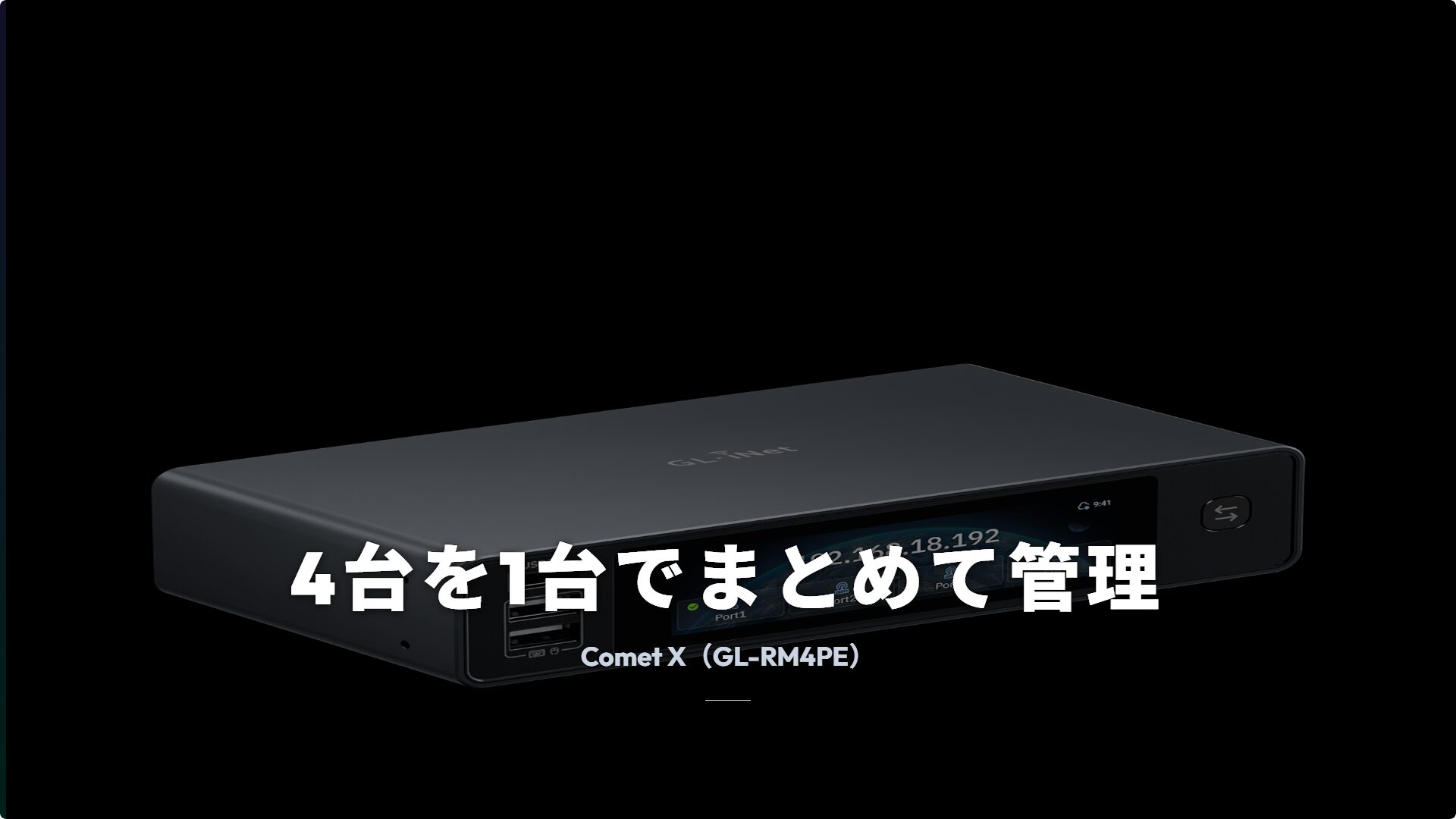
Comet X is a model equipped with four HDMI inputs, capable of managing up to four servers with a single unit. Designed for rackmount environments, it includes brackets for 10-inch and 19-inch installations.
Being able to manage four devices with one unit seems like it could reduce the number of devices needed.
That’s right. Since it supports both PoE and Type-C power, installation and wiring can be simplified.
Comet X (GL-RM4PE) Key Specifications
| Processor | Quad-core ARM Cortex |
| Memory | DDR3L 1GB / 64GB eMMC |
| HDMI Input | 4 ports |
| Ethernet | 1×RJ45 (10/100/1000Mbps) |
| Screen | 3.69-inch Touchscreen |
| Power / Power Consumption | 802.3af/at PoE / Type-C 5V/3A compatible / Less than 8W |
| Dimensions / Weight | 170×90×40mm / 560g |
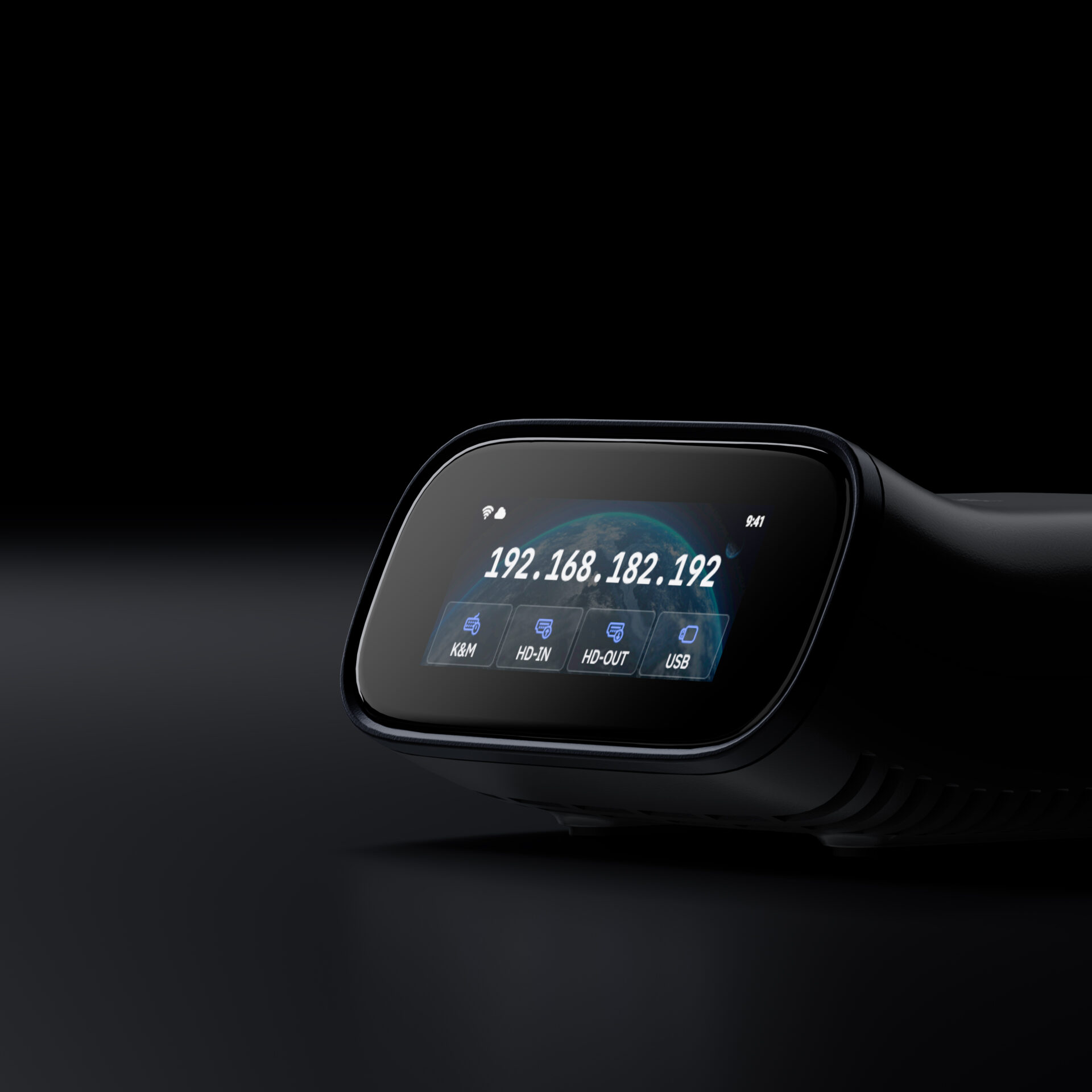
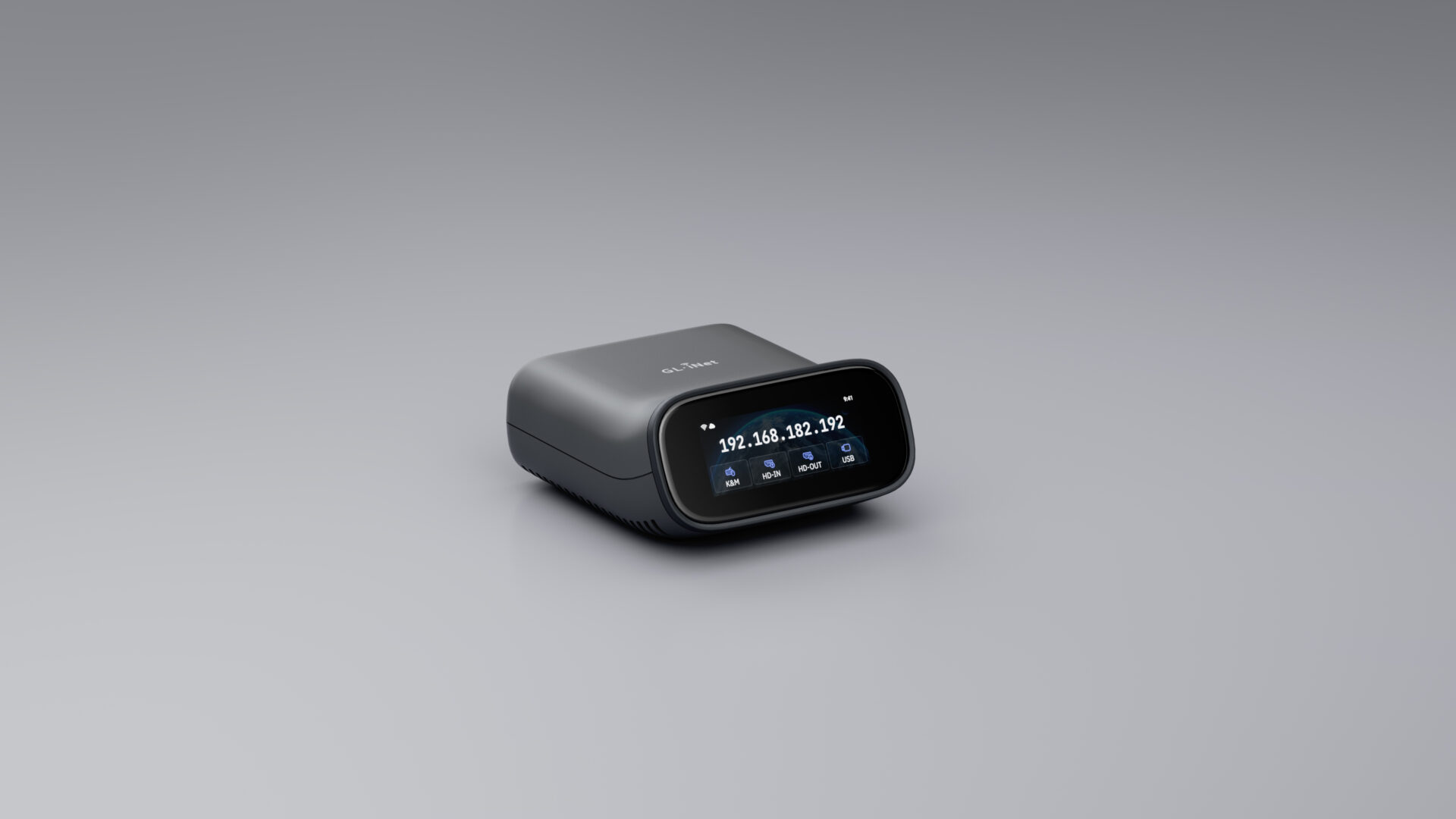
Comet Pro (GL-RM10) — Standalone KVM with Wi-Fi Support
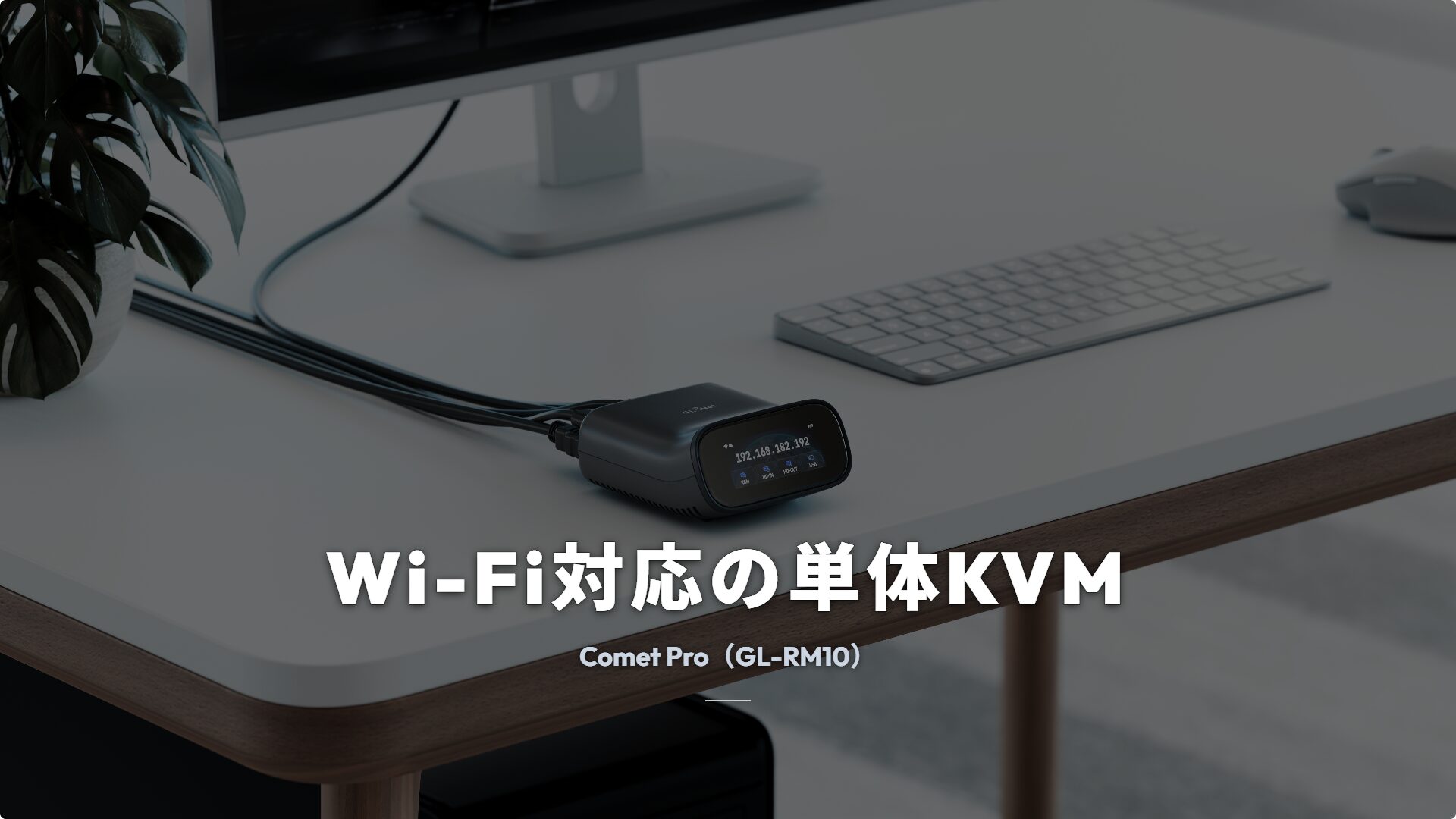
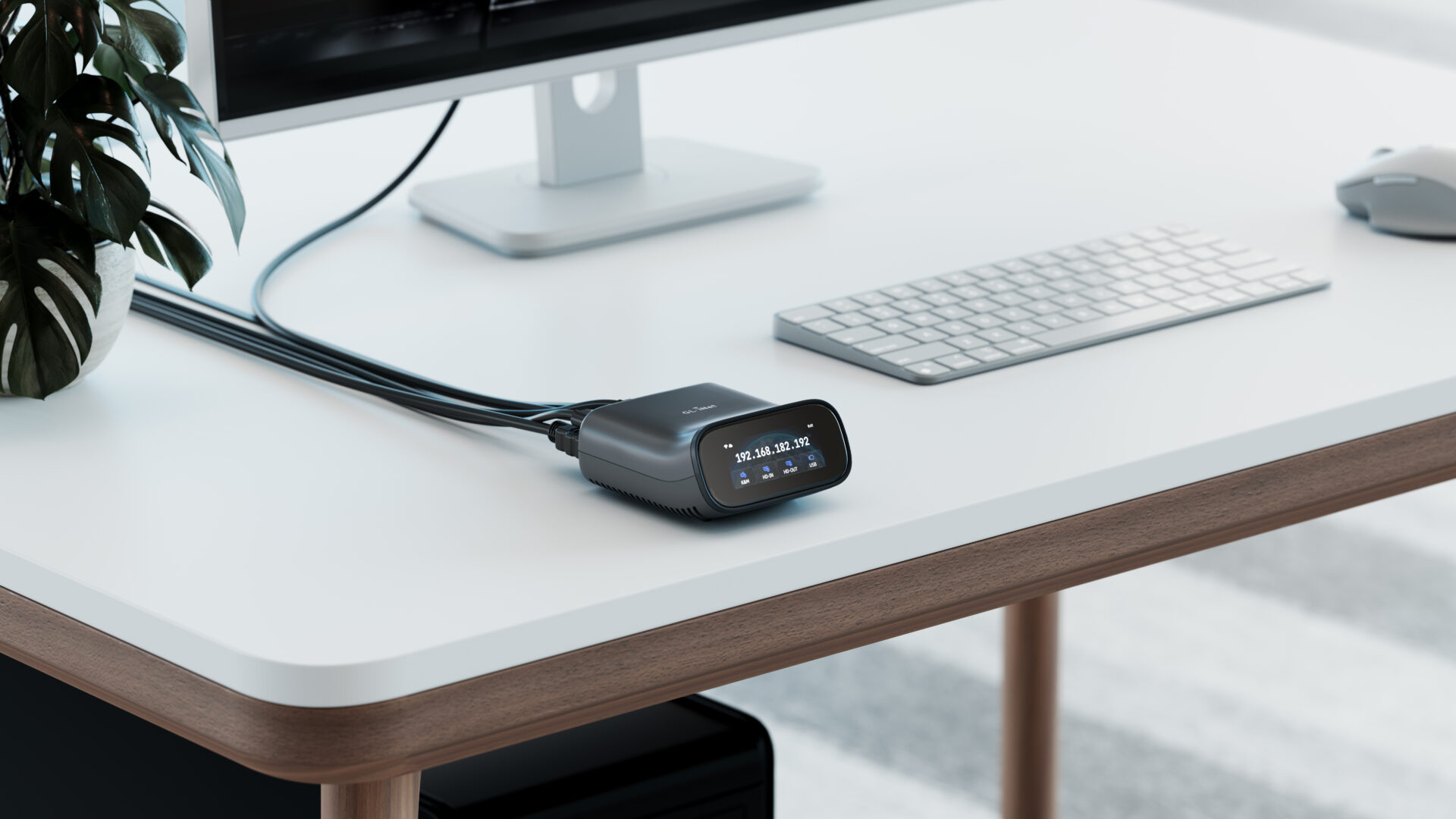
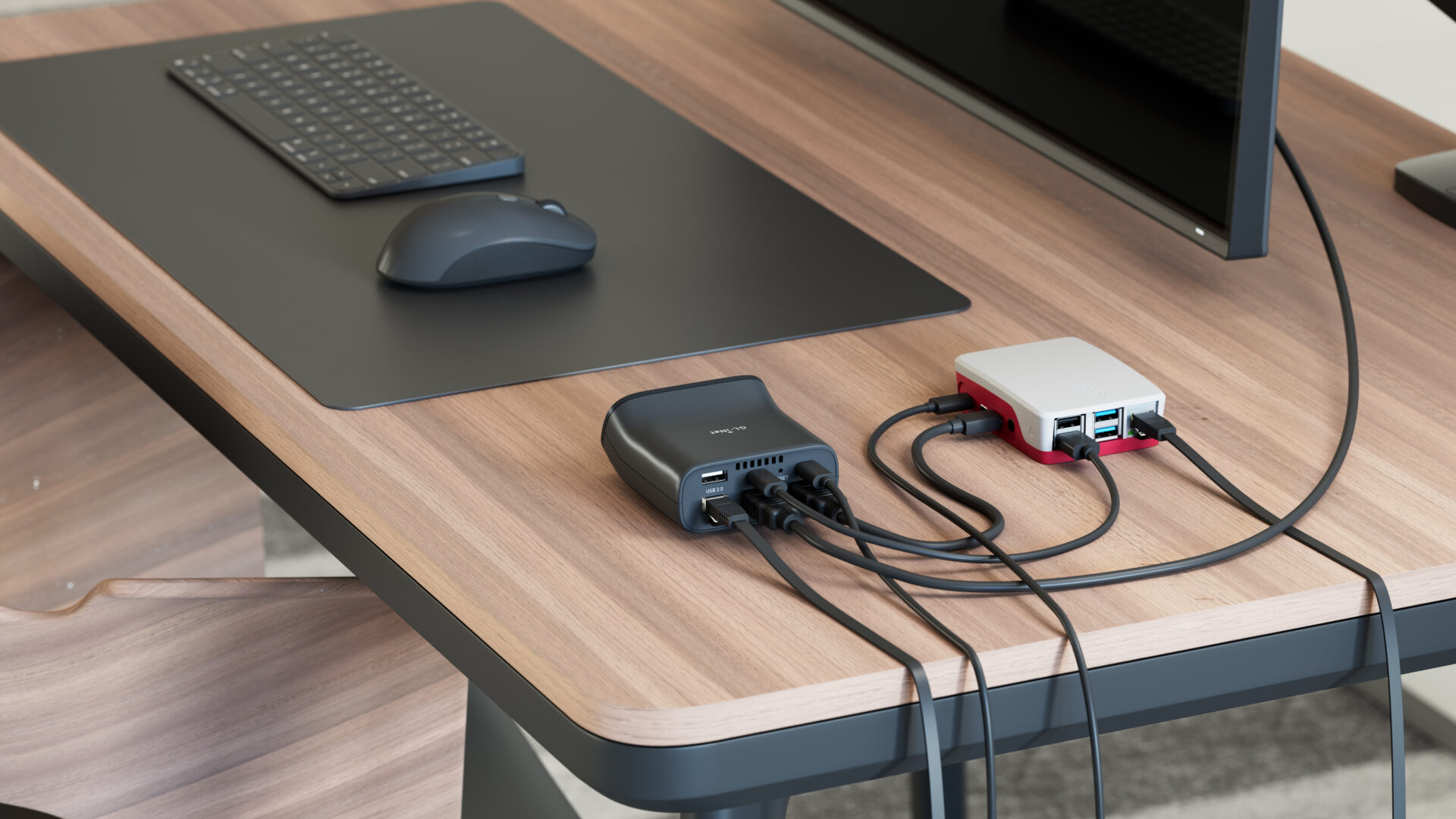
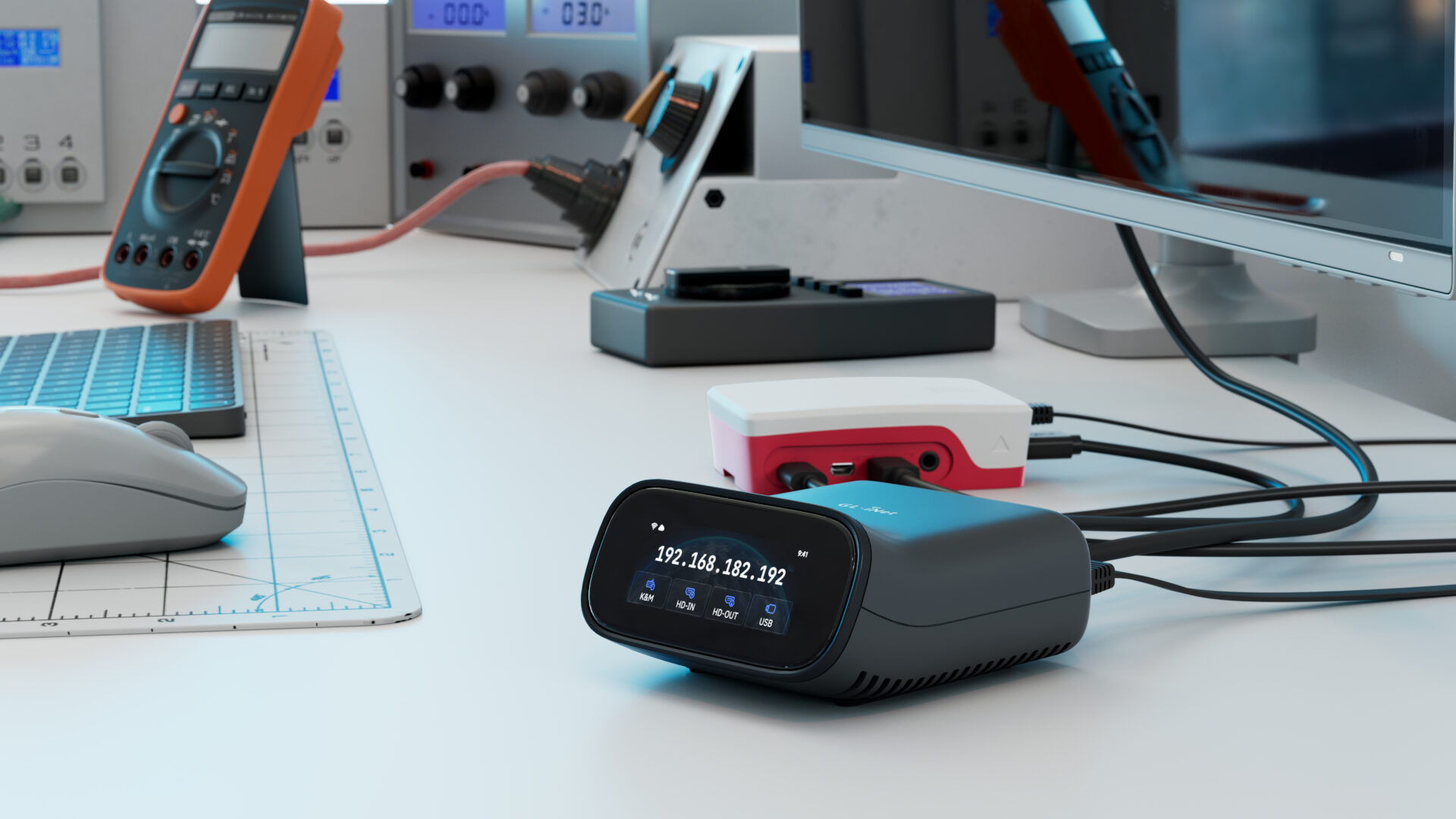
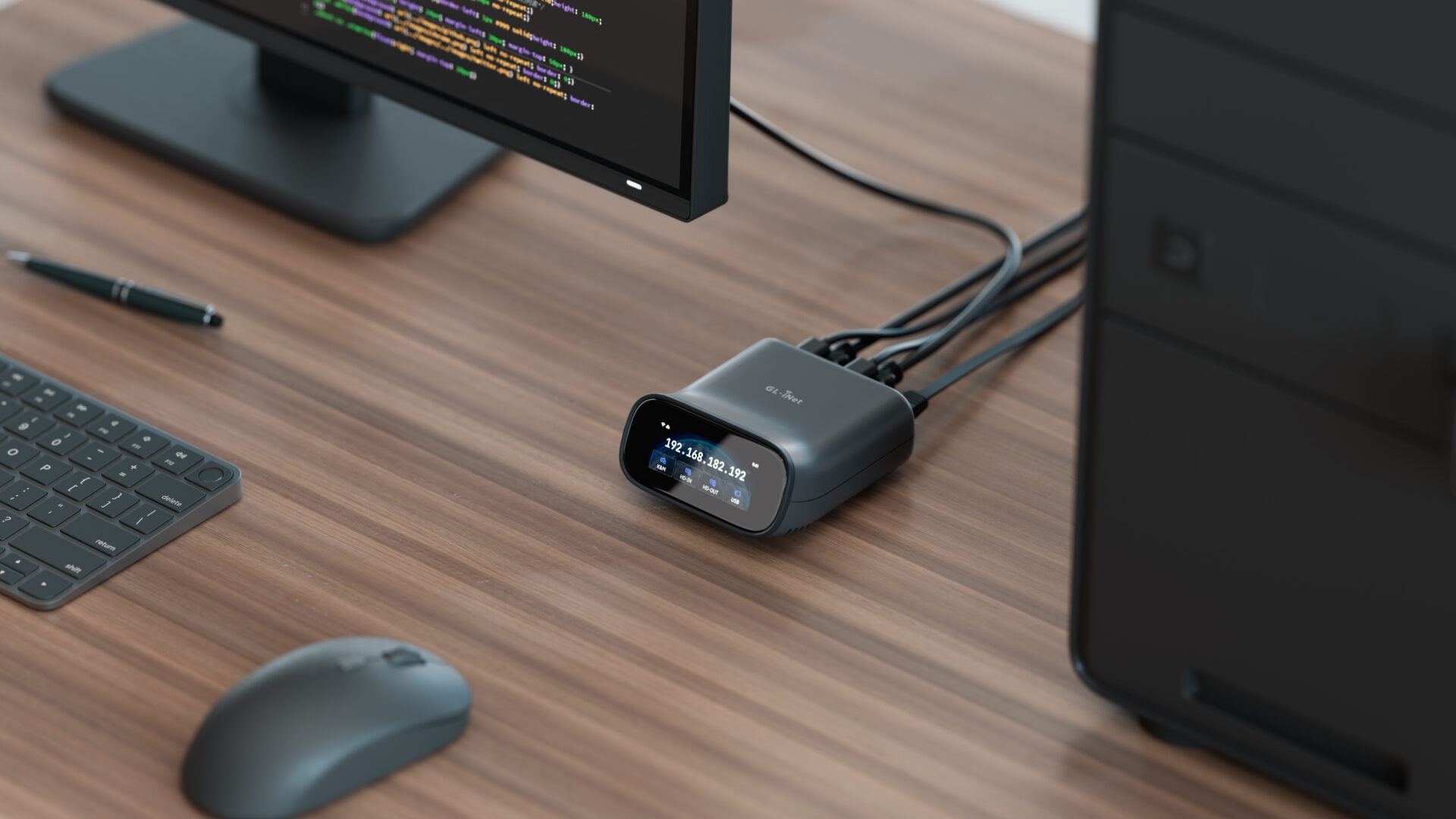
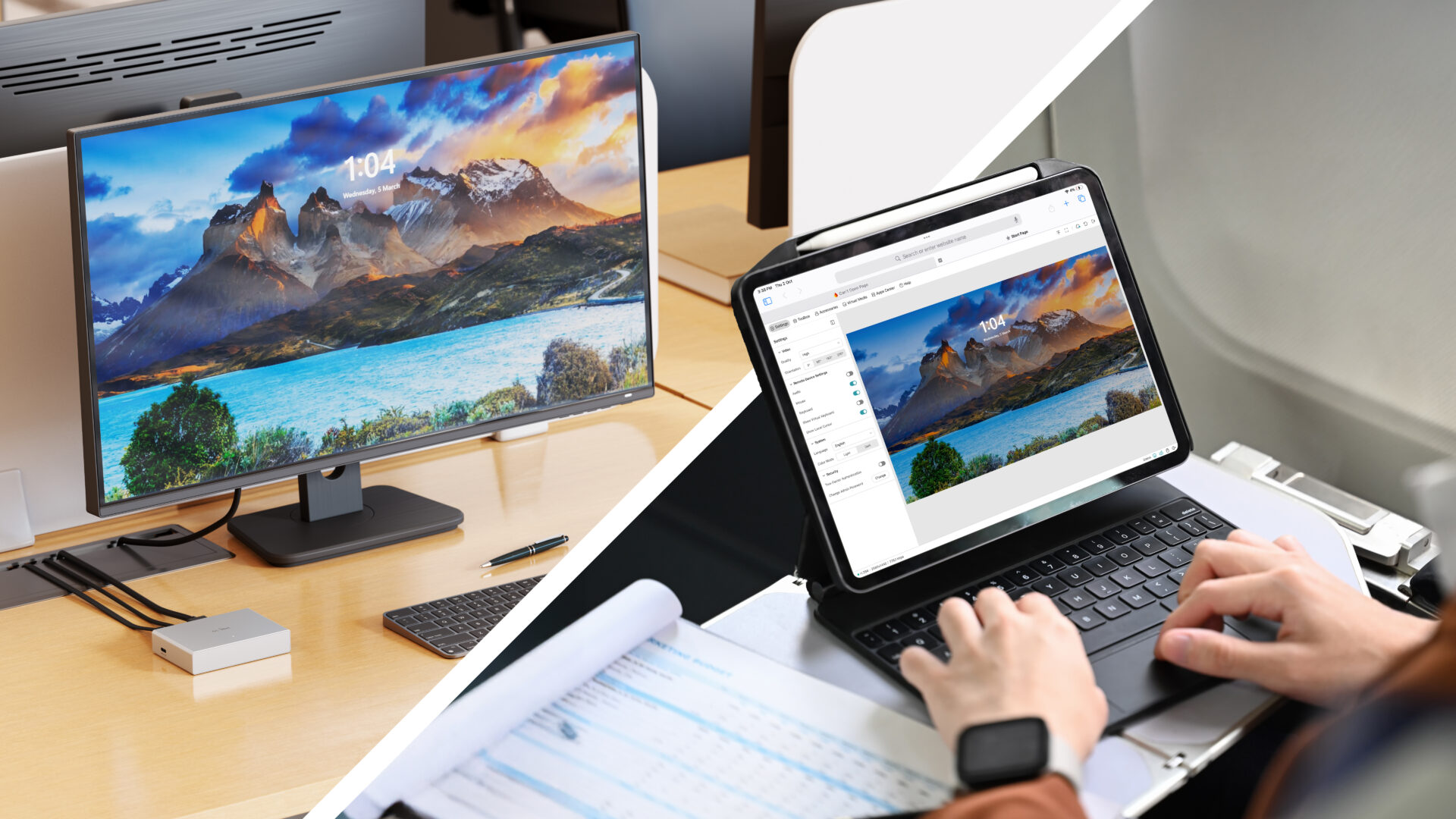
Comet Pro is a standalone remote KVM that allows management of headless servers and workstations from a browser, even during OS failures. It supports both 2.4GHz and 5GHz Wi-Fi, as well as wired and wireless failover.
Being able to operate it solely through a browser makes it easy, as you don’t need to install dedicated software.
It also supports 4K@30FPS video passthrough and audio channels, making it feature-rich for a standalone KVM.
Comet Pro (GL-RM10) Key Specifications
| Processor | Quad-core ARM Cortex |
| Memory | DDR3L 1GB / 32GB eMMC |
| Wi-Fi | Wi-Fi 6 Dual-band (2.4GHz 286Mbps / 5GHz 286Mbps) |
| HDMI Input | 1 port |
| Screen | 2.22-inch Touchscreen |
| Power / Power Consumption | Type-C 5V/2A PD compatible / Less than 5W |
| Dimensions / Weight | 93×84×47mm / 170g |
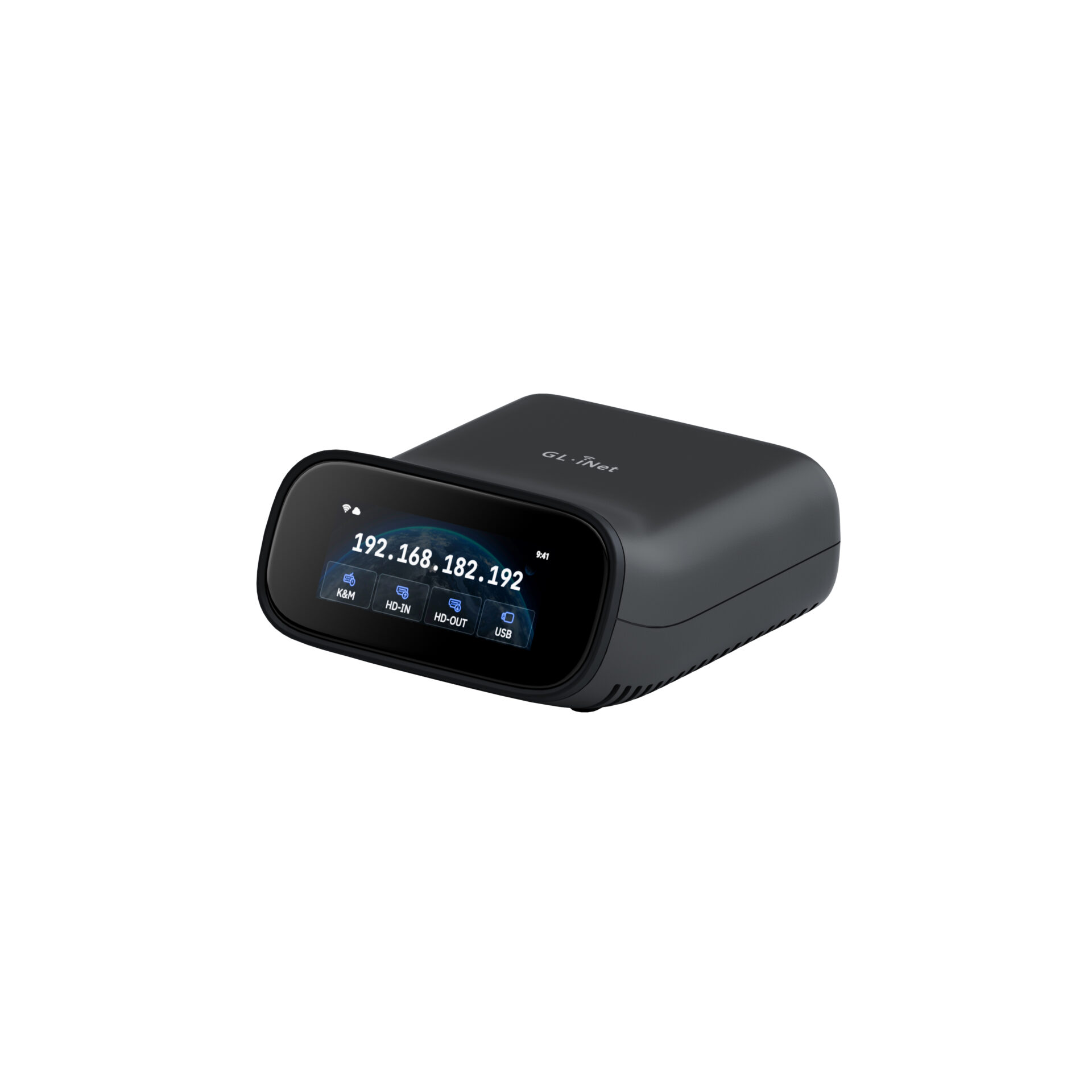
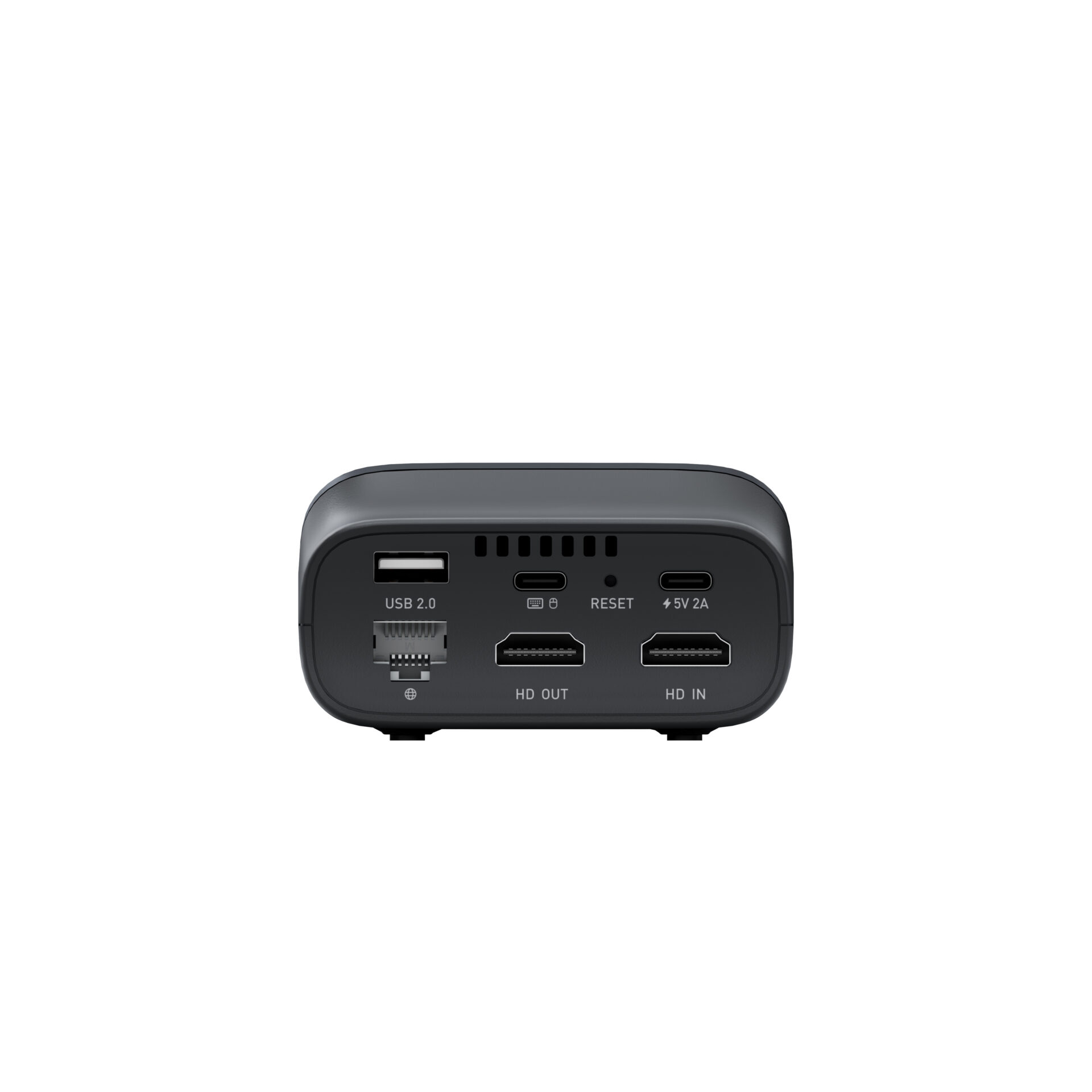
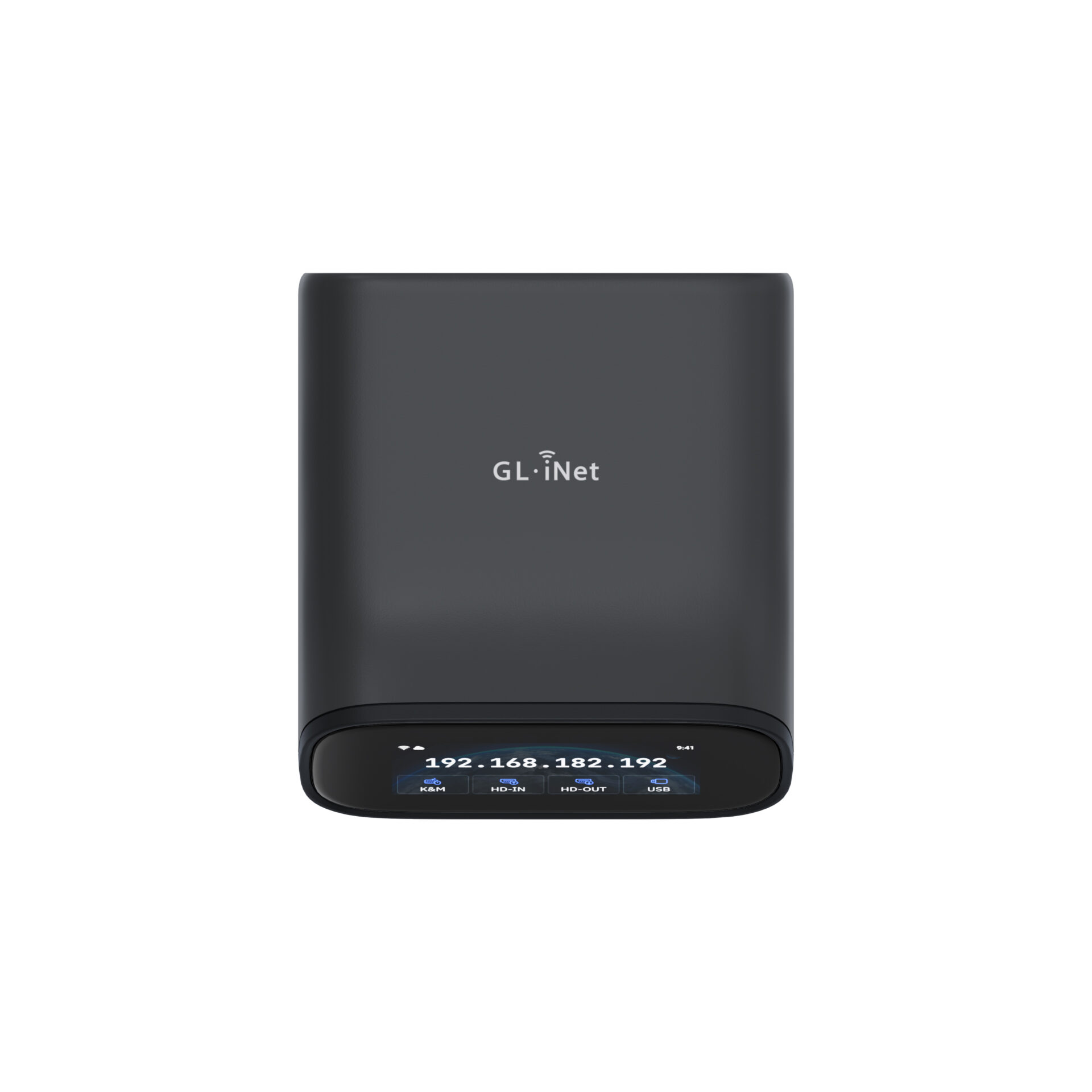
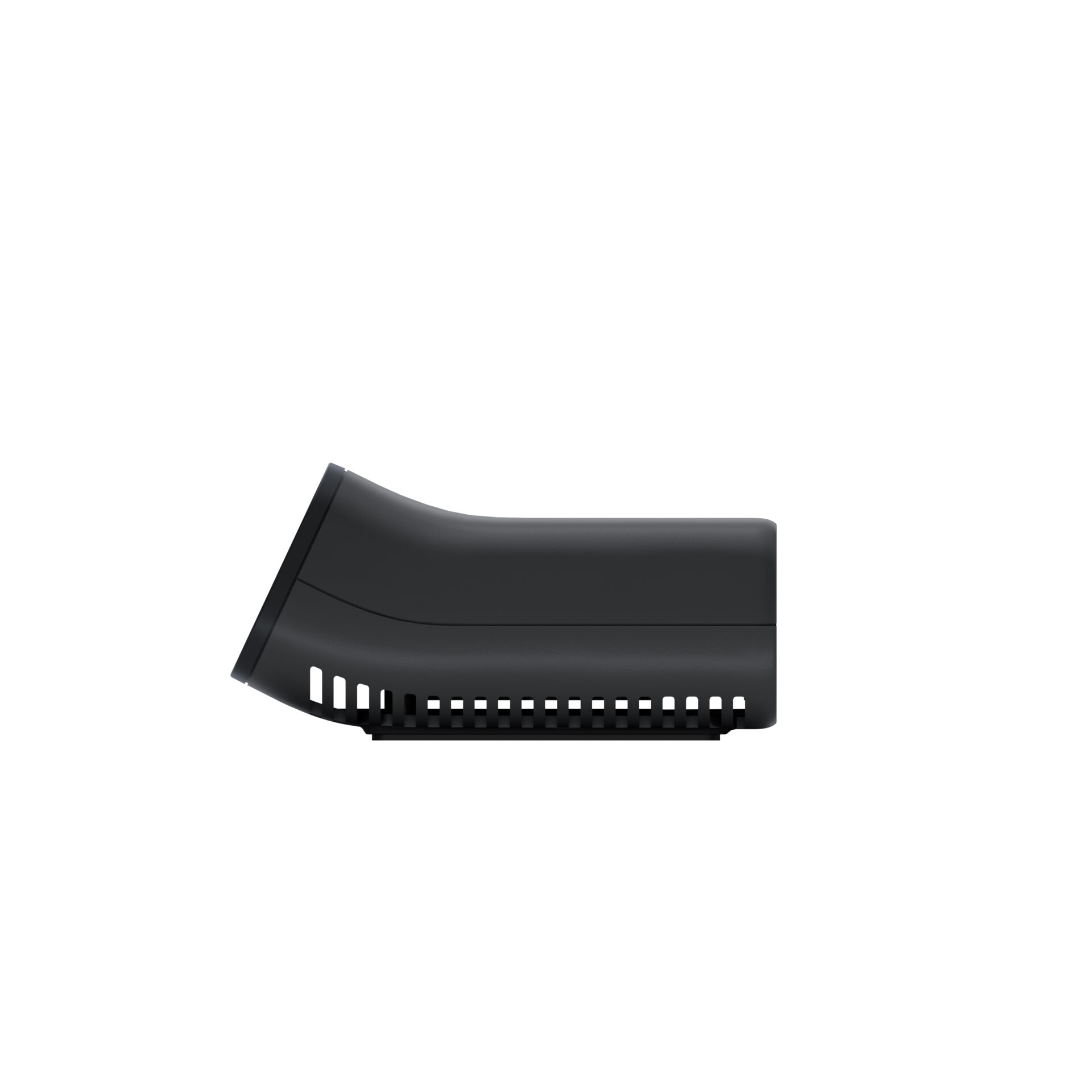
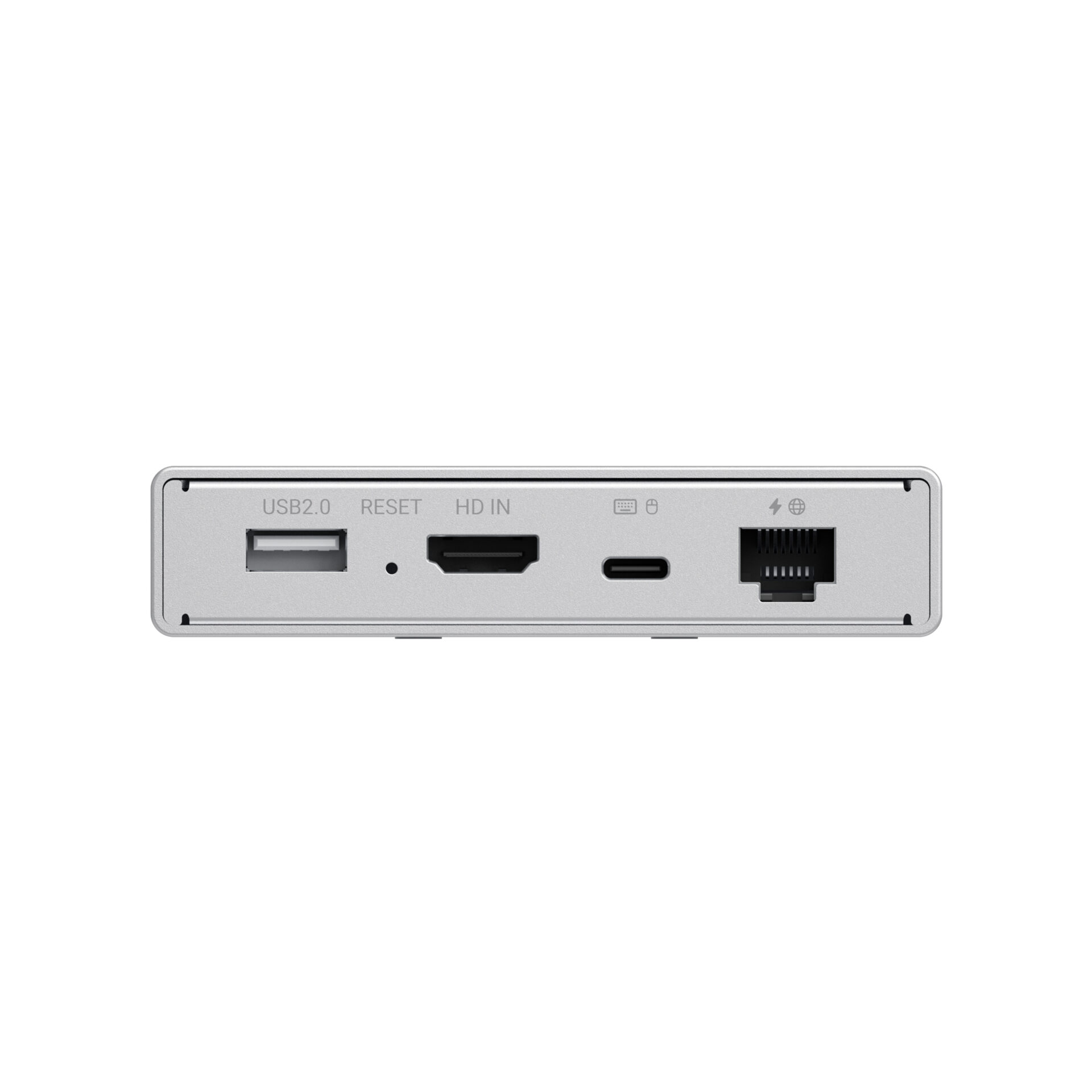
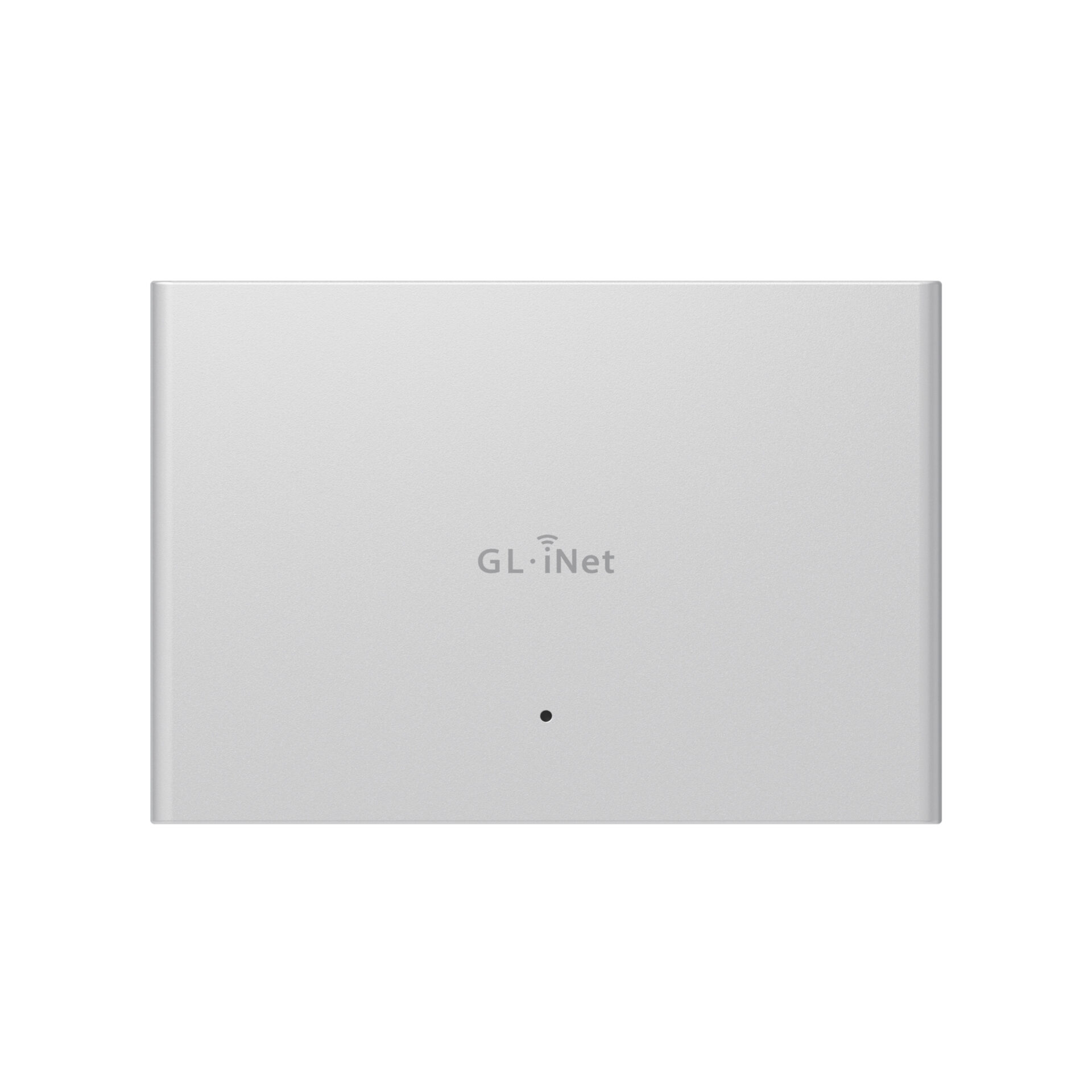
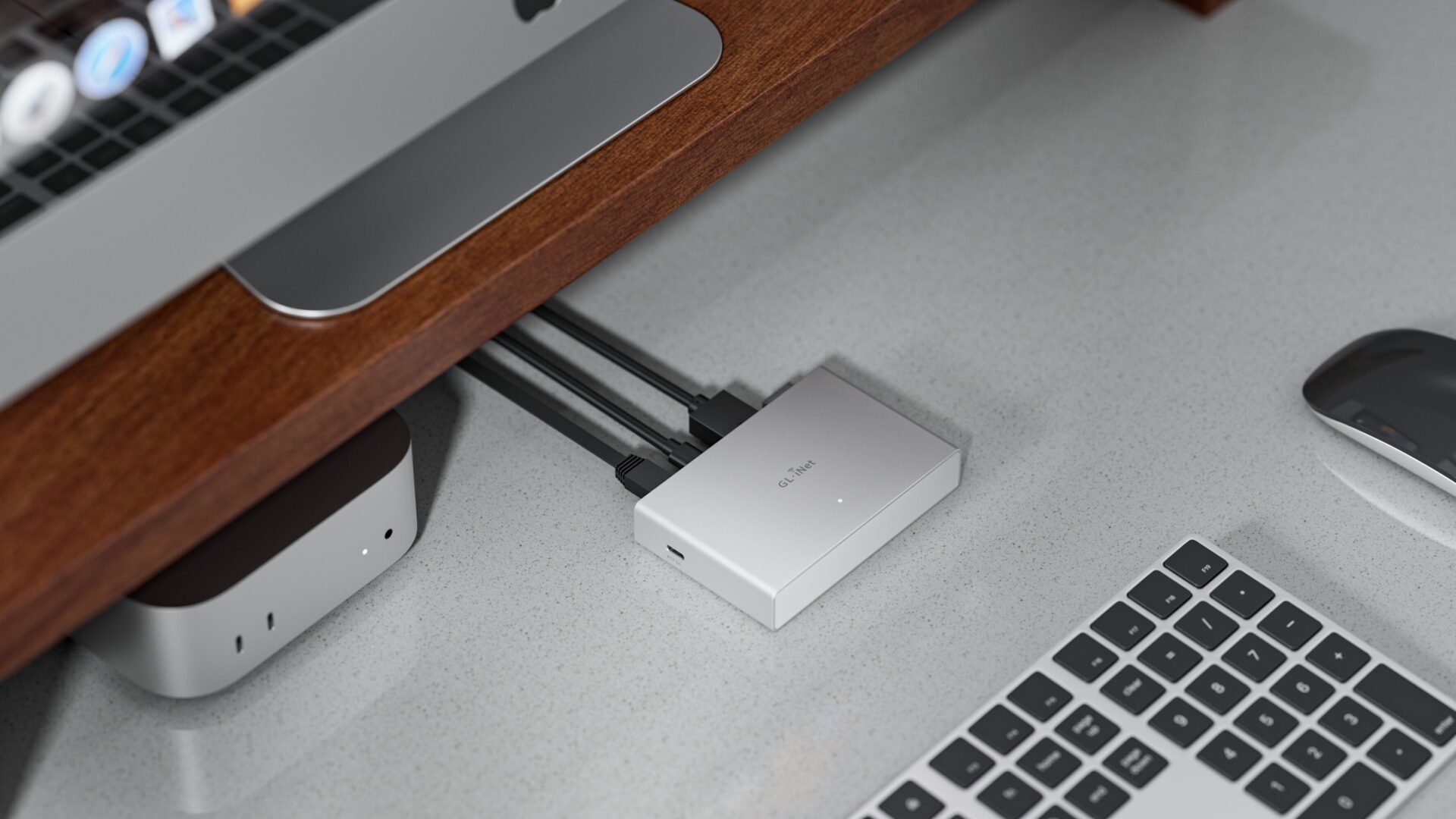
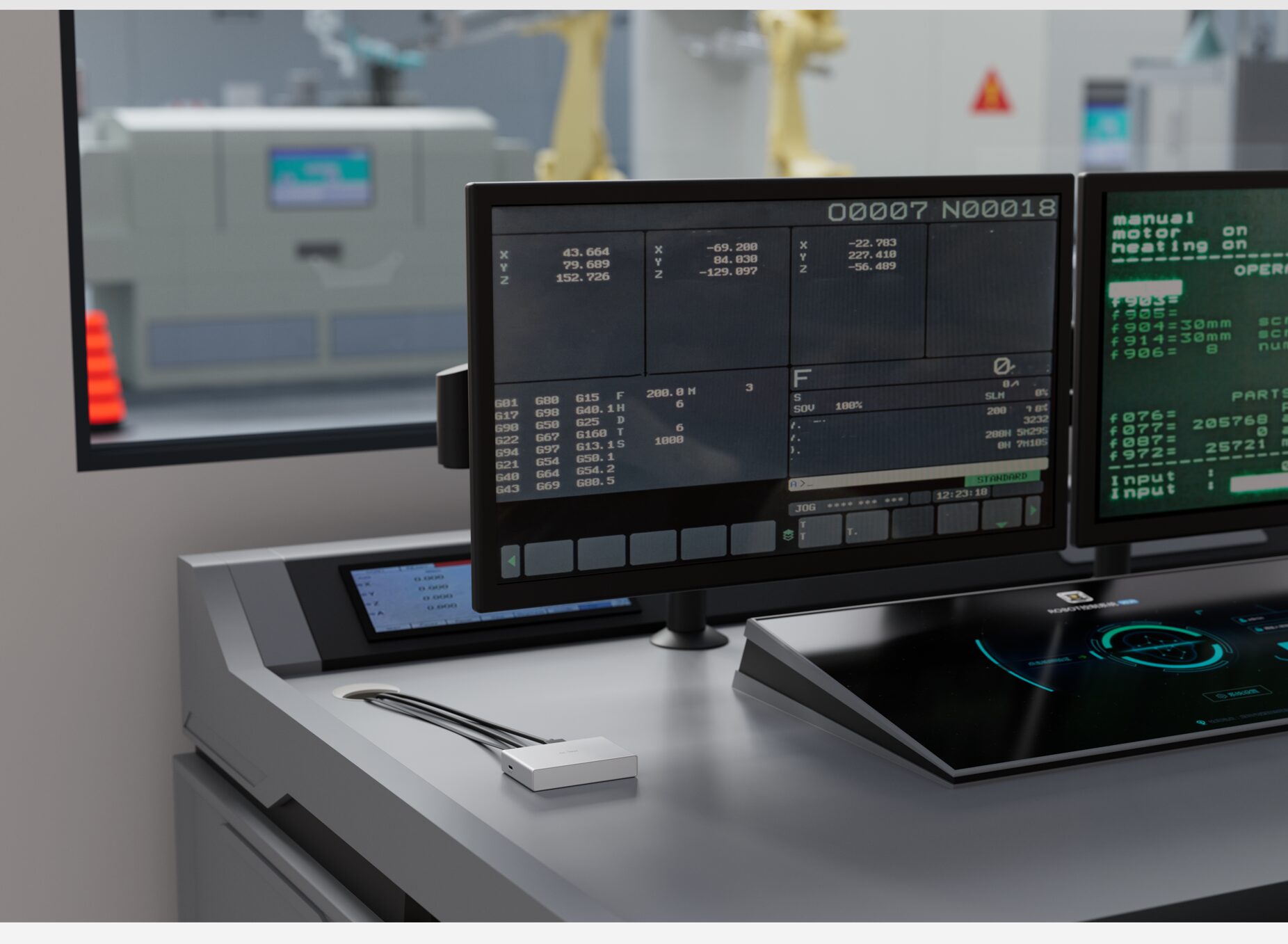
See more official images of Comet Pro
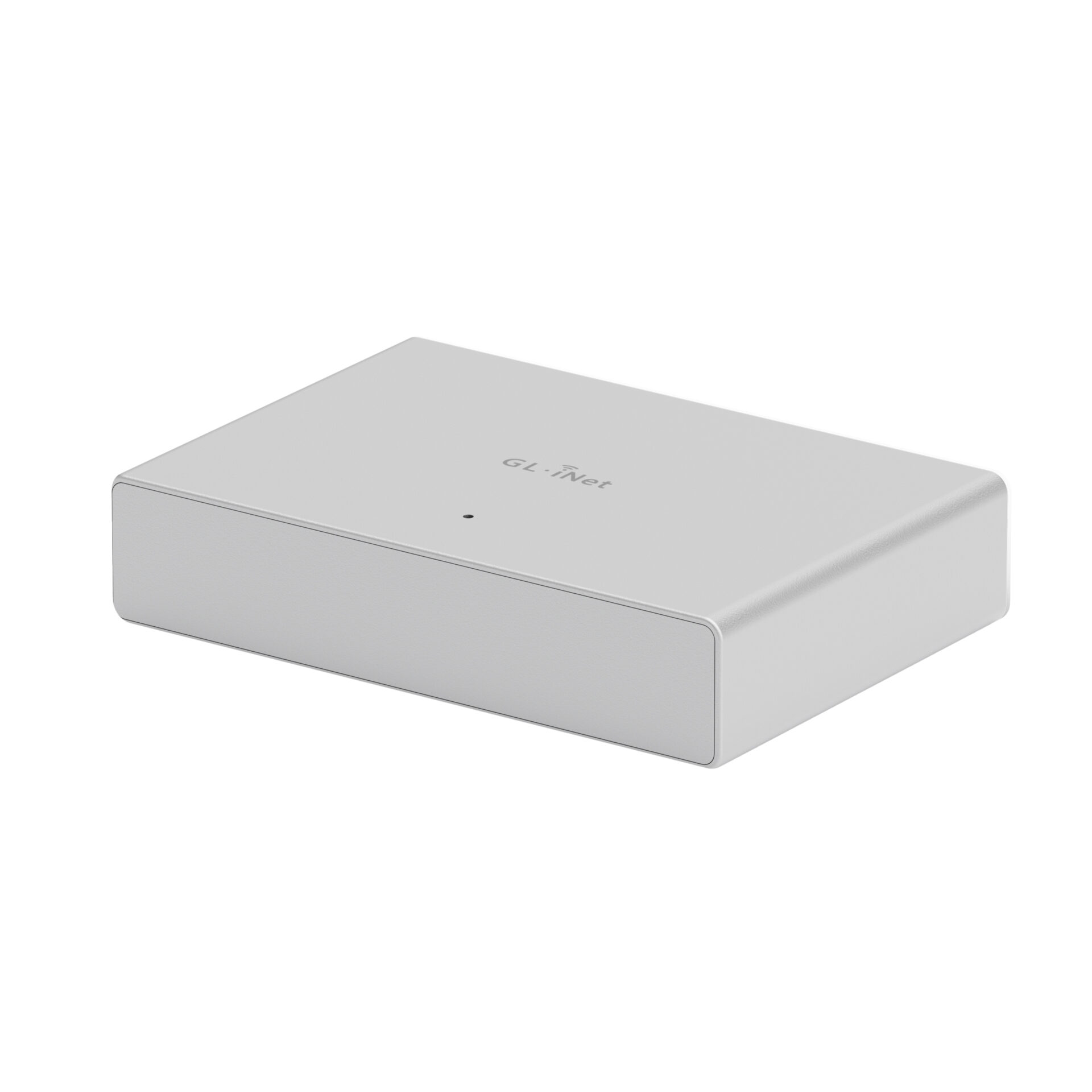
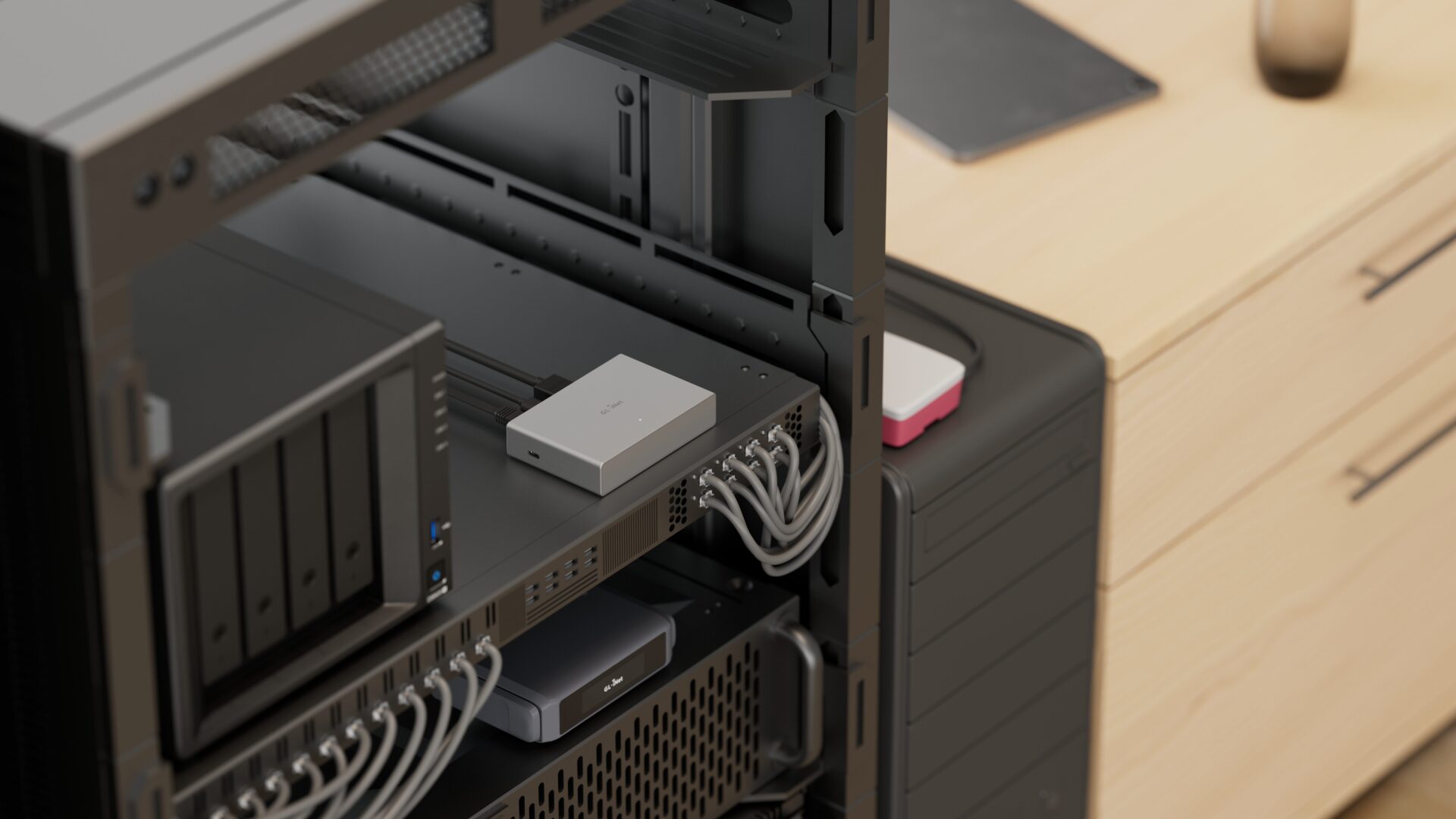
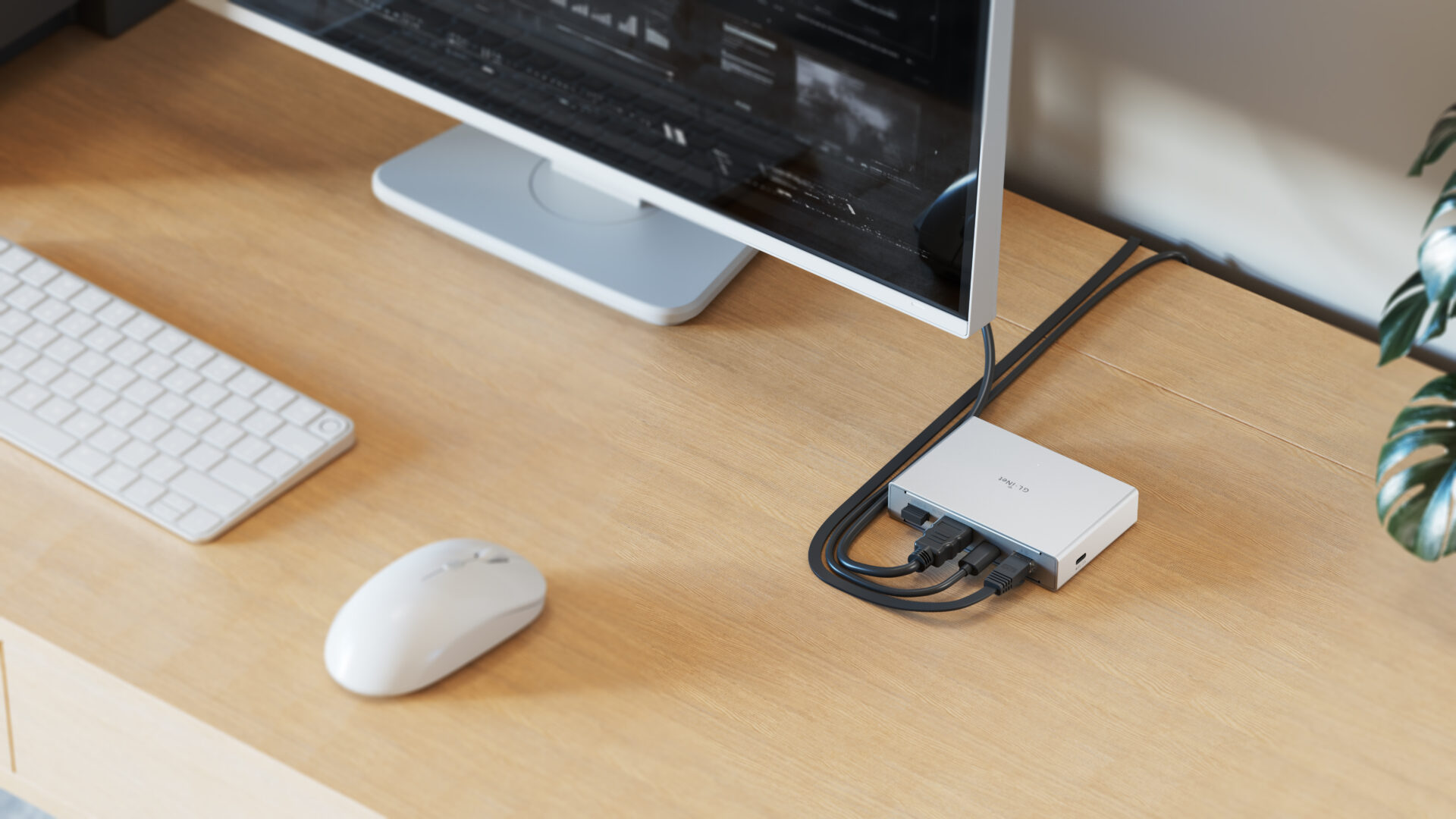
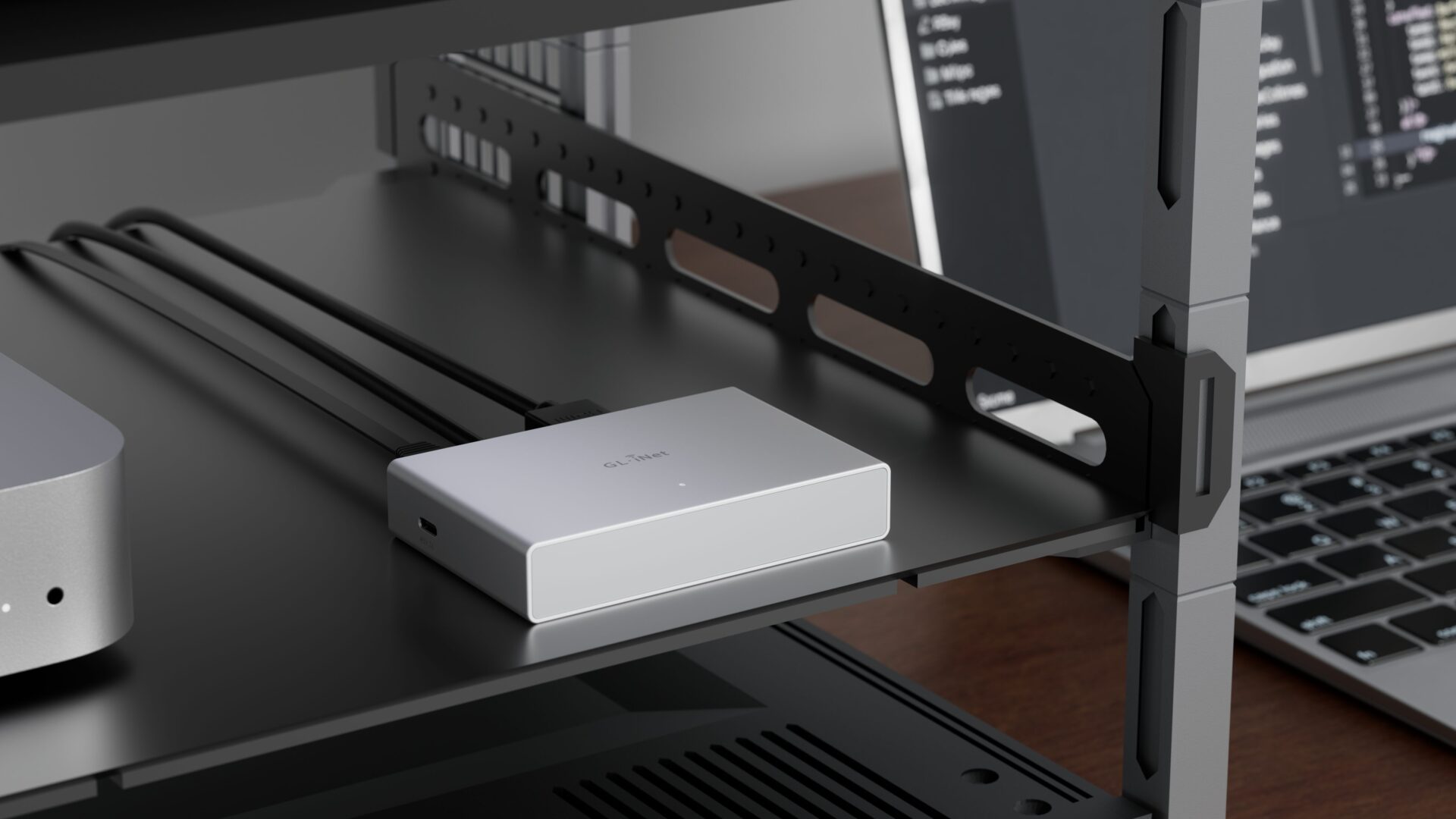
Comet PoE (GL-RM1PE) — Easy-to-Deploy Model with PoE
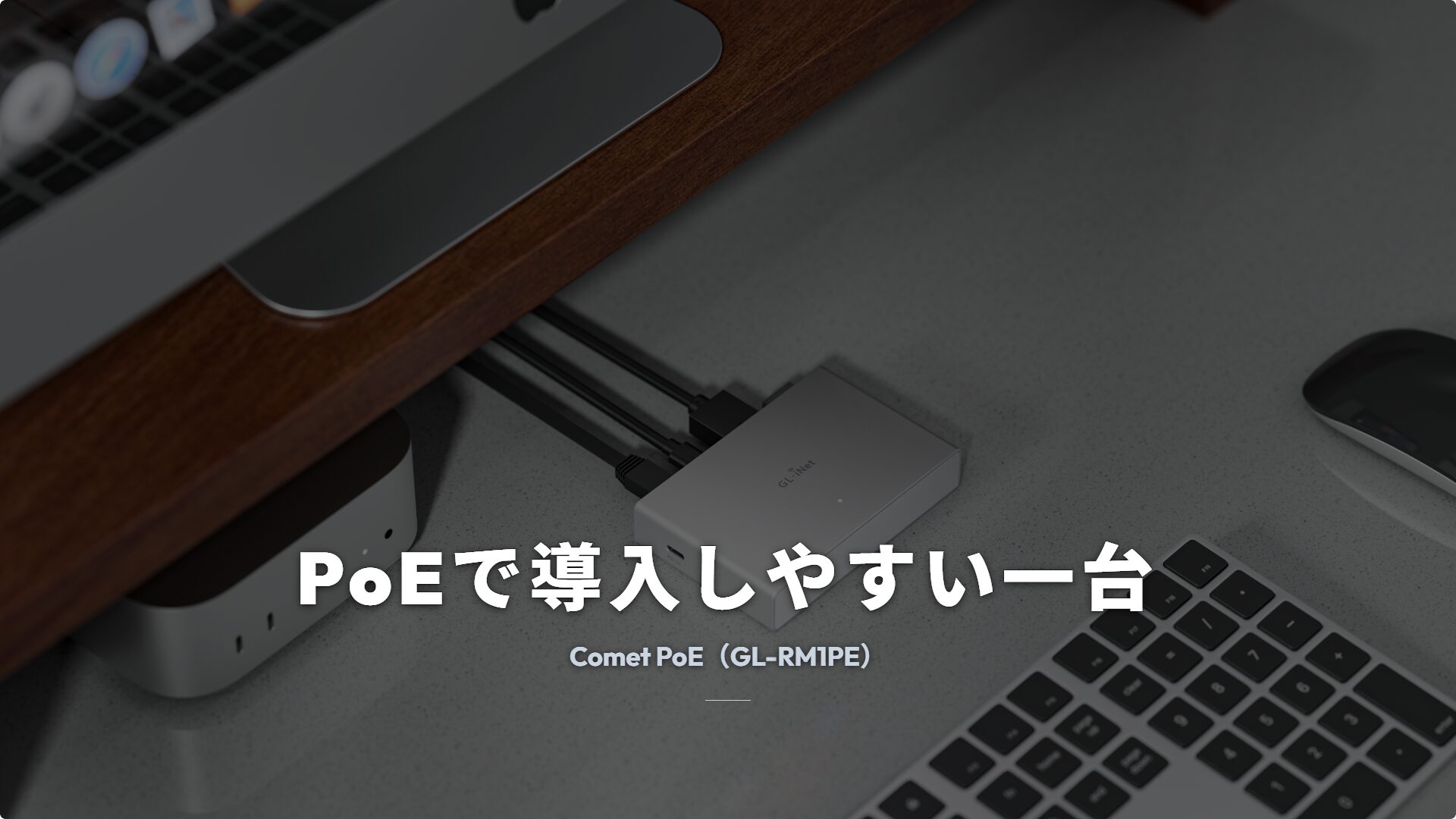
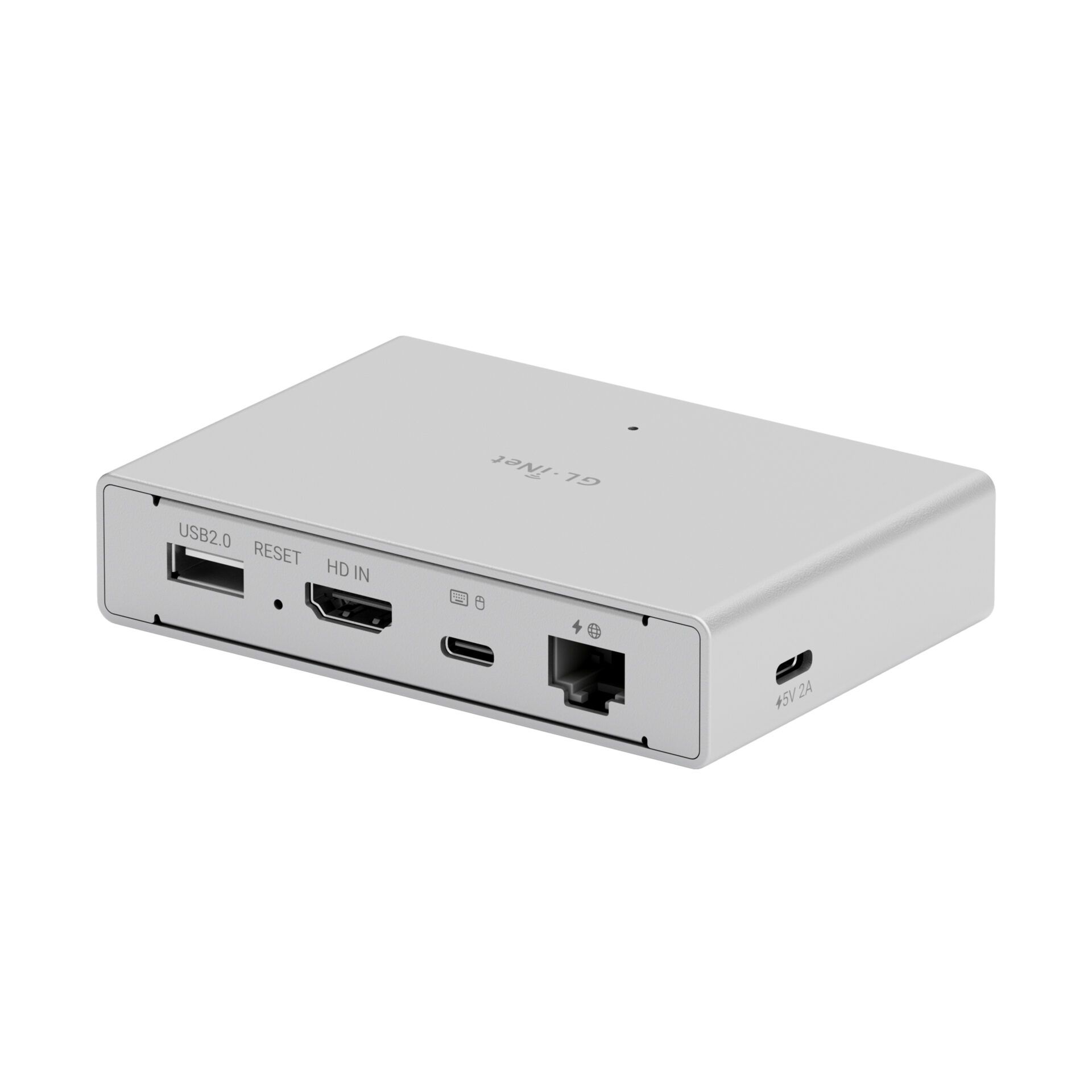
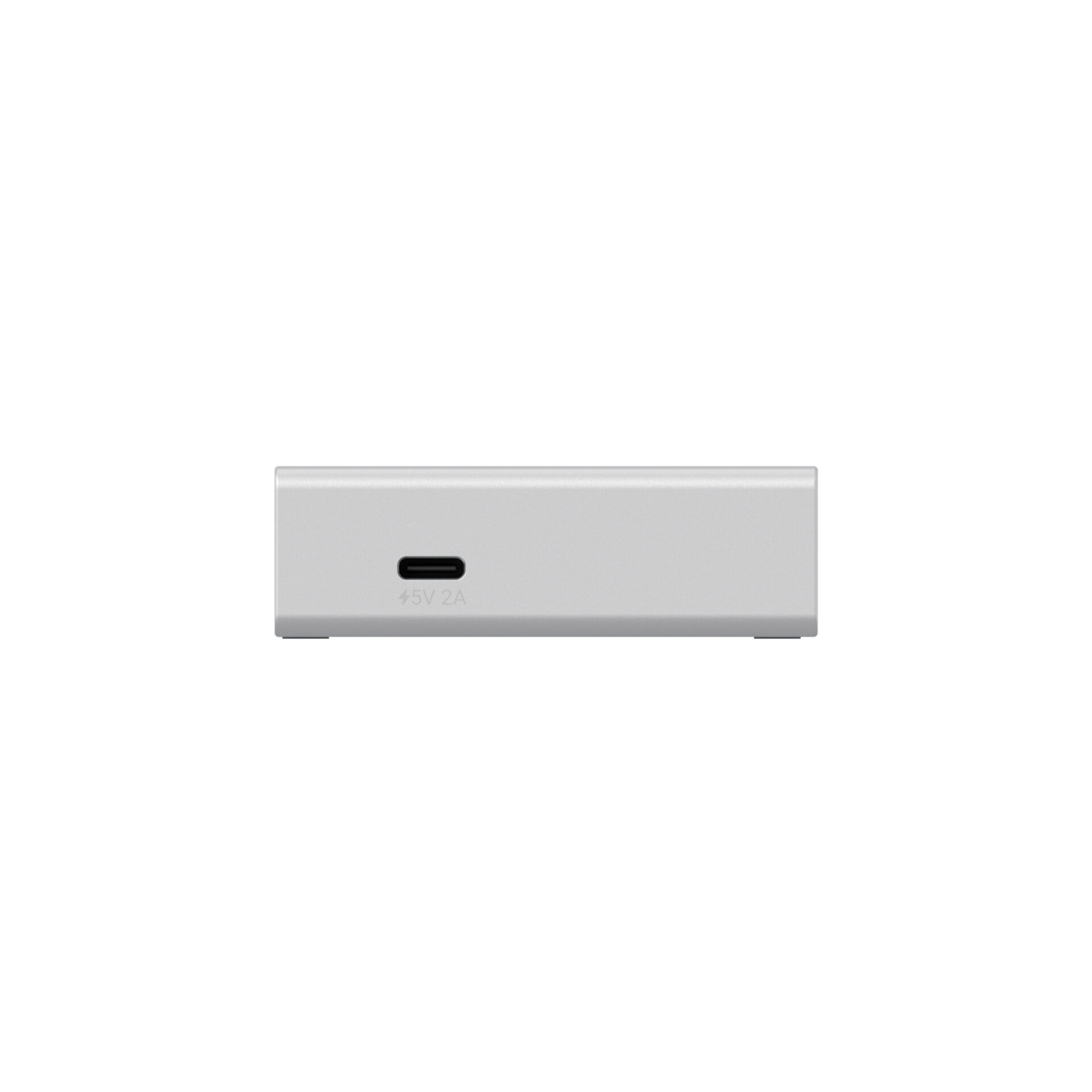
Comet PoE is a model that supports PoE (Power over Ethernet) power supply, simplifying wiring while making it easier to implement BIOS-level remote management. It manages a target device with a single HDMI input.
Being able to power it with a single LAN cable makes for a neat installation.
This is an easy-to-introduce unit for offices and data centers that already have a PoE environment.
Comet PoE (GL-RM1PE) Key Specifications
| Processor | Quad-core ARM Cortex |
| Memory | DDR3L 1GB / 32GB eMMC |
| HDMI Input | 1 port |
| Ethernet | 1×RJ45 (10/100/1000Mbps) |
| Power / Power Consumption | 802.3af/at PoE / Type-C 5V/2A compatible / Less than 5W |
| Dimensions / Weight | 102×70×22mm / 140g |
See more official images of Comet PoE

Travel Routers (B2C) — Secure Communication Like at Home, Even on Public Wi-Fi

Another pillar of the booth was the travel router lineup. These are products that allow you to create a secure and comfortable communication environment, just like at home or the office, even on public networks in hotels, cafes, airports, and other locations.
These routers allow centralized management of features such as VPN functionality, which lets you carry your home IP environment with you, AdGuard Home for blocking ads and trackers, and DPI for monitoring and controlling communications. VPN supports over 30 major services.
Public Wi-Fi security is a concern, so having a router like this provides peace of mind.
The convenience lies in being able to protect all connected devices at once after a single setup. They also support high-speed communication of the Wi-Fi 7 generation.
Slate 7 (GL-BE3600) — High-Performance Dual-Band Wi-Fi 7 Device
Slate 7 is a travel router that supports dual-band Wi-Fi 7. It is a model already available both domestically and internationally, featuring two 2.5G multi-gigabit ports, enhancing wired connectivity.
What are the features of the Slate 7 router?
Its features include dual-band Wi-Fi 7 support and two 2.5G ports. It’s a unit that’s easy to choose based on your needs and budget.
Slate 7 (GL-BE3600) Key Specifications
| Wi-Fi | Dual-band Wi-Fi 7 (2.4GHz 688Mbps / 5GHz 2882Mbps) |
| Ports | 2.5G Ethernet×2 / USB 3.0 |
| Firmware | OpenWrt 23.05 |
| Dimensions | 130×91×34mm |
Beryl 7 (GL-MT3600BE) — A New Generation Portable Router
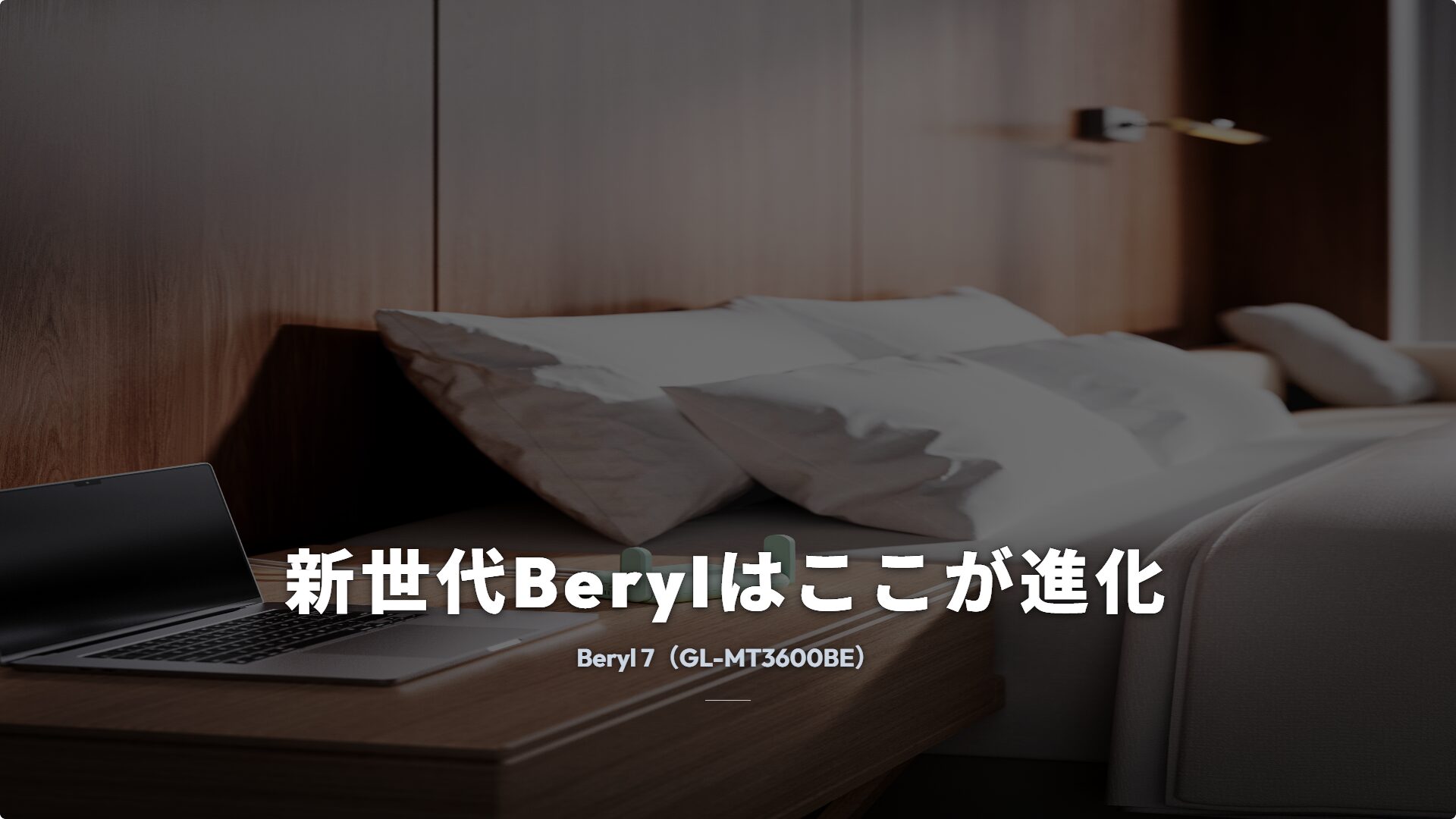
Beryl 7 is a travel router that inherits the ease of use of the popular Beryl series while evolving into the dual-band Wi-Fi 7 generation. It features a 2.5G Ethernet port, enhancing wired connectivity.
So the classic Beryl series also got Wi-Fi 7.
It’s a unit that maintains its usability while advancing its communication performance to the next generation. It’s suitable for those who want to protect multiple devices at once when traveling or on business trips.
Beryl 7 (GL-MT3600BE) Key Specifications
| CPU | MediaTek Quad-core @2.0GHz |
| Memory | DDR4 512MB / 512MB NAND |
| Wi-Fi | 2.4GHz 688Mbps / 5GHz 2882Mbps |
| Ports | WAN×1, LAN×1 (100/1000/2500Mbps) |
| Power Consumption | Less than 12W |
| Dimensions / Weight | 120×83×34mm / 205g |
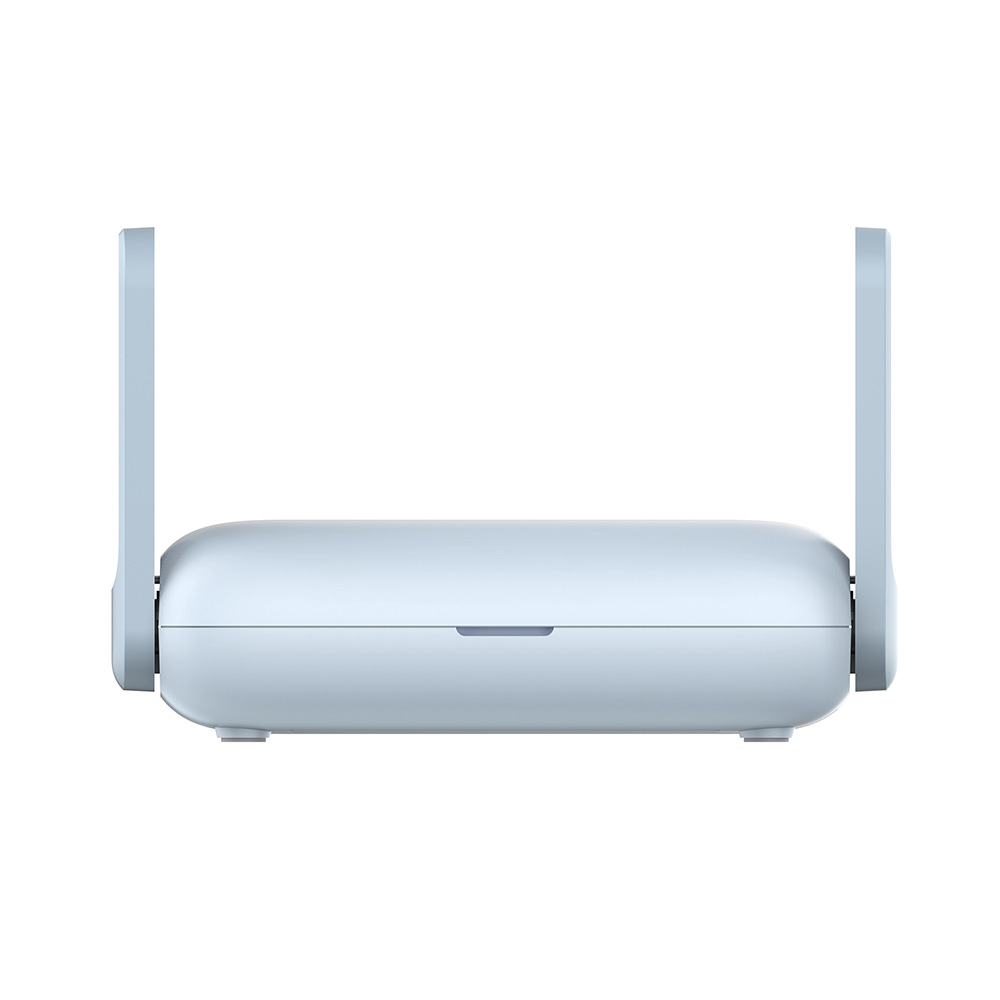
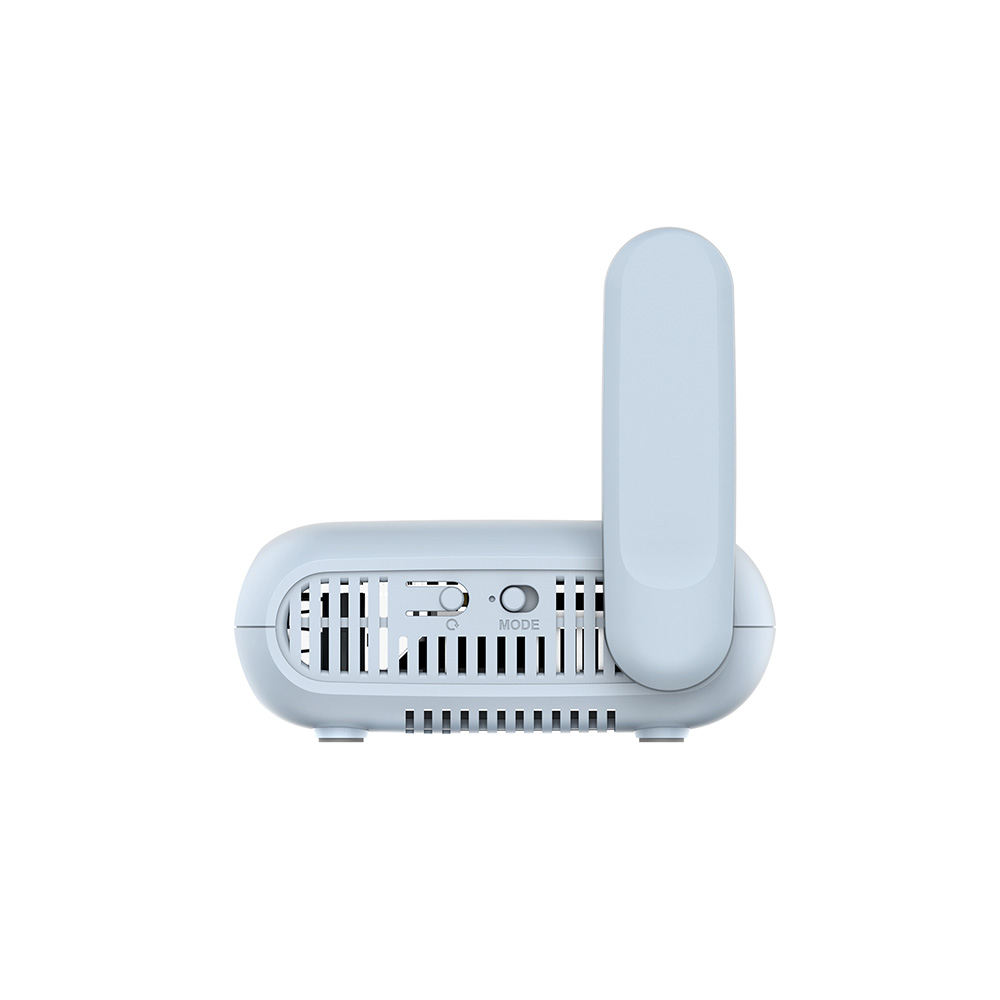
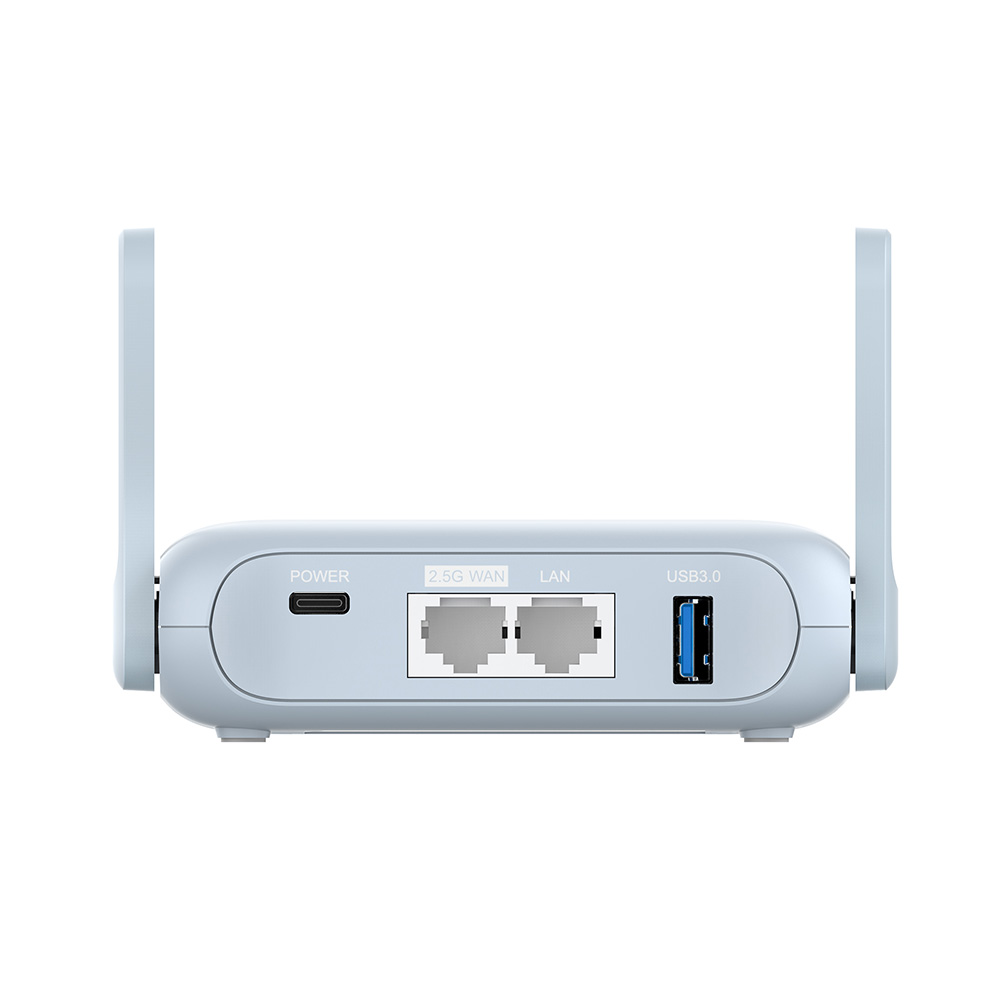
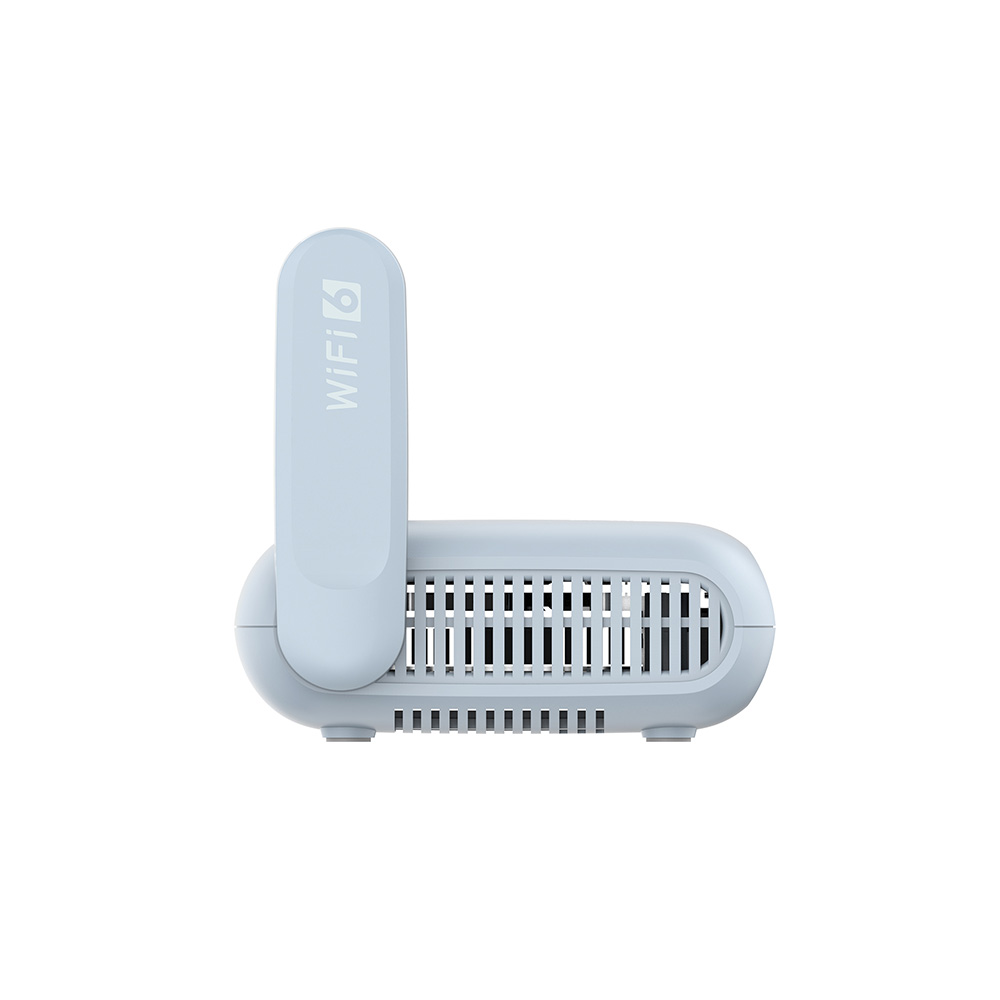
Beryl AX (GL-MT3000) — Classic Model for Secure Public Wi-Fi Use
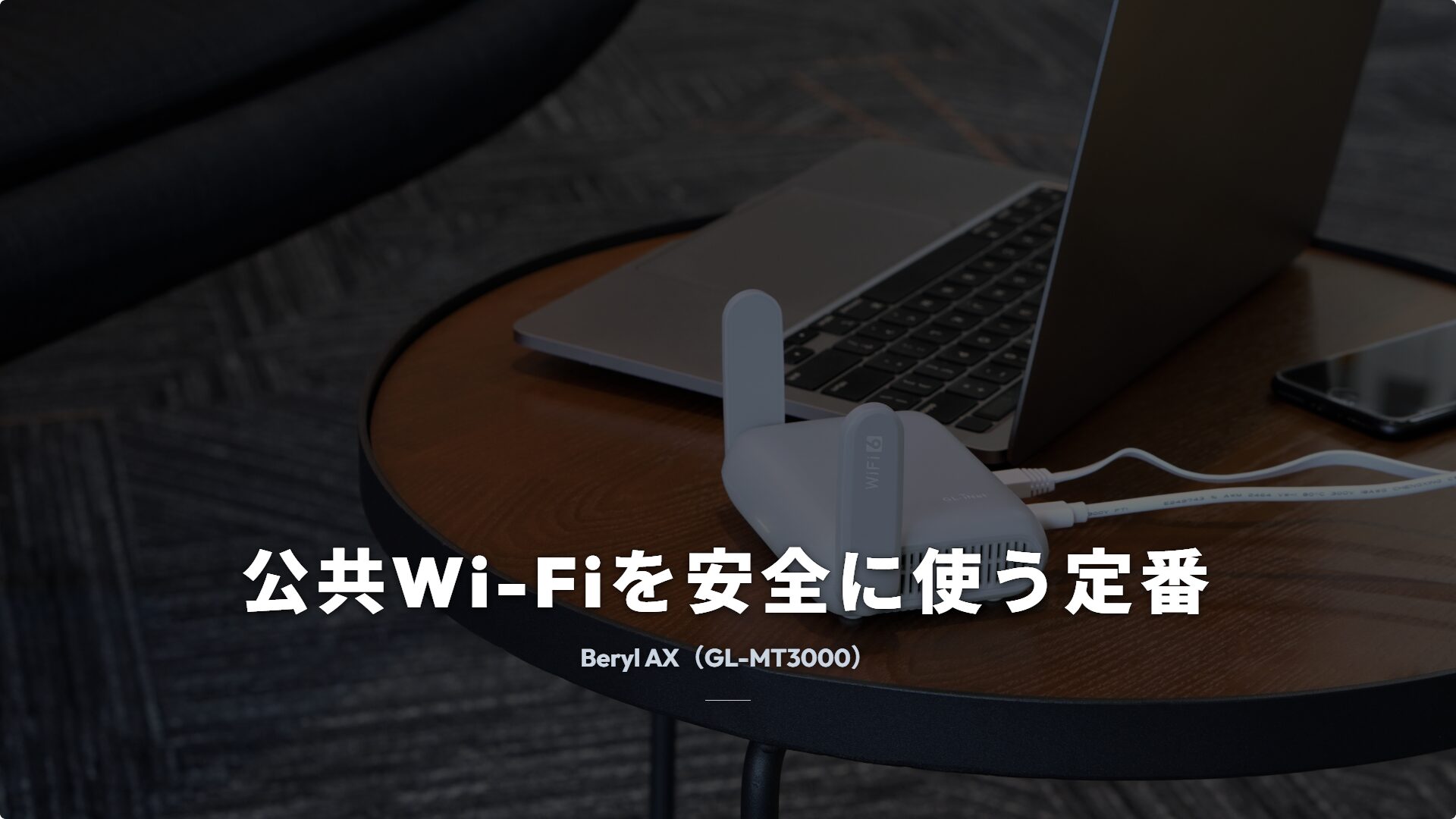
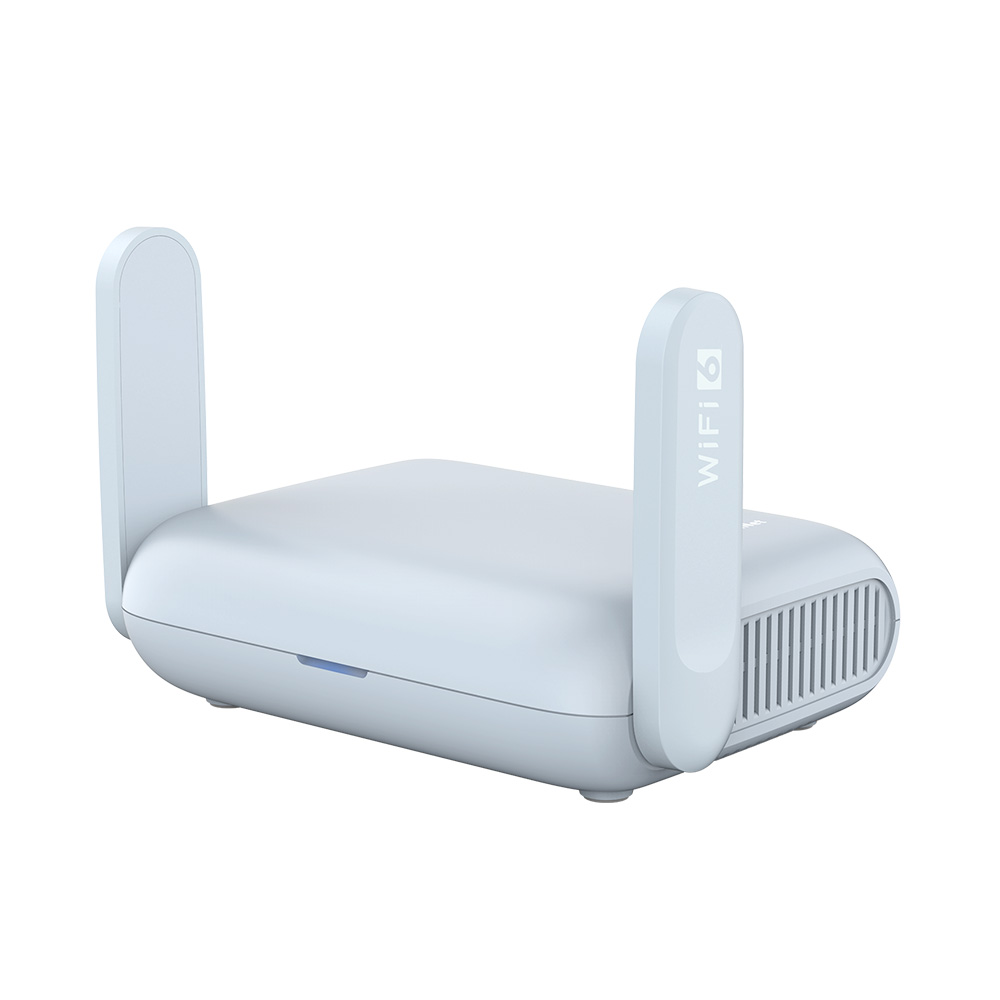
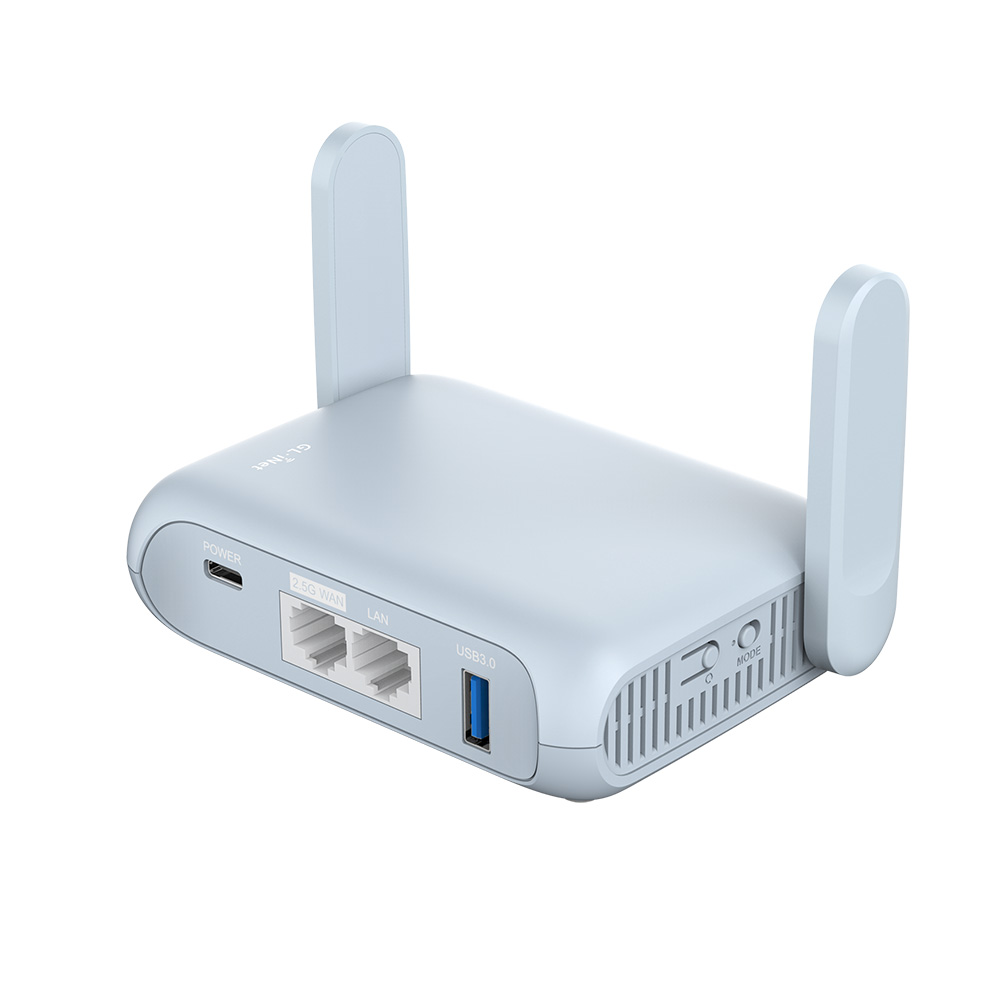
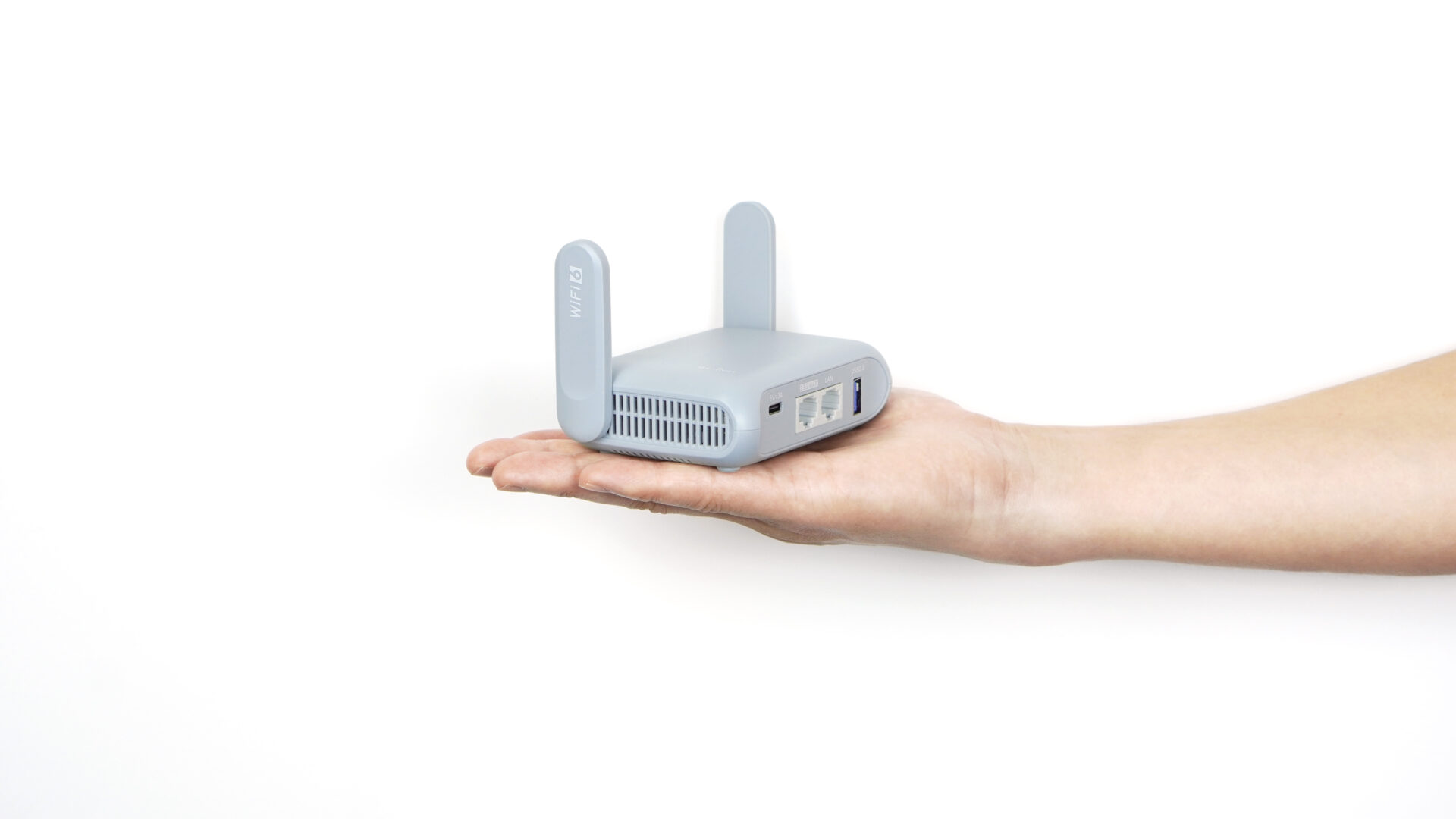
Beryl AX is a pocket-sized Wi-Fi 6 travel router. It supports major VPN services, including WireGuard and OpenVPN, making public networks in hotels, cafes, airports, and other locations easy and safe to use.
Among the Wi-Fi 7 models, what is the positioning of the Wi-Fi 6 Beryl AX?
It’s a classic model that offers a good balance of portability and cost. It’s an easy-to-handle unit for both home and travel.
Beryl AX (GL-MT3000) Key Specifications
| CPU | MediaTek Dual-core @1.3GHz |
| Memory | DDR4 512MB / 256MB NAND |
| Wi-Fi | 2.4GHz 574Mbps / 5GHz 2402Mbps |
| Ports | WAN 2.5Gbps / LAN 1Gbps |
| Power Consumption | Less than 8W |
| Dimensions / Weight | 120×83×34mm / 196g |
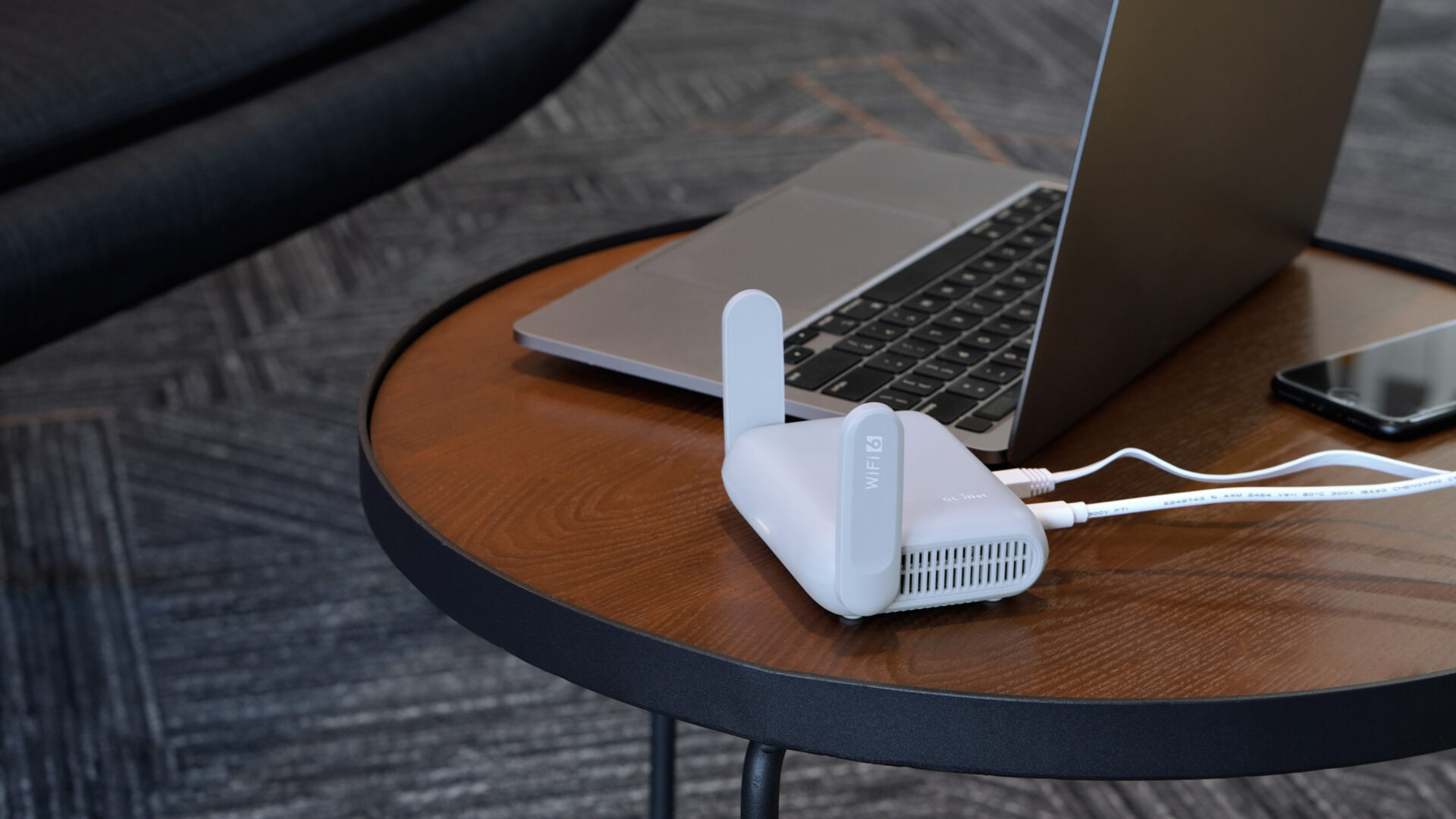
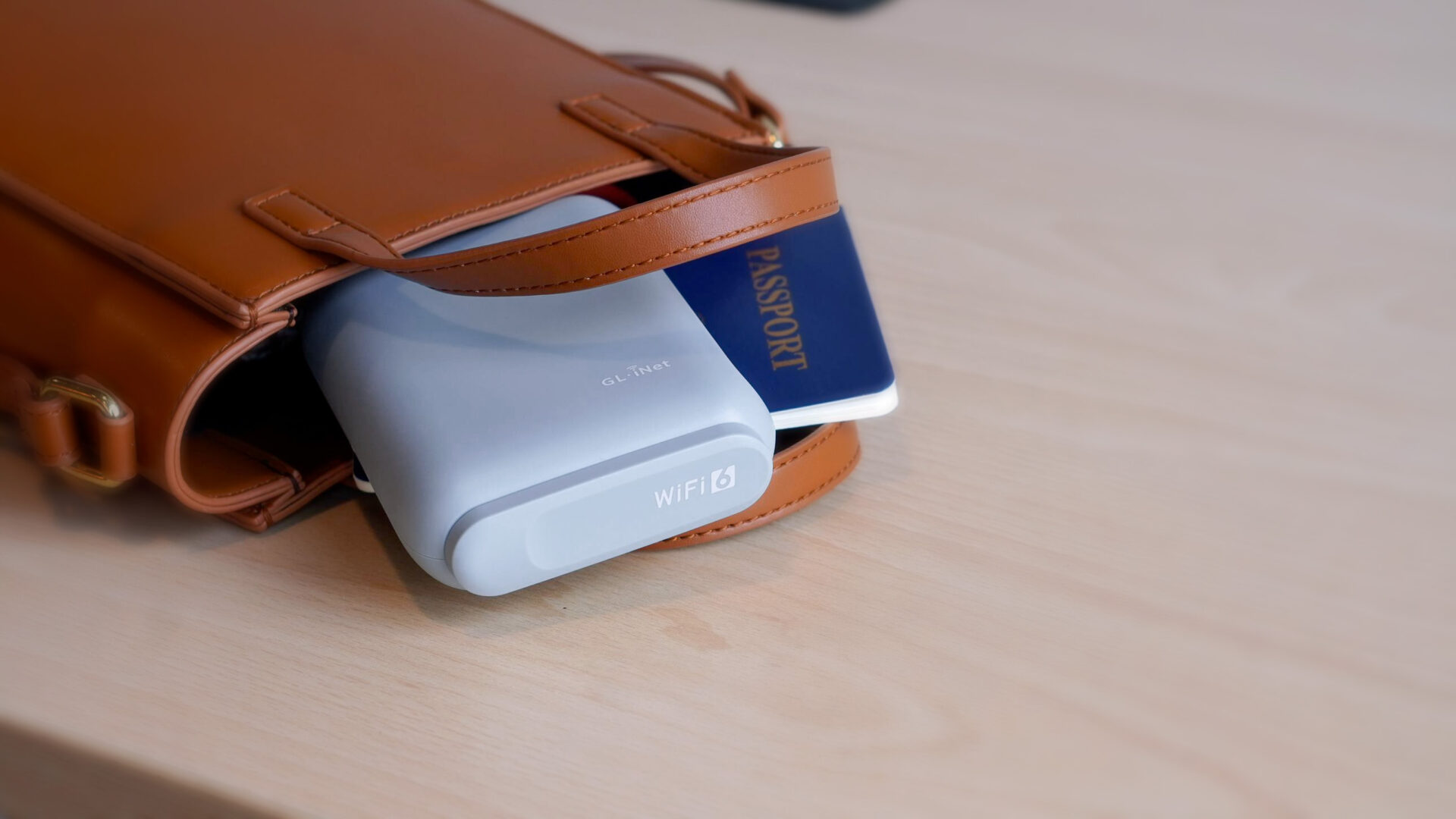
See more official images of Beryl AX


GL.iNet’s Direction and Entry into the Japanese Market as Seen from the Booth Exhibition
What became clear through this coverage is that GL.iNet is consistently proposing the theme of “securely managing networks remotely” from both B2B and B2C perspectives.
For B2B, there’s the Comet series of remote KVMs that reduce on-site responses during failures. For B2C, there are Wi-Fi 7 travel routers that enable secure communication even on public Wi-Fi. All products showcased were aligned with this direction.
How will their entry into the Japanese market proceed from now on?
They plan to proceed with localizing product information, strengthening their Japanese support system, and developing sales partners. Their exhibition at Interop Tokyo is positioned as the starting point for this.
Summary
At GL.iNet’s first exhibition at “Interop Tokyo 2026,” the remote KVM “Comet series,” including products unveiled for the first time in Japan, and travel routers primarily from the Wi-Fi 7 generation were showcased.
In particular, the compact KVM “Comet Q,” which is said to be the world’s first to support iPhone operation, is a new product that expands its range of applications from personal use to on-site operations. Meanwhile, the travel router lineup is steadily advancing to the high-speed communication of Wi-Fi 7, while retaining VPN and security features.
Key points of this article!
- GL.iNet made its first appearance at “Interop Tokyo 2026,” showcasing its remote KVM and Wi-Fi 7 travel router lineups.
- The remote KVM “Comet series” supports OOBM, enabling remote management from the BIOS level even during failures.
- The new “Comet Q” is the world’s first iPhone-compatible KVM, currently undergoing crowdfunding.
- Wi-Fi 7 travel routers feature VPN, AdGuard Home, and DPI, making public Wi-Fi secure.
Network equipment is quite profound, isn’t it? I’m also curious about their future expansion in Japan.
If Japanese support and a partner system are established, they could become a strong option. I’ll be keeping an eye on their future developments.
This article was originally written in Japanese and has been translated.
Comments