
What you’ll learn in this article!
- What country’s manufacturer TP-Link is
- TP-Link’s company overview and business scale
- The achievements and basis behind its No. 1 global Wi-Fi equipment market share
- Its journey from founding to global expansion
- Its core product lineup and technological capabilities
- An objective overview of regulatory trends and safety in the United States
Author of this article: "Mr. Gadget"
- Studied under Masatoshi Ono, a million-selling singer who has performed at Kohaku Uta Gassen
- Experience supervising for Ameba Choice and the web media Picky's
- Individual member of the Word of Mouth Marketing Association
Nice to meet you!

Conclusion: TP-Link is a Manufacturer from China (Shenzhen)

TP-Link is a networking equipment manufacturer headquartered in Shenzhen, China. Founded in China in 1996, it currently operates in over 170 countries worldwide.
 Ms. Gadget
I often see TP-Link at electronics mass retailers, but which country’s manufacturer is it?
 Mr. Gadget
TP-Link is a manufacturer born in Shenzhen, China. In the field of Wi-Fi routers, it is a highly proven brand that has secured No. 1 in global market share for 12 consecutive years according to IDC (International Data Corporation) surveys.
Below is basic information about TP-Link.
| Item | Details |
|---|---|
| Official Name | TP-LINK Technologies Co., Ltd. (China entity) / TP-Link Systems Inc. (US entity) |
| Founded | 1996 |
| Founders | Brothers Zhao Jianjun and Zhao Jiaxing |
| Headquarters Location | Nanshan District, Shenzhen, China (China operations) / Irvine, California, USA (Global operations) |
| Number of Employees | Approx. 26,000 (estimated by corporate intelligence services) |
| Revenue | Approx. $2.3 billion (estimated by corporate intelligence services; no official figures released as it is a private company) |
| Countries of Operation | Over 170 countries |
| User Base | Over 1.7 billion users (stated on official website) |
| Japanese Subsidiary | TP-Link Japan Inc. (Established in 2015, Chiyoda-ku, Tokyo) |
| Origin of Company Name | Derived from Twisted Pair Link (twisted pair cabling) |
Ms. GadgetShenzhen is home to many other famous manufacturers, right?
Mr. GadgetThat’s right. Shenzhen is a city that gathers global technology companies such as Huawei, DJI, and BYD. TP-Link is also one of the key players among them.
TP-Link Company Overview
TP-Link is a global company with a wide range of offerings from home Wi-Fi routers to business-grade networking equipment and smart home products. Here, we will look at its corporate scale and market positioning.
TP-Link Basic Information and Corporate Scale

TP-Link was established in Shenzhen, China, in 1996 by brothers Zhao Jianjun and Zhao Jiaxing. The company name “TP-Link” references twisted pair cable technology used in telephone lines and other applications. This technology reduces electromagnetic interference to achieve clear signal transmission, reflecting the founders’ vision of providing “highly reliable network connectivity.”
At its founding, it was a small company manufacturing network cards to connect computers to networks. However, fueled by the rapid development of internet infrastructure in China during the late 1990s, it expanded its product lineup to routers and switching hubs, rapidly increasing its market share within China.
Ms. GadgetIt only made network cards at first? That’s hard to imagine given its current scale.
Mr. GadgetThe company built its own factory in Shenzhen in 1997 and began expanding its product line in earnest from there. Today, it has grown to a scale of approximately 26,000 employees and an estimated revenue of around $2.3 billion.
Achievement of No. 1 Global Market Share in Wi-Fi Equipment
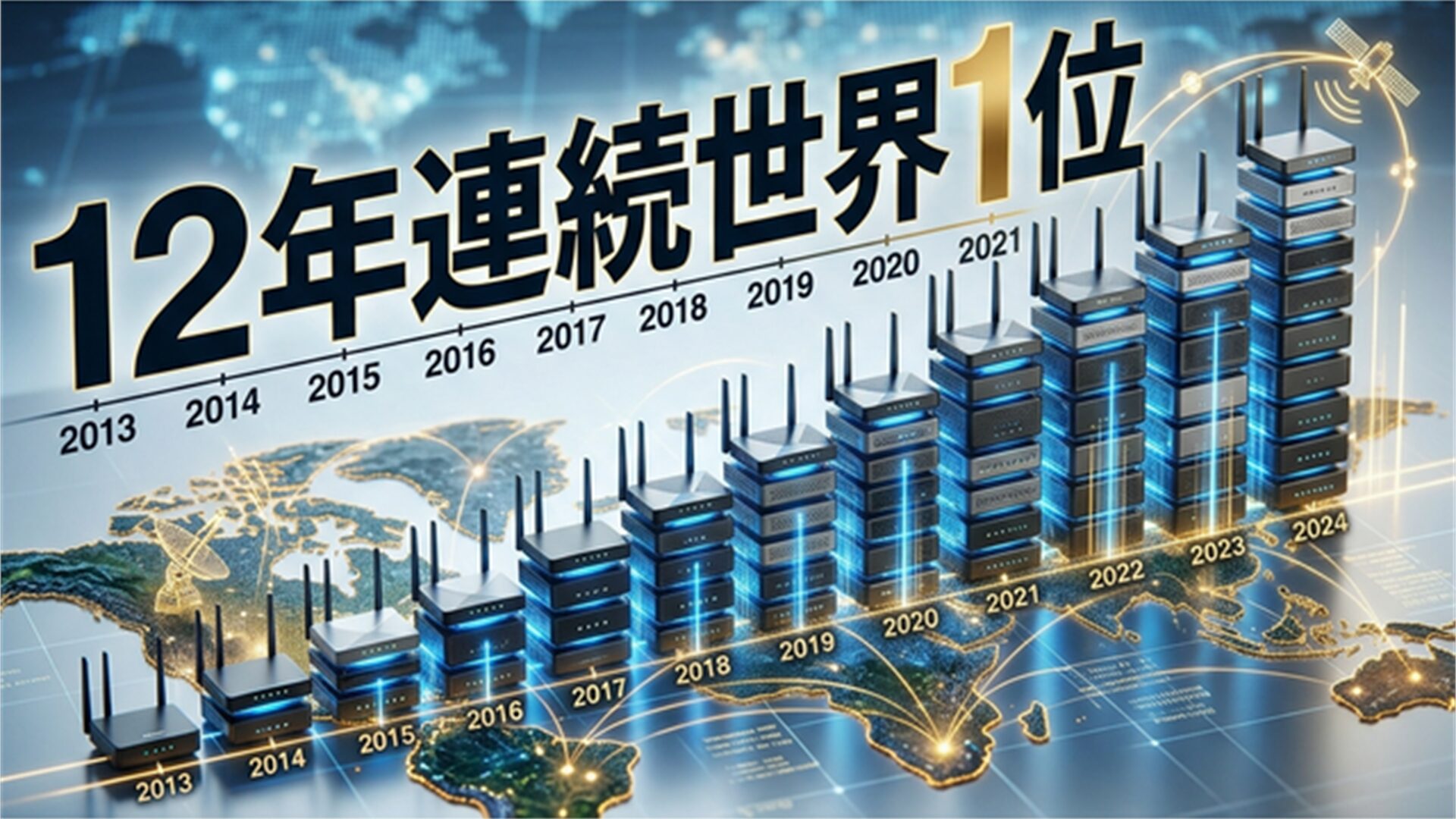
TP-Link’s biggest characteristic is that it has maintained No. 1 global market share in WLAN (wireless LAN) equipment over the long term.
According to reports from market research firm IDC (International Data Corporation), TP-Link has ranked first in global WLAN equipment shipment volume for 12 consecutive years (as of 2022). Regarding the US market, some reports (such as the Wall Street Journal) state that it accounts for approximately 60% to 65% of the home router market, whereas TP-Link denies this figure, maintaining that it holds “about 12% in the consumer segment.”
Furthermore, in the 2024 PCMag Readers’ Choice Awards, it won top ratings across all three categories: “Overall Routers,” “Standalone Routers,” and “Mesh Systems.”
Ms. GadgetRanked first for 12 consecutive years is truly an incredible achievement.
Mr. GadgetSince the data is based on official reports from market research firm IDC, it can be said to have high reliability. It holds an overwhelming presence, especially in the home router market.
TP-Link History and Reliability
We will examine TP-Link’s reliability through its journey to establishing a global position, as well as its technological capabilities and award history.
From Founding to Global Expansion
Organized chronologically, TP-Link’s history unfolds as follows:
| Year | Event |
|---|---|
| 1996 | Founders Zhao Jianjun and Zhao Jiaxing establish the company in Shenzhen. First product is a network card. |
| 1997 | Builds its own factory in Shenzhen. |
| 2005 | Begins global expansion. |
| 2007 | Establishes a 100,000-square-meter new headquarters in Shenzhen Hi-Tech Industry Park. |
| 2008 | Establishes TP-Link USA (US subsidiary) in Irvine, California. |
| 2015 | Establishes TP-Link Japan Inc. in Chiyoda-ku, Tokyo. |
| May 2024 | Announces the establishment of new global HQs in the US and Singapore. |
| October 2024 | Establishes TP-Link Systems Inc. (US) as the new global headquarters. Jeff Barney assumes the role of President. |
Ms. GadgetA major organizational change took place in 2024.
Mr. GadgetYes. TP-Link underwent a major corporate restructuring in 2024. TP-Link Systems Inc., which oversees global operations, was established in California, USA, with Jeff Barney appointed as President. Meanwhile, domestic Chinese operations are handled by TP-Link Technologies, led by Zhao Jiaxing, resulting in a dual-company structure.
As a key point to grasp when reading about this, the post-restructuring TP-Link is split into a US-based global enterprise and a business entity dedicated to the domestic Chinese market.
Core Product Lineup
TP-Link’s products are deployed under multiple brands tailored to different use cases.
| Brand | Category | Main Products |
|---|---|---|
| Archer | Home Wi-Fi Routers | Archer BE900 (Wi-Fi 7 flagship), Archer GE800 (Gaming) |
| Deco | Mesh Wi-Fi Systems | Deco BE95, Deco BE65 Pro, Deco BM65 (CES 2025 Award Winner) |
| Tapo | Smart Home | Security cameras, smart door locks (vein recognition supported), robot vacuums, smart lighting |
| Kasa | Smart Home (Legacy line) | Smart plugs, smart switches |
| Omada | Business-grade SDN | Access points, switches, VPN gateways, cloud management |
| VIGI | Surveillance Cameras (Business-grade) | NVRs, PoE cameras |
Ms. GadgetSo it’s not just Wi-Fi routers; they also have smart home and business products.
Mr. GadgetWhile TP-Link started as a network equipment manufacturer, in recent years it has actively expanded into the smart home sector, centering around the Tapo brand. At CES 2025, they announced numerous advanced products, such as vein-recognition smart door locks and AI-equipped surveillance cameras.
Notably, regarding Wi-Fi 7 compatibility, they introduced products early on in both routers (Archer) and mesh systems (Deco), and it is worth noting that they are actively leading the transition to next-generation standards.
Technological Capabilities and Awards

TP-Link’s technological capabilities are supported by international design awards and media evaluations.
| Award | Target Product / Details |
|---|---|
| CES 2025 Innovation Awards | Deco BM65 Tri-Band Mesh Wi-Fi 7 System |
| Red Dot Design Award | Archer BE900 / BE800 / BE700 (Recognized for V-shaped design) |
| iF Design Award 2022 | Archer AXE300 |
| iF Design Award 2021 | Deco Voice X20 |
| PCMag Readers’ Choice 2024 | Top ratings in 3 router categories |
| MyBroadband Award 2024/2025 | Best Networking Brand (2 consecutive years) |
Ms. GadgetThey have won a lot of design awards as well.
Mr. GadgetThe Red Dot and iF Design Awards are prestigious international accolades in the field of industrial design. Receiving high praise not only for functionality but also for design is one indicator of product refinement.
Summary: Is TP-Link Reliable?
TP-Link is one of the world’s largest networking equipment manufacturers, founded in Shenzhen, China in 1996. Their track record of IDC-certified No. 1 global WLAN equipment market share for 12 consecutive years demonstrates product quality and price competitiveness.
Ms. GadgetUltimately, can we consider TP-Link a manufacturer we can use with peace of mind?
Mr. GadgetFrom the perspective of product quality, track record, and awards, it is a highly reliable manufacturer. However, there is one fact that should be mentioned.
Regarding Regulatory Trends in the US
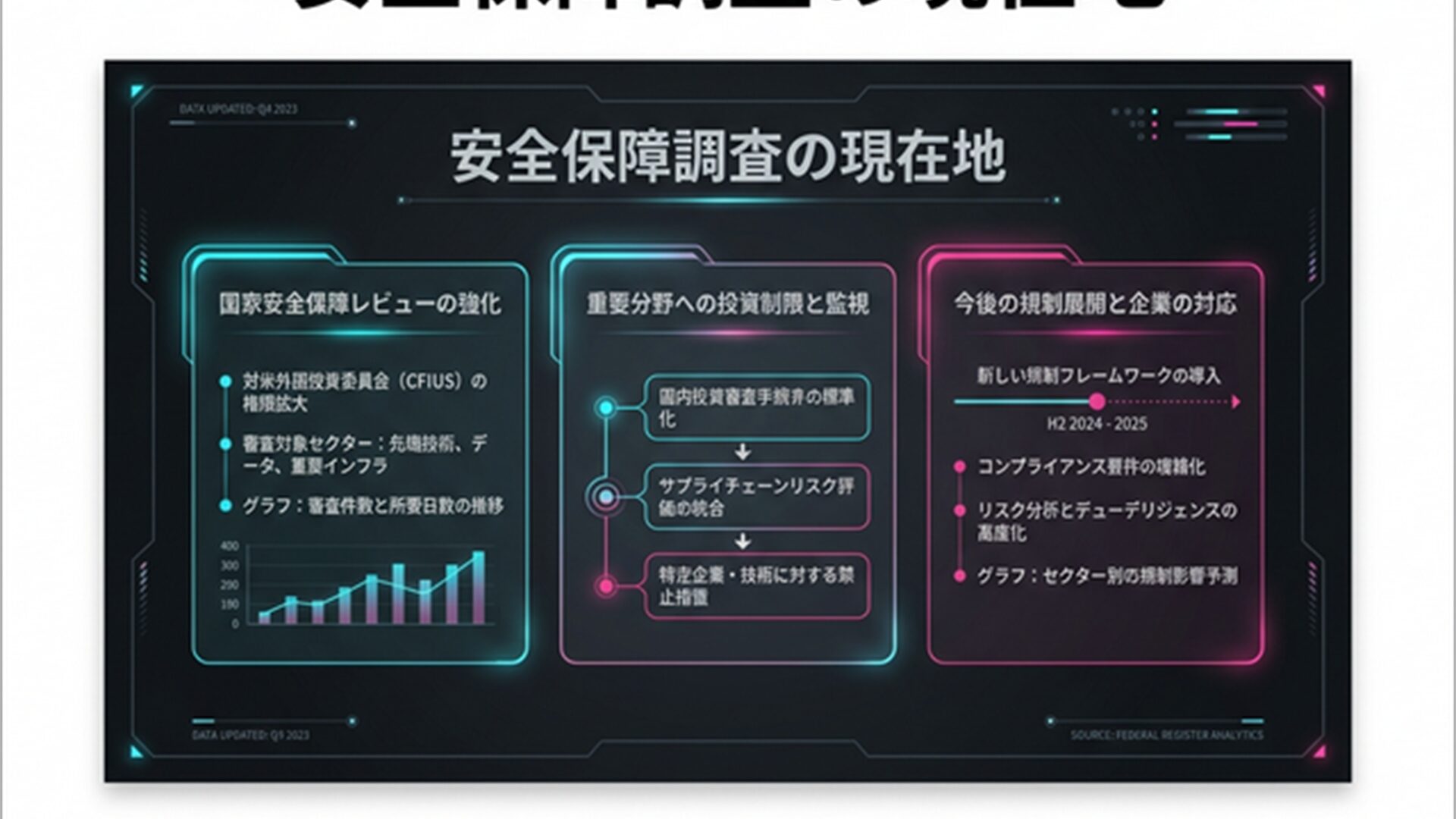
Beginning in 2024, multiple US government agencies have been conducting national security investigations into TP-Link products. This movement accelerated further from 2025 into 2026.
Developments in 2024:
- Security Vulnerability: In October 2024, Microsoft reported that state-sponsored Chinese hacker groups constructed a botnet (CovertNetwork-1658) exploiting TP-Link routers.
- Department of Commerce Investigation Initiated: The Department of Commerce issued subpoenas regarding TP-Link’s corporate structure and launched a national security investigation.
- Concerns Over Market Dominance: Concerns regarding reports that it accounts for approximately 60% to 65% of the US router market (denied by TP-Link, which maintains it holds “about 12% in the consumer segment”).
Developments in 2025–2026:
- Department of Justice (DOJ) Investigation: The DOJ initiated an investigation into allegations of predatory pricing by TP-Link, examining whether products were sold below cost to expand market share.
- Federal Sales Ban Proposal: In late 2025, reports indicated that over 6 federal agencies supported proposals to ban the sale of TP-Link products in the US.
- Texas State Lawsuit: On February 17, 2026, the Texas Attorney General filed a lawsuit against TP-Link Systems Inc., alleging that the company “falsely advertised product security” and “labeled products as ‘Made in Vietnam’ despite the majority of parts being manufactured in China.”
- Reports of Ban Postponement: In February 2026, PCMag reported that the Trump administration may have postponed TP-Link ban measures out of consideration for diplomatic relations with China.
TP-Link has consistently refuted these points. Specifically, they maintain that “TP-Link Systems Inc. is a US company and not under the influence of the Chinese government” and that “security measures meet industry standards,” signing CISA’s (Cybersecurity and Infrastructure Security Agency) “Secure by Design” pledge in February 2025.
This article does not conclude whether this issue makes the products “dangerous” or “safe.” However, federal-level investigations and state-level lawsuits are proceeding simultaneously, and depending on future developments, handling of TP-Link products in the US may be affected. When considering TP-Link products, we recommend keeping a close eye on these trends.
Ms. GadgetI see. Regulation has progressed quite a bit.
Mr. GadgetYes. While product quality and track records are solid, investigations and lawsuits are underway at both the federal and state levels in the US. However, there are no such regulatory movements in the Japanese market at this time. When choosing products, it is best to make your decision after checking the latest trends.
Key Takeaways from This Article!
- TP-Link is a networking equipment manufacturer originating from Shenzhen, China.
- IDC-certified No. 1 global WLAN equipment market share for 12 consecutive years.
- Numerous international awards including CES, Red Dot, and iF Design.
- Established a new global headquarters in the US in 2024.
- Investigations and lawsuits are ongoing at the federal and state levels in the US (as of March 2026).
Thank you for reading until the end!
- The evaluation in this article is unique to this site.
- Unless otherwise specified, product prices and information are current as of the time of writing.
- Please note that this site cannot be held responsible for any inaccuracies in this information.
- Product and service names mentioned on this site are trademarks of their respective companies.
This article was originally written in Japanese and has been translated.
Comments