

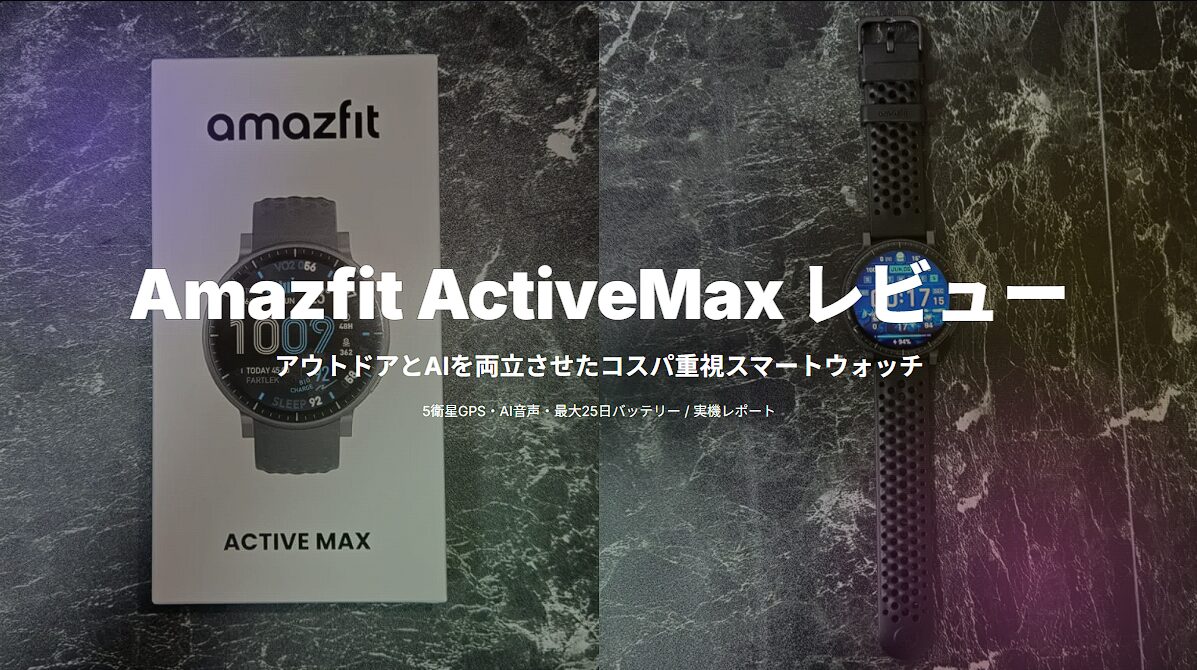
The Amazfit ActiveMax, released by Zepp Health Corporation in January 2026, is an ambitious model that highlights “Five MAX” features within the company’s smartwatch lineup. It packs a 1.5-inch AMOLED display, 5-satellite GPS, AI-powered voice control, and up to 25 days of battery life into a single device. Zepp Health Corporation provided this product for review, and I have tested it through actual daily use.
In this article, I will provide a detailed report on the Amazfit ActiveMax, covering everything from its design and operation to Zepp Flow AI, ski map features, and battery life. I will also provide an honest assessment of who this model is best suited for.
What you’ll learn in this article:
- Full specifications of the Amazfit ActiveMax and the power of its “Five MAX” features
- Actual visibility of the 1.5-inch AMOLED (3,000 nits) display
- The level of refinement in Zepp Flow AI voice control
- Usability of the 5-satellite GPS and ski map features (covering 10,000 locations worldwide)
- Real-world experience with the up to 25-day battery life
- Honest look at concerns, such as the lack of Suica support
Overall Evaluation of the Amazfit ActiveMax
What kind of smartwatch is the Amazfit ActiveMax?
In short, it is a “cost-effective, multi-functional smartwatch that balances outdoor capabilities with AI.”
The Amazfit ActiveMax is a smartwatch released by Zepp Health Corporation on January 21, 2026. The “MAX” in the product name refers to the “Five MAX” features, representing upgrades in five key areas: large screen, high brightness, large battery capacity, large storage capacity, and AI operability.
In actual use, the 1.5-inch AMOLED display is expansive, making it exceptionally easy to check information outdoors. The UI and operability, running on Zepp OS 5.5, are also refined, allowing even those unfamiliar with smartwatches to start using it intuitively.
Amazfit ActiveMax Specifications
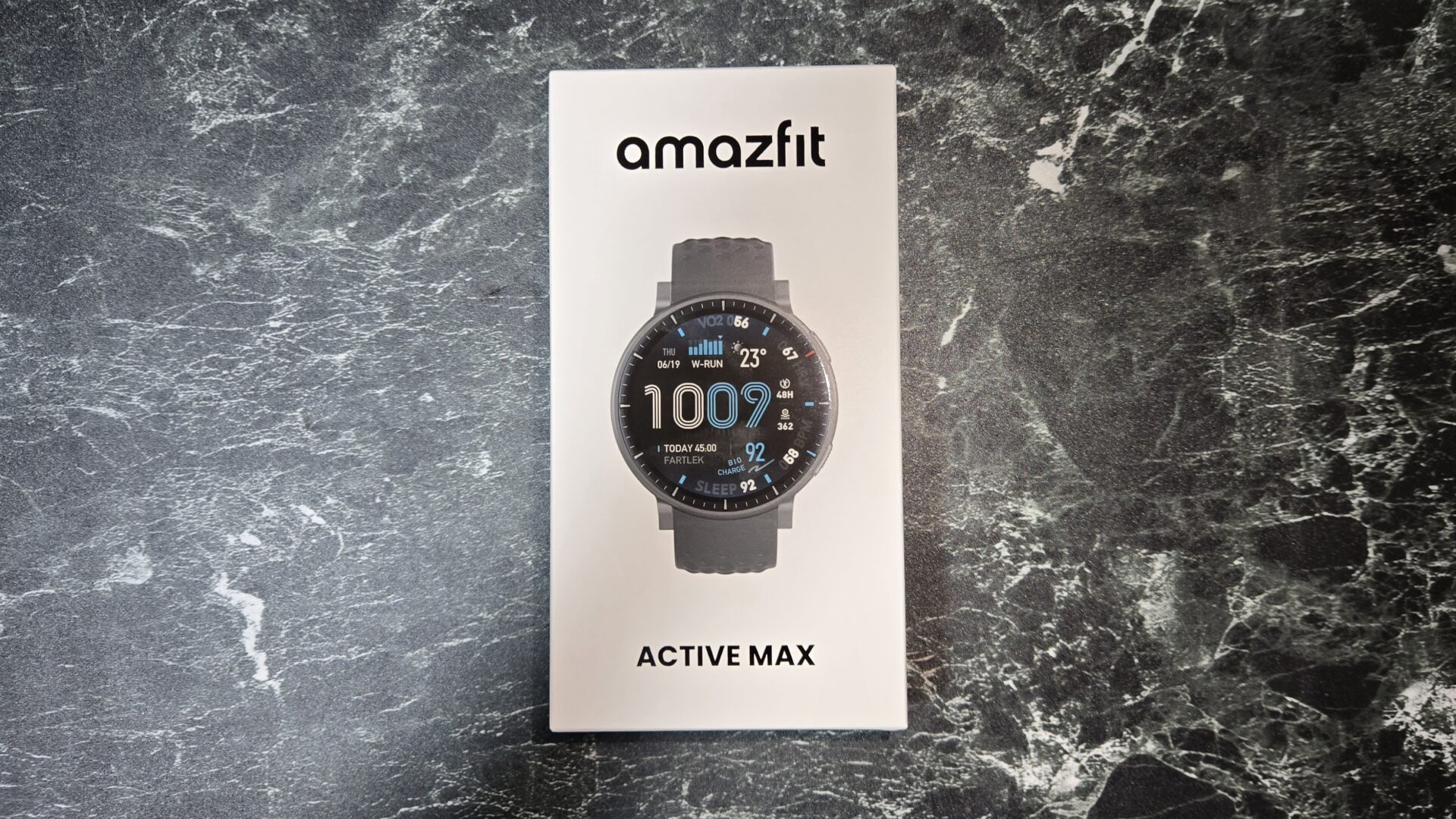
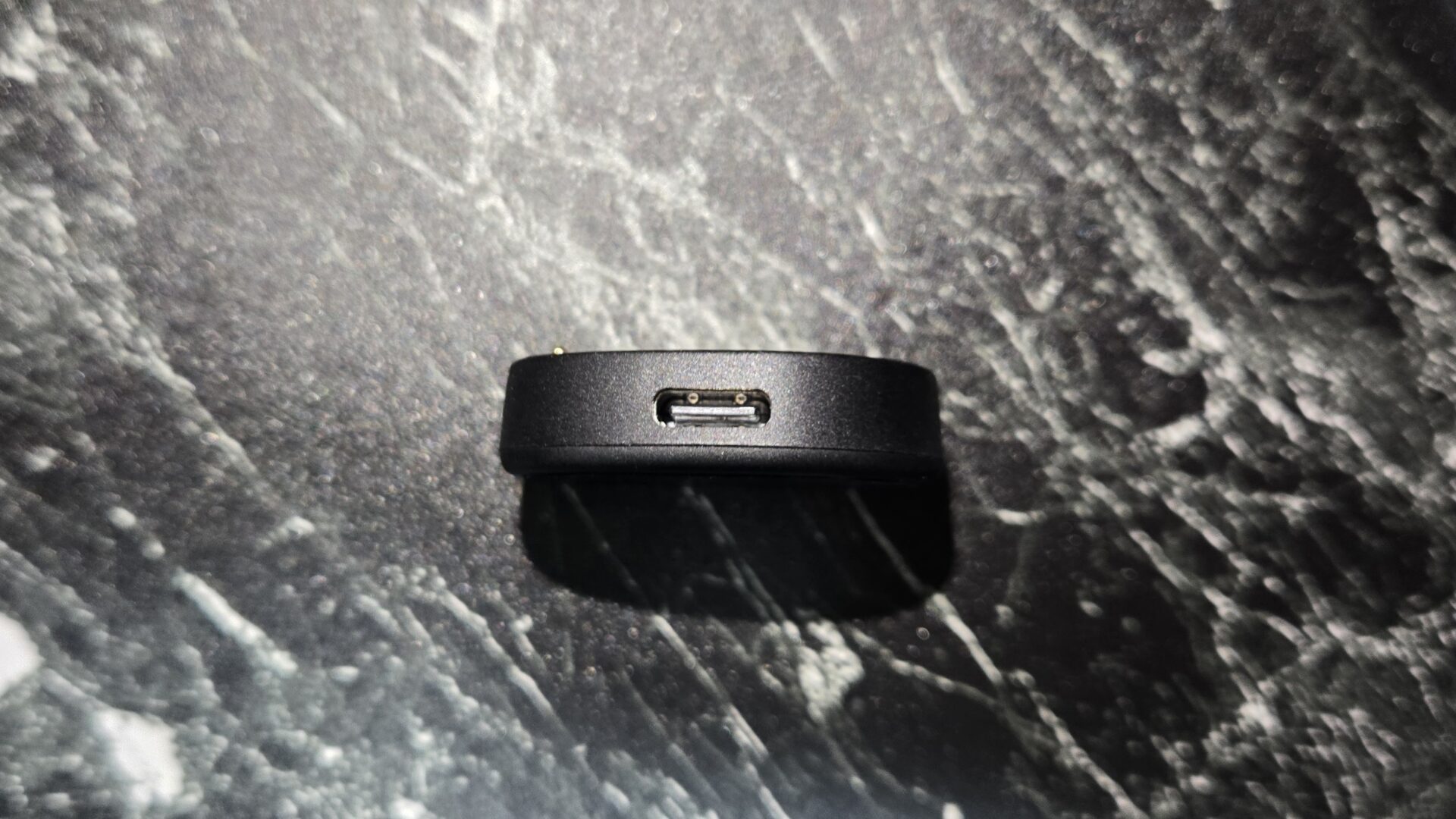
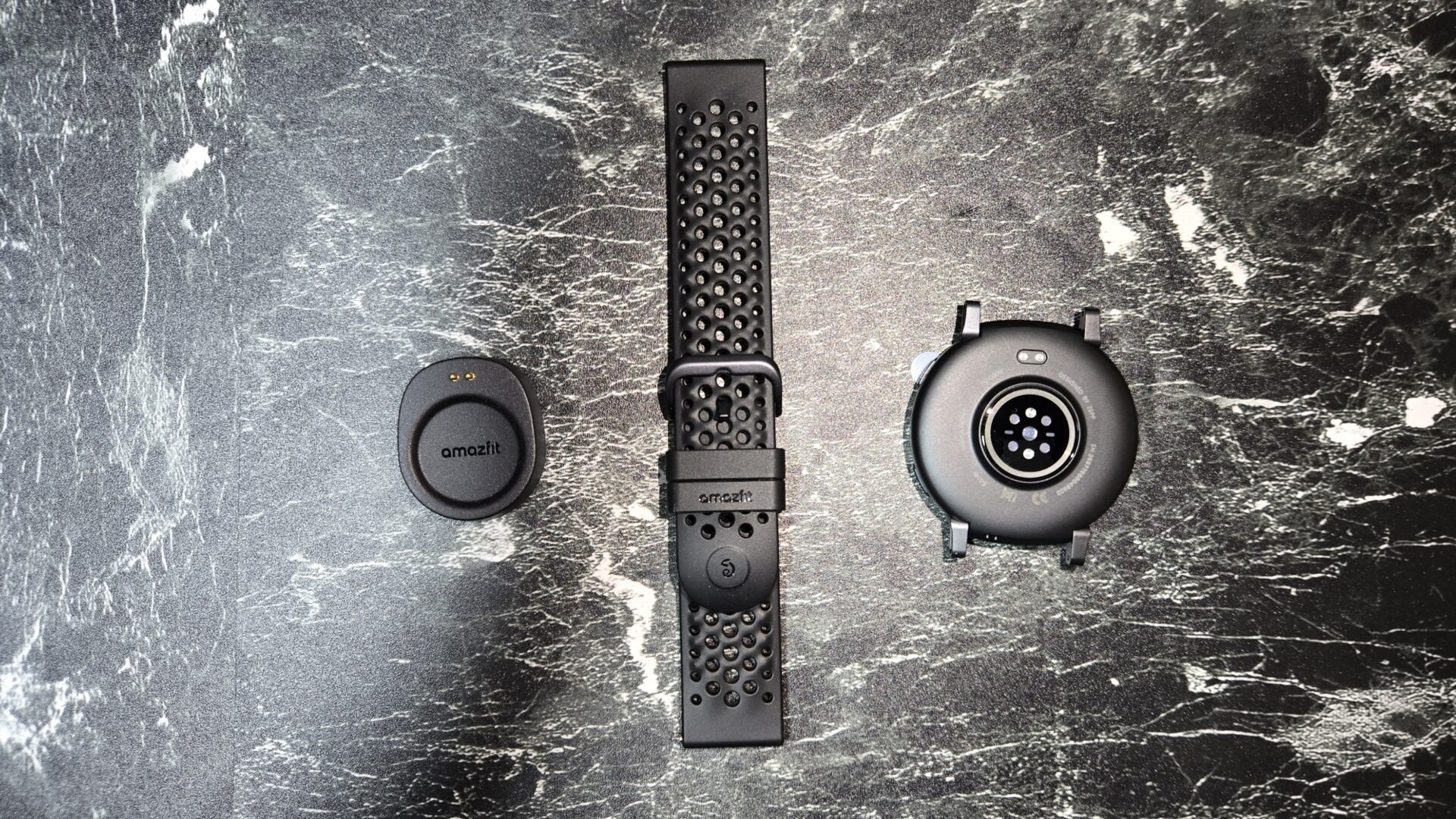
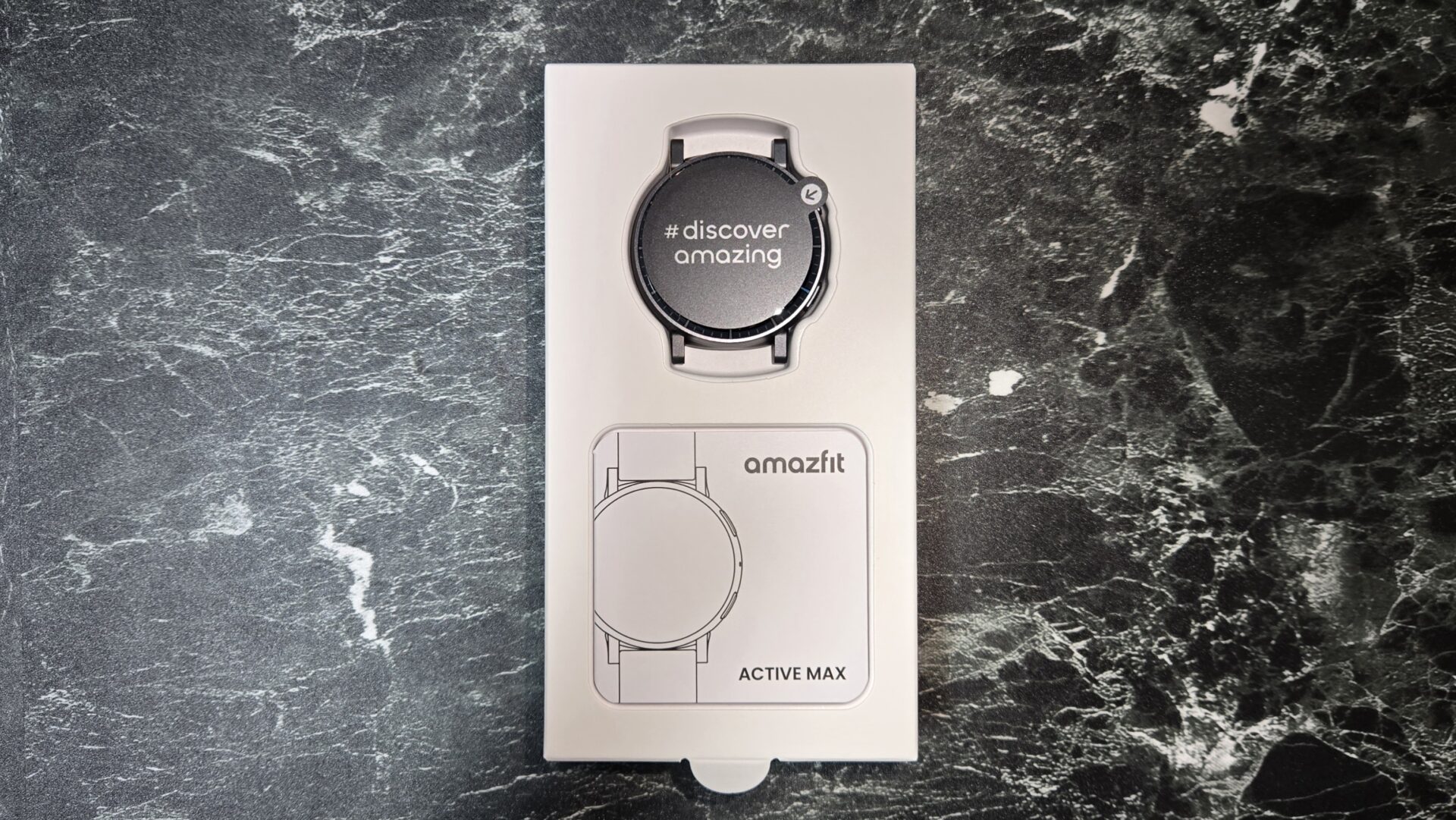
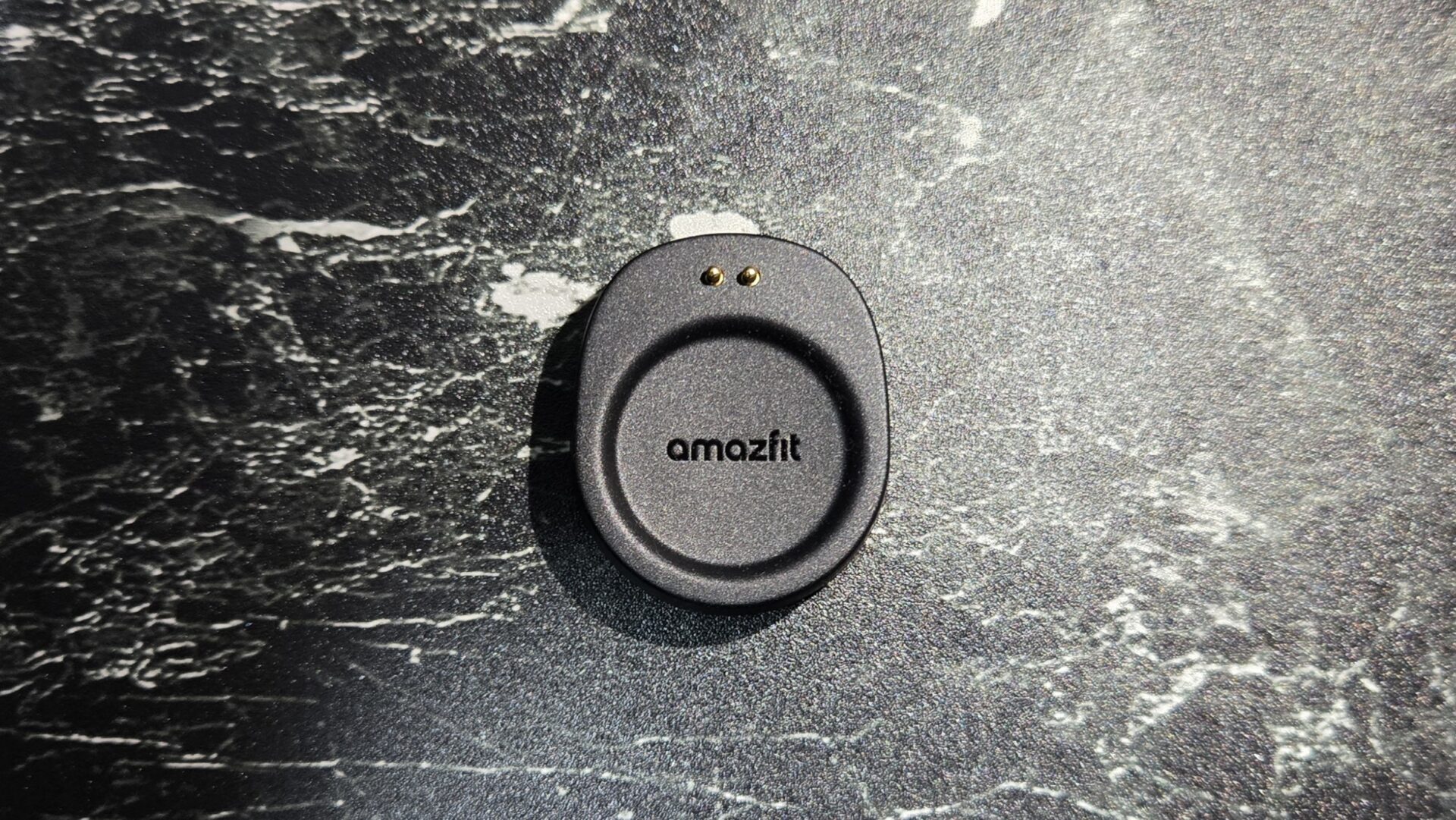
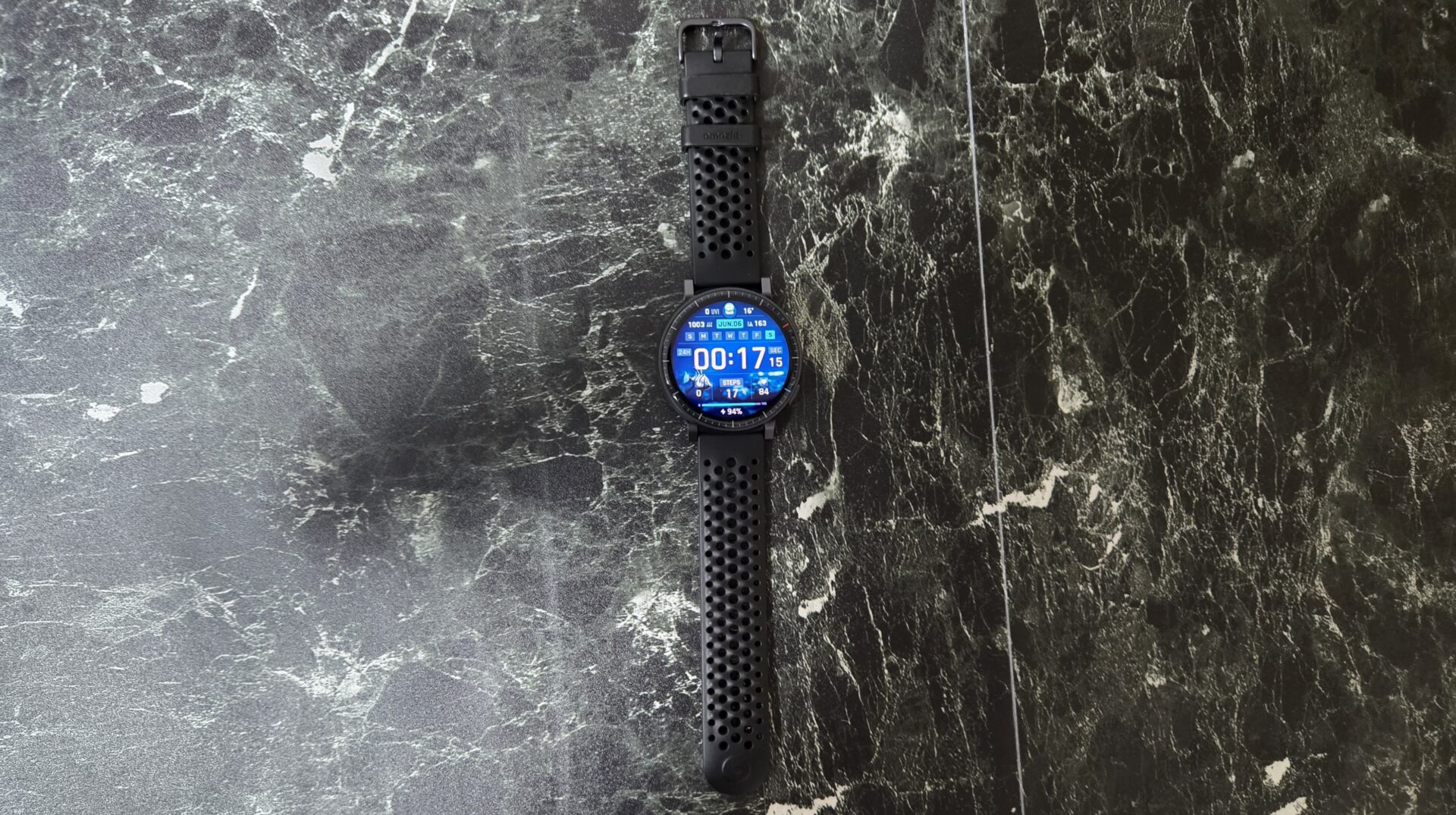
There are so many numbers in the specs that I don’t know what to look at. What are the key points?
First, pay attention to the “Number of GPS satellites (5 satellites)” and the “Battery capacity (658mAh).” 5-satellite support is directly linked to GPS accuracy and acquisition speed, while the large 658mAh battery is what makes the 25-day battery life possible.
Amazfit ActiveMax Full Specification List (Click to expand)
| Item | Specification |
|---|---|
| Display | 1.5-inch HD AMOLED / 480×480 / 323 PPI / Max brightness 3,000 nits |
| Protection Glass | Tempered glass |
| OS | Zepp OS 5.5 |
| GPS | GPS / GLONASS / Galileo / BDS / QZSS (5 satellites) / Circularly-polarized GPS antenna |
| Sensors | BioTracker™ 6.0 PPG / Acceleration / Gyro / Barometric altimeter / Geomagnetic / Temperature / Ambient light |
| Battery | 658mAh / 25 days typical use / 13 days heavy use / 64 hours GPS |
| Charging | Magnetic / approx. 2 hours |
| Water Resistance | 5ATM (ISO 22810:2010) |
| Dimensions | approx. 48.5×48.5×12.2mm |
| Weight | approx. 56g (with band) / approx. 39.5g (without band) |
| Body Material | Aluminum alloy + fiber-reinforced resin |
| Band | Silicone 22mm / 135–210mm / Classic pin buckle (Quick-release compatible) |
| Bluetooth | 5.3 BLE |
| Storage | 4GB (512MB for music) |
| Sports Modes | 170+ / 8 types auto-recognized |
| Watch Faces | 400+ |
| Buttons | 2 |
| Compatible OS | Android 7.0+ / iOS 14.0+ |
| AI | Zepp Flow (GPT-4o integrated) / Hands-free calling supported |
Amazfit ActiveMax Review and Usage Experience
How was it to actually use? Please give me your honest impressions.
Overall, my impression is that it “achieves a great balance between functionality and ease of use.” Let’s take a closer look at each feature.
Design and Build Quality
The case of the Amazfit ActiveMax is a combination of aluminum alloy and fiber-reinforced resin. Viewed from the front, it has a round form with a diameter of about 48.5mm, giving it a calm, understated design that has a presence without being overly flashy.
Two physical buttons are mounted on the side. Operation is a combination of touch and buttons, allowing for control even when wearing gloves or in outdoor environments.
The body color is available only in black. The silicone band fits wrist sizes from 135 to 210mm. The 22mm quick-release mechanism makes it easy to swap for third-party 22mm bands.
Display (1.5-inch AMOLED, 3,000 nits)
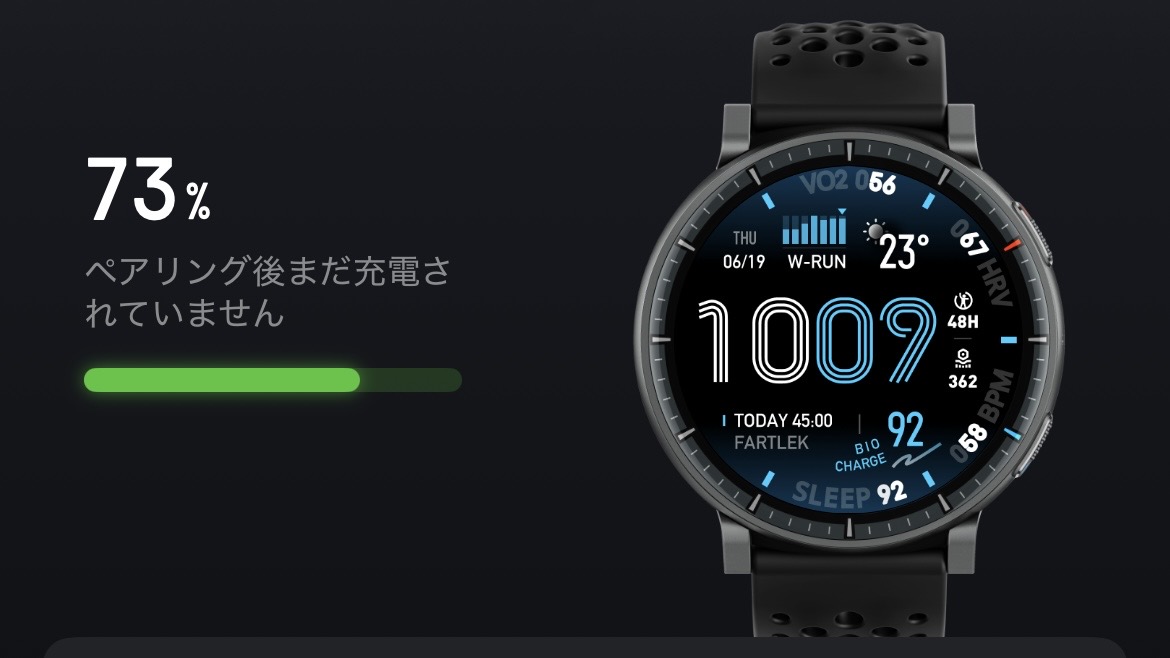
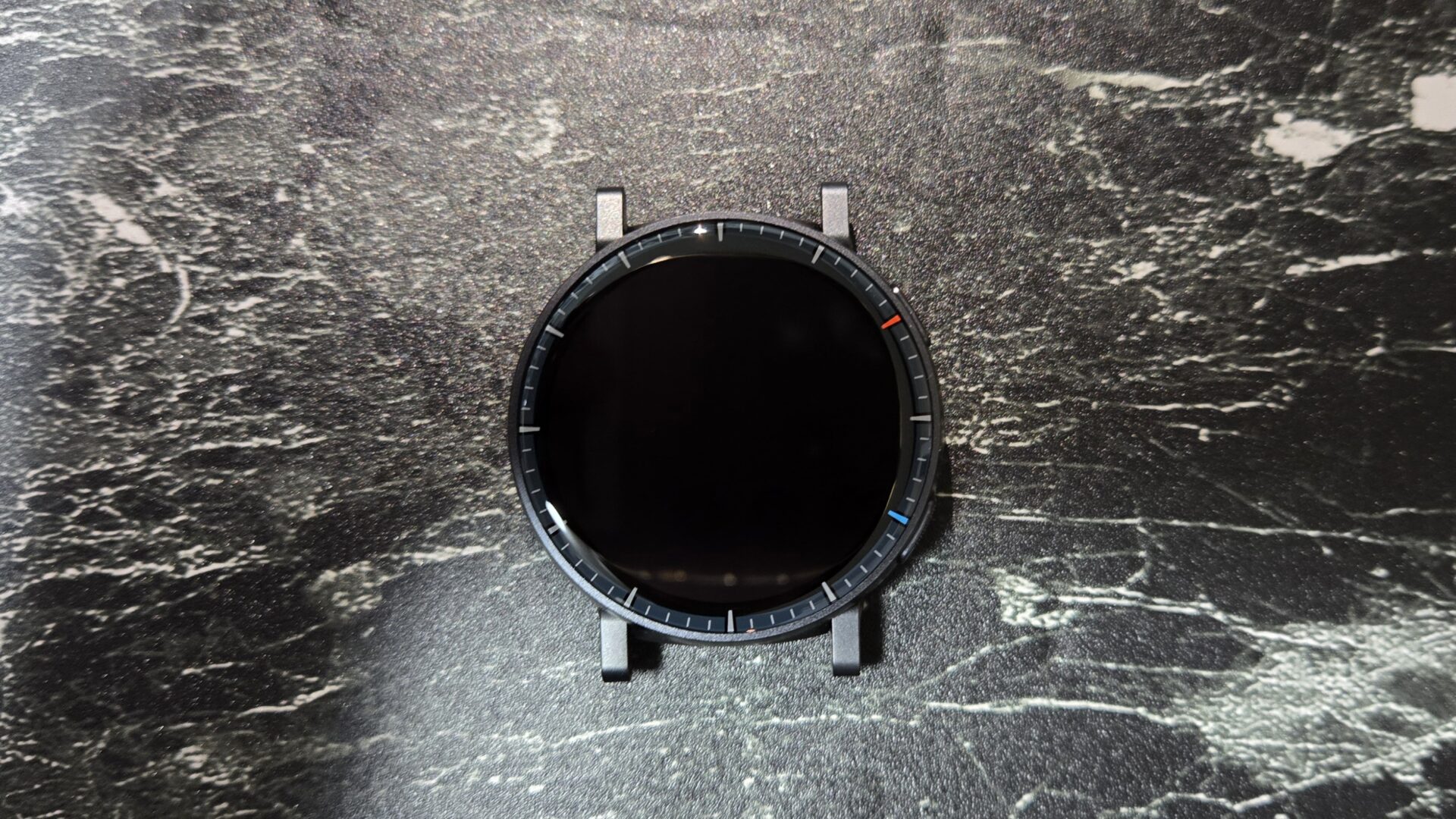
I honestly don’t know if 1.5 inches is big or small…
1.5 inches falls into the “slightly larger” category. It’s a practical size that makes it easier to read maps and notification text.
The 480×480 resolution and 323 PPI are directly linked to the sharpness of the text. In actual display, fine text is rendered without jagged edges, making it easy to read even with a quick glance during sports.
Notably, it features a peak brightness of 3,000 nits (up to 2,000 nits in auto-brightness mode). This ensures sufficient visibility even outdoors under direct sunlight. It also includes auto-brightness adjustment, which automatically dims the screen indoors to reduce eye strain.
Operability, Zepp OS, and AI Voice Control “Zepp Flow”
Zepp OS 5.5 has a simple layout that allows access to widgets, notifications, and quick settings via swipe gestures from the home screen. The app list can be toggled between list and grid views, and the 170+ sports modes are well-organized, allowing you to find the mode you need quickly.
Zepp Flow is an AI voice assistant feature integrated with GPT-4o. You can operate it hands-free using the built-in speaker and microphone, responding to natural language queries such as “What’s the weather today?” or “Show me my running record.” While Japanese recognition accuracy varies depending on the environment and how you speak, it generally works as intended for short commands.
It’s amazing that GPT-4o is inside a watch. In what situations do you actually use it?
It proves its worth in situations where it’s difficult to take out your smartphone, such as while cooking, driving, or at the gym. Its primary use is for issuing short verbal instructions like “Set a 3-minute timer” or “Record my heart rate.” I found it more useful for simple operational commands rather than complex questions.
Health and Fitness Features (BioCharge™, Heart Rate, SpO2)
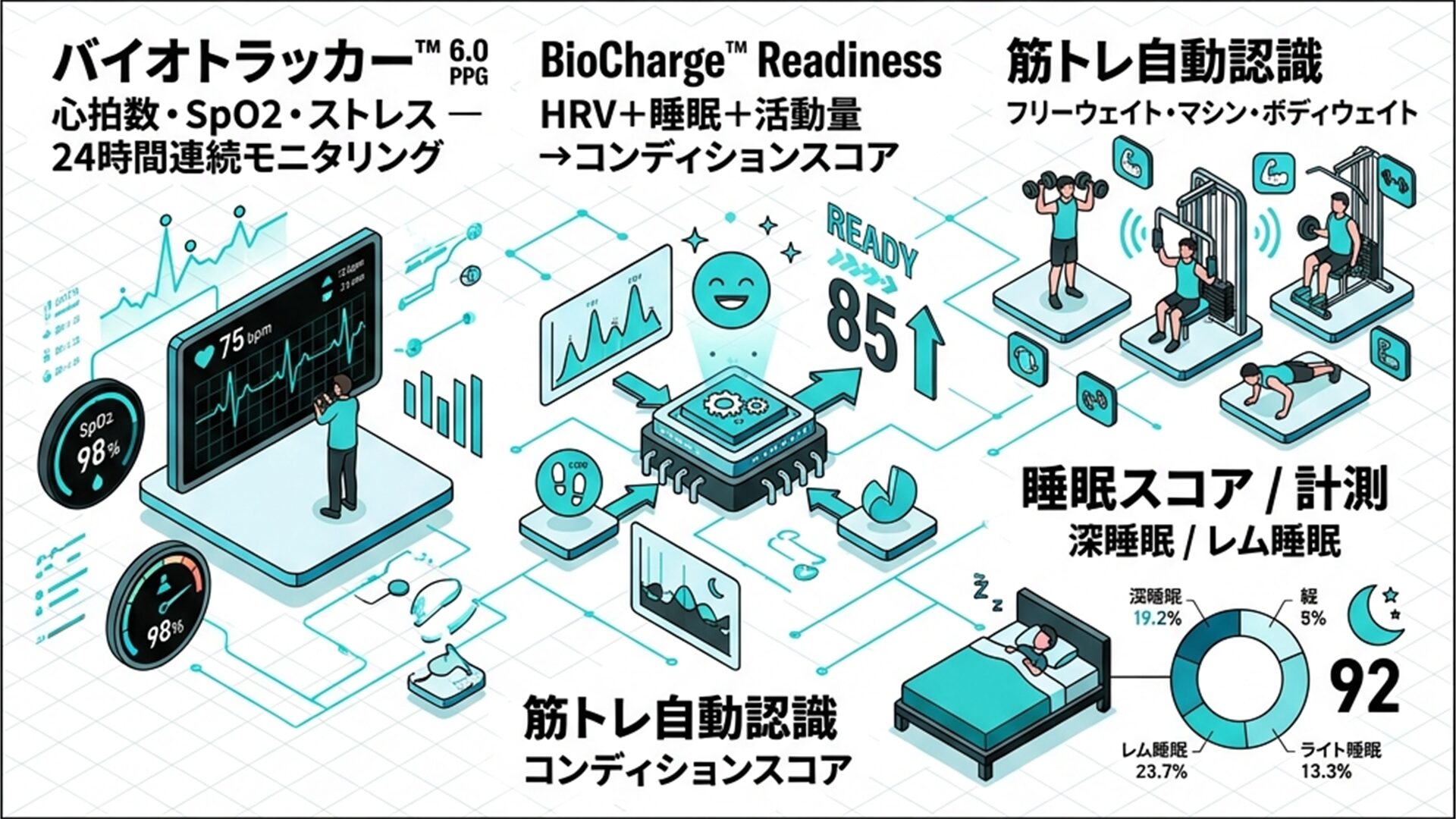
The core of the health sensors is the BioTracker™ 6.0 PPG sensor, which supports 24-hour continuous heart rate, blood oxygen level (SpO2), and stress level monitoring. It is also capable of measuring sleep scores, deep sleep, and REM sleep.
Strength training tracking has also been enhanced, automatically recognizing 25 types of exercises to record sets, reps, and rest times. This is a practical feature for gym users.
How accurate is the blood oxygen level (SpO2) reading?
Since this is not a medical device, the goal is to “grasp trends” rather than get exact clinical numbers. By measuring under the same conditions (at rest, using the same finger) every day, it is well-suited for tracking changes from your baseline value.
GPS Accuracy, 5-Satellite Support, and Ski Maps (10,000 locations worldwide)
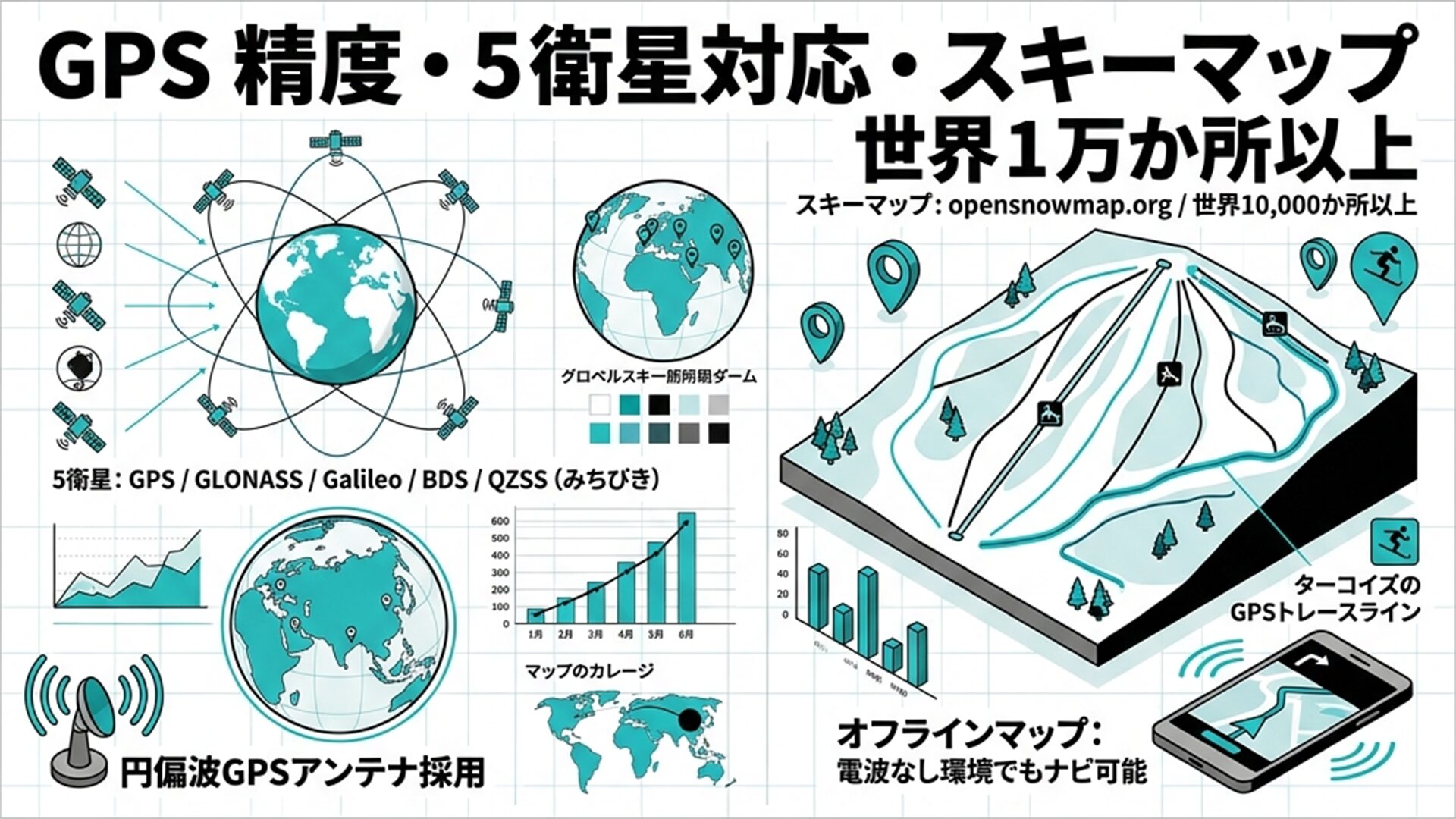
In addition to 5-satellite systems (GPS, GLONASS, Galileo, BDS, and QZSS), the GPS employs a circularly-polarized GPS antenna. It is designed to easily acquire satellite signals even in urban areas with building shadows or among trees.
In practice, the initial GPS acquisition speed outdoors is fast, and the track recording during running or cycling has little deviation from the actual route, making it reliable in terms of accuracy.
The offline map feature, which utilizes the 4GB of storage, is another highlight. By downloading map data in advance, you can use navigation even in the mountains without a cellular signal. The ski maps are based on data from opensnowmap.org and cover over 10,000 ski resorts worldwide.
Battery Life (Up to 25 days, 64 hours continuous GPS)

The nominal figures are up to 25 days for typical use, up to 13 days for heavy use (continuous heart rate monitoring + many notifications), and up to 64 hours in GPS mode.
In actual use, even with continuous heart rate and sleep tracking ON and smartphone notifications ON, I was able to operate it with a charging frequency of once every 1 to 2 weeks. The low charging frequency is a major advantage.
Charging is magnetic; you simply attach the dedicated cable to the back of the case. Charging takes about 2 hours, which is a realistic timeframe to go from 0% to 100%.
I have the image that GPS drains the battery, but is 64 hours really that long?
It is. Even if you run a full marathon (about 4–5 hours) every single day, it is equivalent to 12–16 days of continuous GPS use. These figures are sufficient to handle ultra-marathons or multi-day hiking and skiing trips.
Speaker, Microphone, and Podcast Features
The Amazfit ActiveMax supports voice control and hands-free calling. While connected to your smartphone via Bluetooth, you can answer incoming calls using only the watch.
The podcast feature is provided via software update, allowing you to play episodes saved on the 4GB storage through Bluetooth-connected earphones without needing your smartphone. This is a handy feature for situations where you don’t want to carry an extra device while running.
Regarding Suica and Payment Features
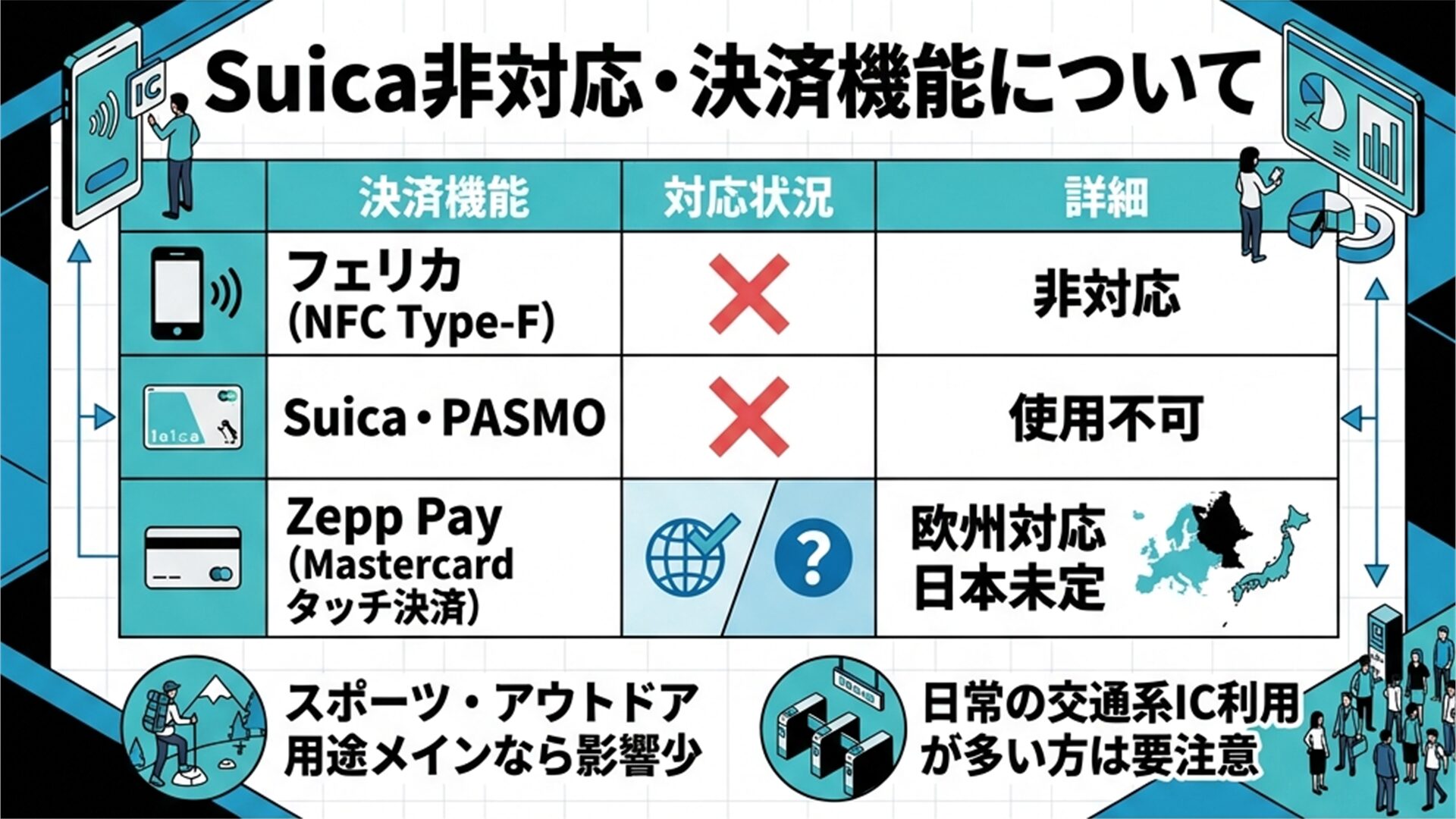
Can’t I use Suica or PASMO? That sounds inconvenient…
It does not support FeliCa (NFC Type-F) in Japan. As the Amazfit is a global model, it is difficult to support Japan-specific standards. While it supports Zepp Pay (Mastercard contactless payment) in Europe, the launch date for Japan is undecided. Those who use Suica on a daily basis should keep this in mind.
For those living primarily around transit IC cards, the lack of Suica support is something to be aware of before purchasing. However, if you are using it mainly for sports or outdoor purposes, this point has almost no impact. Please keep in mind that it is not suited for those who want to complete daily contactless payments using their smartwatch.
App Integration (Zepp App)
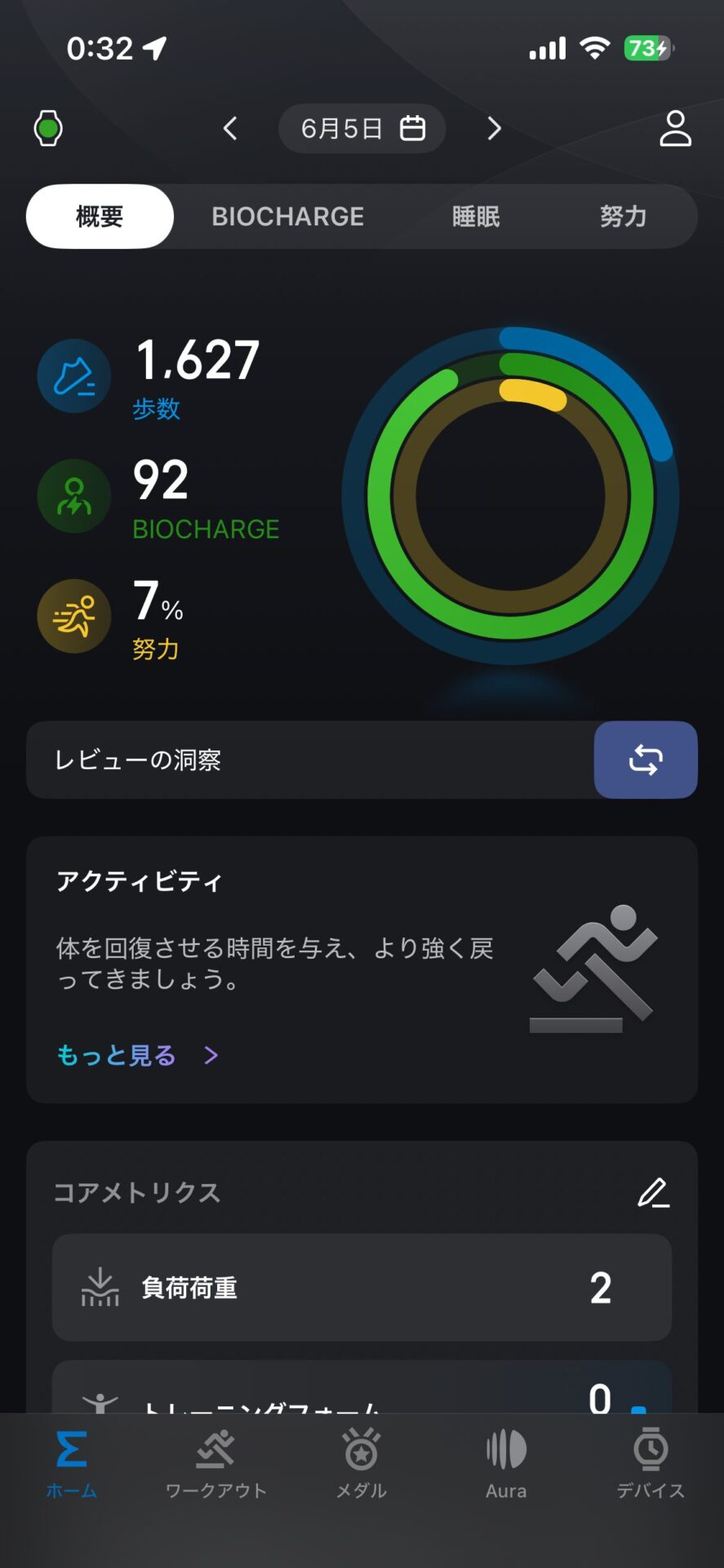
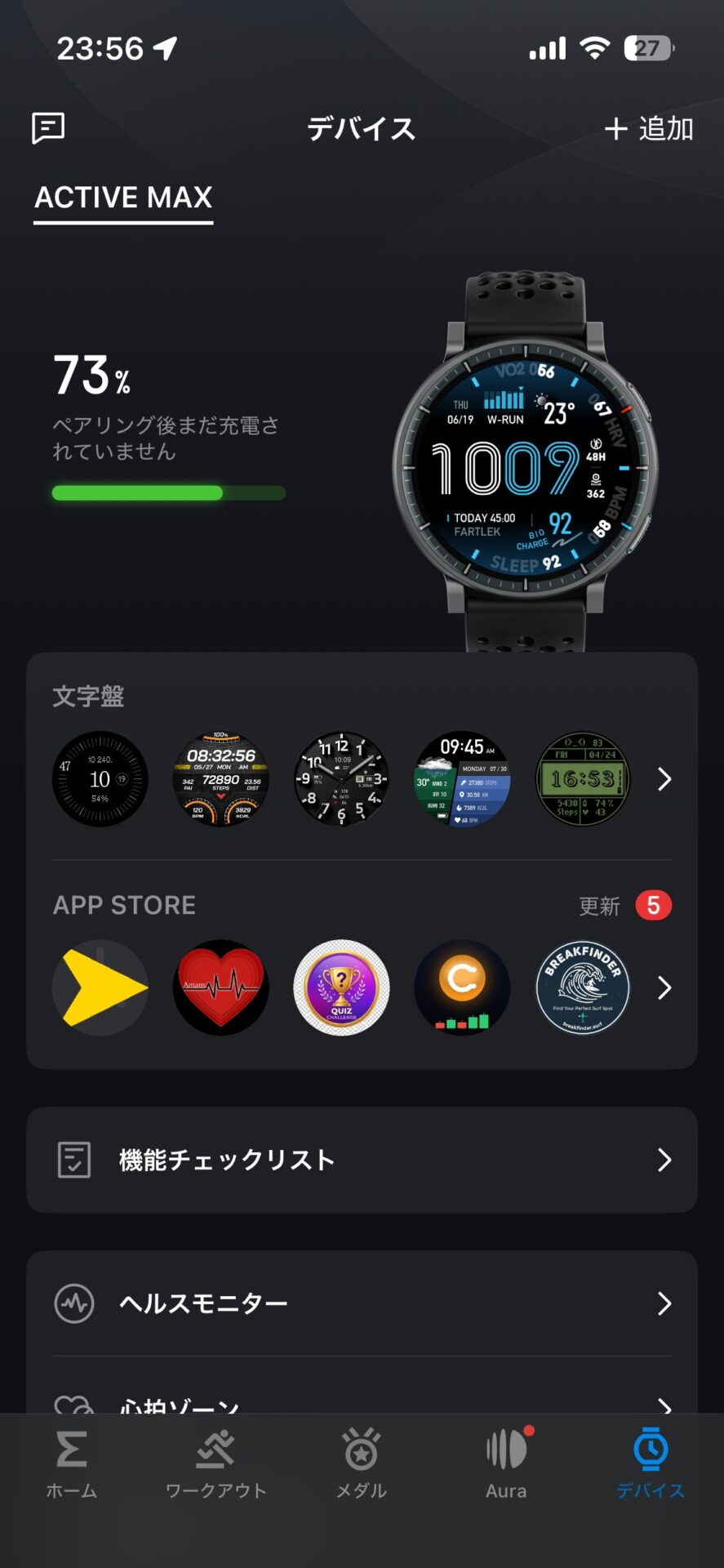
Integration with your smartphone is done via the Zepp App. It supports Android 7.0+ and iOS 14.0+, so it can be used without issues on almost any modern smartphone.
In the Zepp App, you can check detailed health data, review sports records, customize watch faces, and add apps. The UI supports Japanese, and the settings menu is intuitive to operate.
Summary
The Amazfit ActiveMax is a “Cost-Effective Smartwatch Combining Outdoor Capabilities and AI”
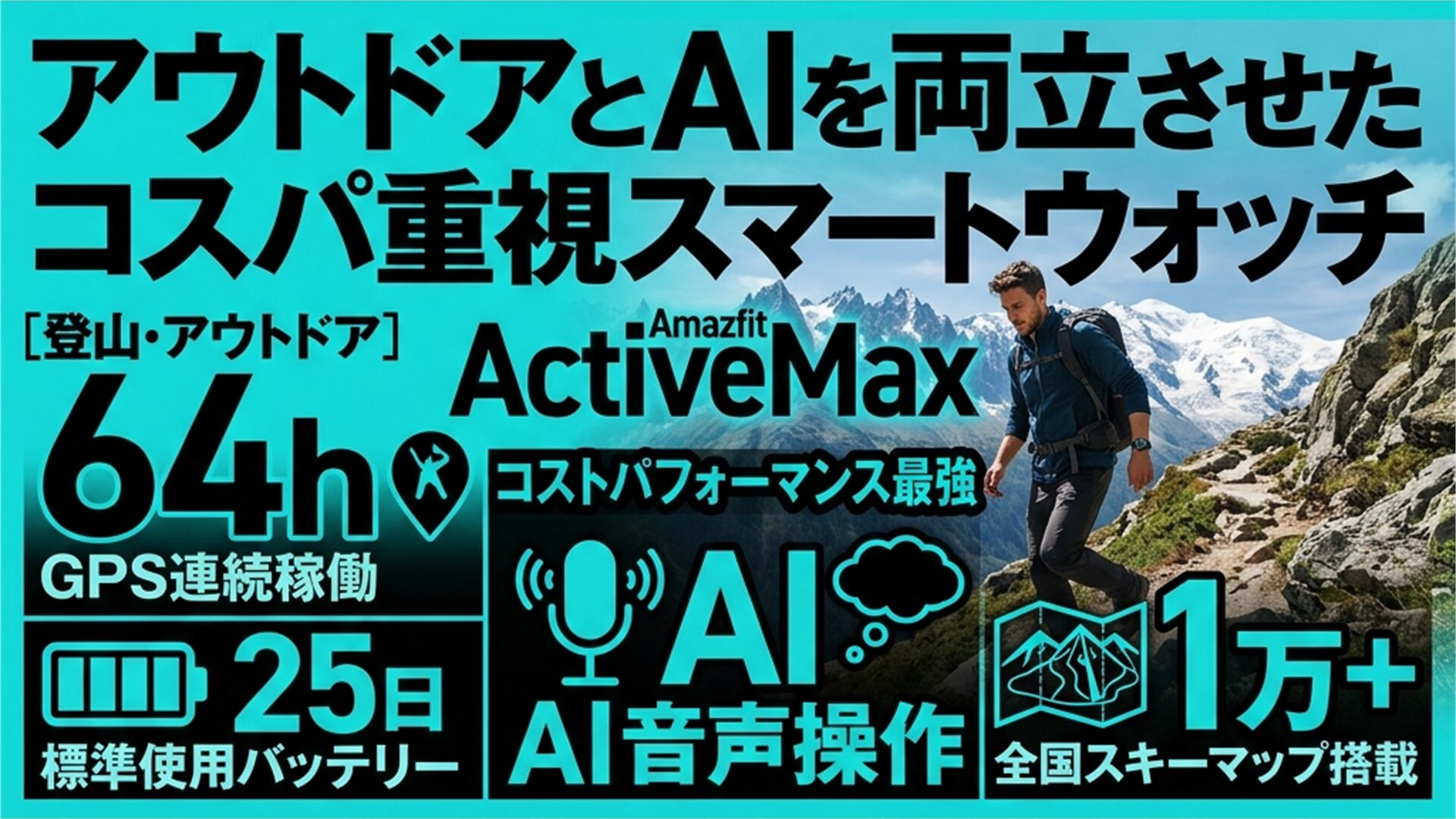
The Amazfit ActiveMax features “Five MAX” highlights: 1.5-inch AMOLED (3,000 nits), 5-satellite GPS, 658mAh battery, 4GB storage, and Zepp Flow AI voice control, covering a wide range of needs from sports users to everyday use.
Its greatest strength is the “combination of 64 hours of continuous GPS and up to 25 days of battery life,” providing peace of mind to keep using it without worrying about charging during outdoor, sports, and travel scenes. The 10,000+ ski maps and offline navigation are practical points of differentiation for users with an active lifestyle.
On the other hand, the lack of Suica/PASMO support, 512MB of dedicated music storage, and 56g weight (including band) may be points of concern depending on your usage. If your priority is to “pass through ticket gates using a smartwatch with a transit IC card” or “minimize the load on your wrist,” I recommend checking these points before purchasing.
Pros and Cons of the Amazfit ActiveMax
Having looked at each feature, let’s summarize the pros and cons once again.
Recommended For:
- Those who want to use a smartwatch for outdoor activities, skiing, and mountain climbing
- Those who prioritize GPS accuracy for running and cycling
- Those who want to reduce the hassle of charging and use it on a once-a-week or every-two-weeks basis
- Those who want to try the latest features like AI voice control and podcast playback
- Those who want to customize it like a traditional watch using 22mm bands
コメント