
You may have seen Xiaomi smartphones and home appliances more frequently, but many people have likely wondered, “Which country is this manufacturer from?” or “Is it safe to trust them?”
In this article, we will explain in detail everything from Xiaomi’s headquarters and company size to its unique business model and its 15-year journey from founding to the present day.
What you will learn in this article!
- Which country the Xiaomi brand is from
- Company overview and unique business model
- History from founding to today and brand reliability
- Business expansion beyond smartphones (EVs and IoT)
 Ms.ガジェット
I hear that Xiaomi smartphones have great cost-performance, but which country is the brand actually from?
 Mr.ガジェット
Xiaomi is a technology company headquartered in Beijing, China. It is a massive corporation that ranks third in global smartphone market share and is included in the Fortune Global 500.

Conclusion: Xiaomi is a Chinese Company

Xiaomi is a technology brand headquartered in Haidian District, Beijing, China. The official name is “Xiaomi Corporation,” and it was founded on April 6, 2010, by Lei Jun and six co-founders. Founder Lei Jun is a serial entrepreneur who launched the smartphone business after serving as CEO of Kingsoft.
The company was listed on the Hong Kong Stock Exchange (HKEX) on July 9, 2018 (Stock Code: 1810), ensuring management transparency as a publicly traded company. In fiscal year 2024, revenue reached RMB 365.9 billion (approximately 7.7 trillion yen), and the company employs approximately 43,700 people.
Ms.ガジェットRevenue exceeding 7 trillion yen is a significant scale.
Mr.ガジェットYes. Xiaomi has been named to the Fortune Global 500 (the world’s 500 largest companies by revenue) for seven consecutive years, ranking 297th in 2025. In terms of scale, it is comparable to companies like Panasonic or Sony in Japan.
The Japanese subsidiary, “Xiaomi Technology Japan Co., Ltd.,” was established in February 2020 and is based in Akasaka, Minato-ku, Tokyo. Their products are widely available at Amazon and major electronics retailers (such as Yodobashi Camera and Bic Camera), and they have established physical retail presence and customer support.
| Item | Details |
|---|---|
| Brand Name | Xiaomi |
| Official Corporate Name | Xiaomi Corporation |
| Date of Establishment | April 6, 2010 |
| Founders | Lei Jun and 7 others |
| Headquarters Location | Haidian District, Beijing, China |
| Japanese Subsidiary | Xiaomi Technology Japan Co., Ltd. (Akasaka, Minato-ku, Tokyo) |
| Stock Exchange | Hong Kong Stock Exchange (HKEX: 1810) |
| Number of Employees | Approx. 43,700 (2024) |
| 2024 Revenue | RMB 365.9 billion (approx. 7.7 trillion yen) |
| Fortune Global 500 | 297th (2025) |
| Global Smartphone Market Share | 3rd (13.6%, 2024) |
| Core Products | Smartphones, IoT appliances, EVs |
Ms.ガジェットSo they are a publicly traded company. Can I see their annual reports?
Mr.ガジェットYes. Because they are listed on the HKEX, financial statements and management information are made public. If you are interested, you can access them via the Xiaomi investor relations page.
Xiaomi’s Company Overview and Technical Capability
The reason Xiaomi has gained global support lies in its clear corporate philosophy of “providing high-quality products at affordable prices.” It is also characterized by having an enthusiastic fan community worldwide known as “Mi Fans,” and a stance of actively reflecting user feedback in product development. Here, we will explain their product lineup, business model, and proprietary technologies.
Xiaomi’s Product Lineup
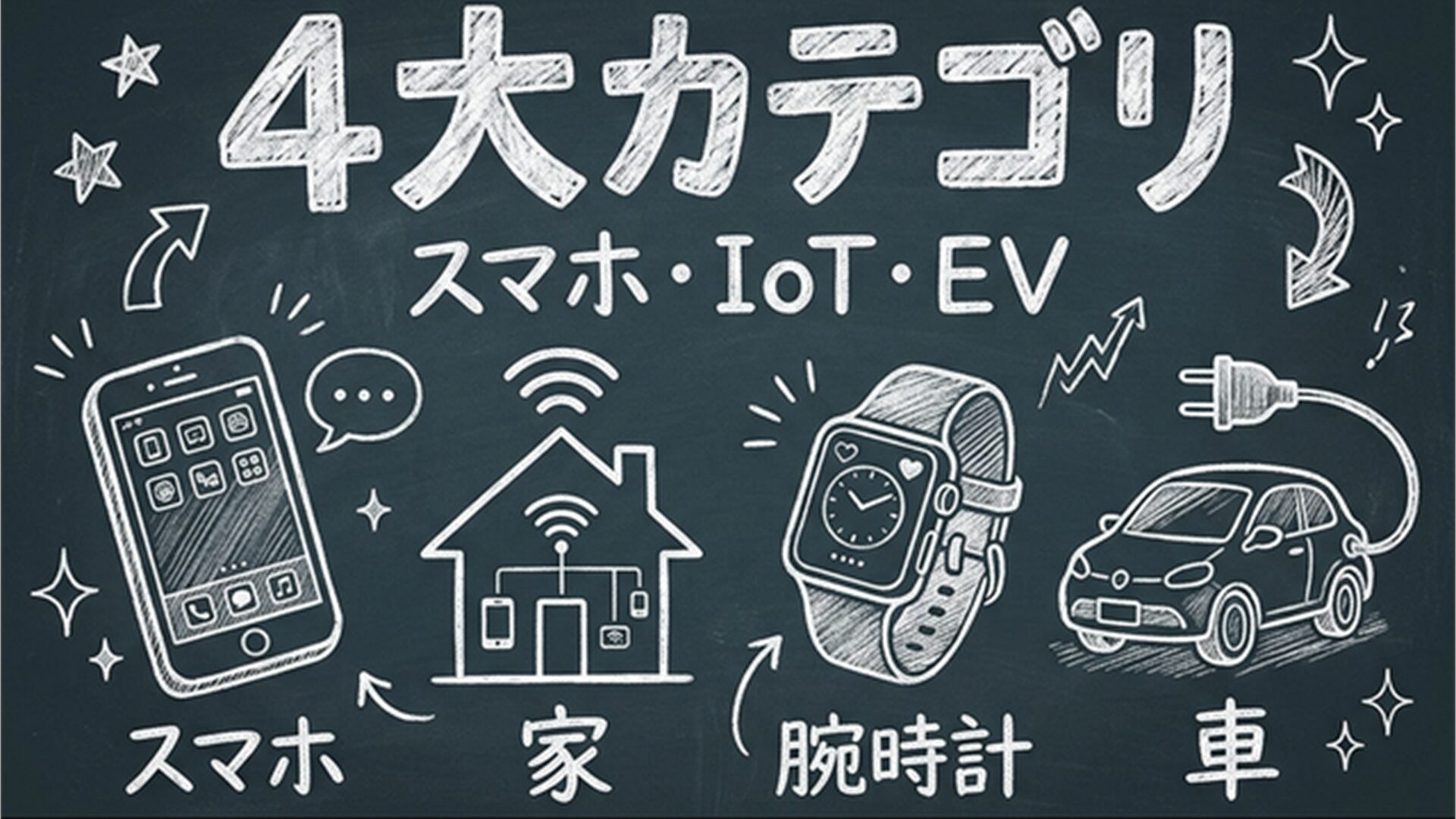
Xiaomi’s products are diverse, but they can be broadly categorized into four groups.
- Smartphones (Xiaomi / Redmi / POCO brands): Covering everything from the flagship “Xiaomi 14” series to the cost-performance-focused “Redmi” series and the performance-oriented “POCO” series. In 2024, it held the world’s 3rd largest market share (13.6%).
- IoT / Smart Home Products: Robot vacuums, air purifiers, smart displays, LED lighting, electric toothbrushes, and more. There are hundreds of products in the Xiaomi ecosystem, all manageable from a smartphone. The number of connected devices on its IoT platform is among the largest in the world.
- Wearables (Xiaomi Band / Watch series): Activity trackers and smartwatches. They hold a strong presence in the fitness tracker market due to their high functionality and affordable price range.
- Electric Vehicles (Xiaomi SU7): A new field entered in March 2024. The first EV, “SU7,” is equipped with HyperOS, enabling seamless integration with smartphones and IoT devices. It recorded over 50,000 orders within just 27 minutes of launch, making a significant impact on the automotive industry.
Ms.ガジェットAre they making not just smartphones, but vacuums and electric vehicles too?
Mr.ガジェットYes. Xiaomi promotes the “Human x Car x Home” ecosystem concept, aiming to connect every scene of daily life with Xiaomi products.
Xiaomi’s Business Model — The “Hardware Net Profit Margin Under 5%” Declaration
An essential part of Xiaomi’s business model is its unique declaration to “keep the net profit margin of the hardware business at 5% or less.”
This was publicly declared by CEO Lei Jun himself at the launch event for the Mi 6X on April 25, 2018, with a promise that “if it exceeds 5%, we will return it to users in an appropriate manner.” The continuation of this policy was officially confirmed again in May 2023.
The background to this declaration is Xiaomi’s revenue structure. Instead of relying on high hardware margins, Xiaomi secures profits through advertising revenue and internet services. It is a model of “gathering users through hardware and generating profit through software and services,” an approach similar to Amazon’s Kindle series.
Note that this “5% or less” refers to net profit margin, not gross margin. Their gross margin is around 10%, so it is not as if there is “almost no profit.”
Ms.ガジェットLimiting profit to 5% is a very bold policy.
Mr.ガジェットIt is precisely because of this policy that they can set prices lower than competitors in the same spec range. It is a major benefit for users.
Xiaomi’s Proprietary Technology
Alongside the expansion of its product lineup, Xiaomi is advancing the development of proprietary technologies such as the following:
- HyperOS: An integrated OS developed as the successor to Android / MIUI. It operates across smartphones, tablets, IoT devices, and EVs (SU7), serving as the core of the Xiaomi ecosystem.
- Surge Chip: A series of processors designed in-house by Xiaomi. Rather than full independent development, these are rolled out in stages as custom chips specialized for specific tasks (charging ICs, ISP, battery management, etc.).
- Xiaomi Imaging: Smartphone camera technology developed in collaboration with Leica. They jointly develop everything from optical design to software processing, featured in flagship models like the “Xiaomi 14 Ultra.”
- AI Assistant (HyperMind): An AI feature that runs on HyperOS. It enables information linkage between devices, routine automation, and integrated control of smart homes.
Ms.ガジェットAre they even making their own chips?
Mr.ガジェットAt this moment, they focus on custom chips for specific areas like charging management and ISP. I should clarify that they use Qualcomm Snapdragon for the main smartphone processors.
Addressing Concerns About “Chinese Smartphones”
When considering Xiaomi, some may feel anxious, wondering, “They are a Chinese manufacturer, but is it okay?” Here are the objective facts regarding that point:
- Global Standard Certification: Xiaomi products are sold only after officially obtaining radio equipment certifications (such as the Japanese Technical Conformity Mark and European CE marking).
- Governance as a Publicly Traded Company: Based on HKEX listing rules, they undergo quarterly financial disclosures and external audits by accounting firms. Being a publicly listed company ensures transparency in management information.
- Serious Commitment to the Japanese Market: Since the establishment of the Japanese subsidiary in 2020, they have been expanding physical stores (Xiaomi Stores, etc.) and service centers, ensuring repair and support can be completed within Japan. They also provide Japanese-language support via a toll-free number.
Please note that personal imports or parallel imports may not have the Technical Conformity Mark. To use products safely in Japan, we recommend purchasing through authorized channels such as Amazon or major electronics retailers.
Ms.ガジェットIf it has the Technical Conformity Mark, I can use it with peace of mind in Japan.
Mr.ガジェットThat is correct. Products purchased through authorized channels have obtained the mark. Since support is provided in Japanese, even first-time users can feel secure.
Xiaomi’s History and Reliability
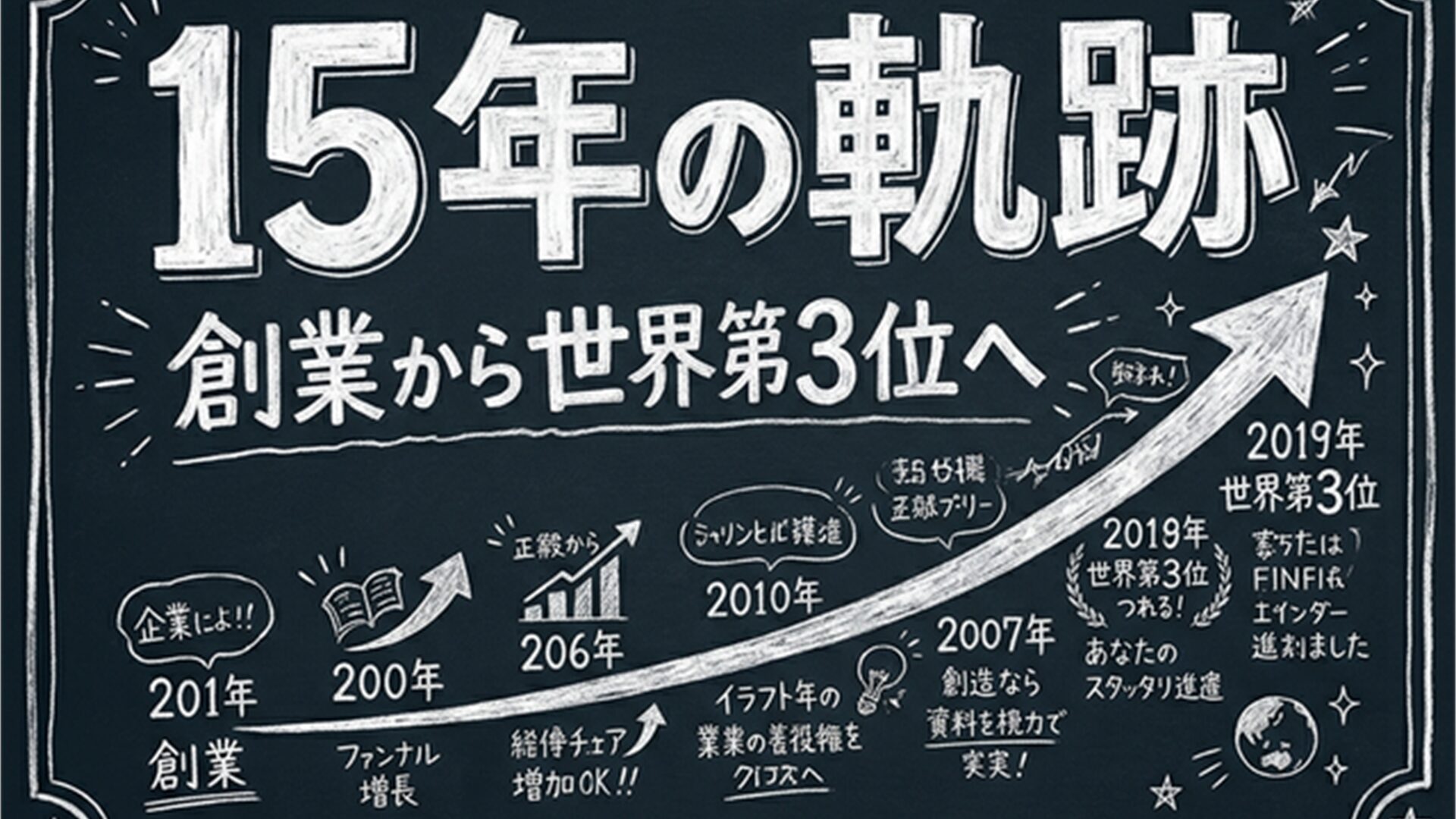
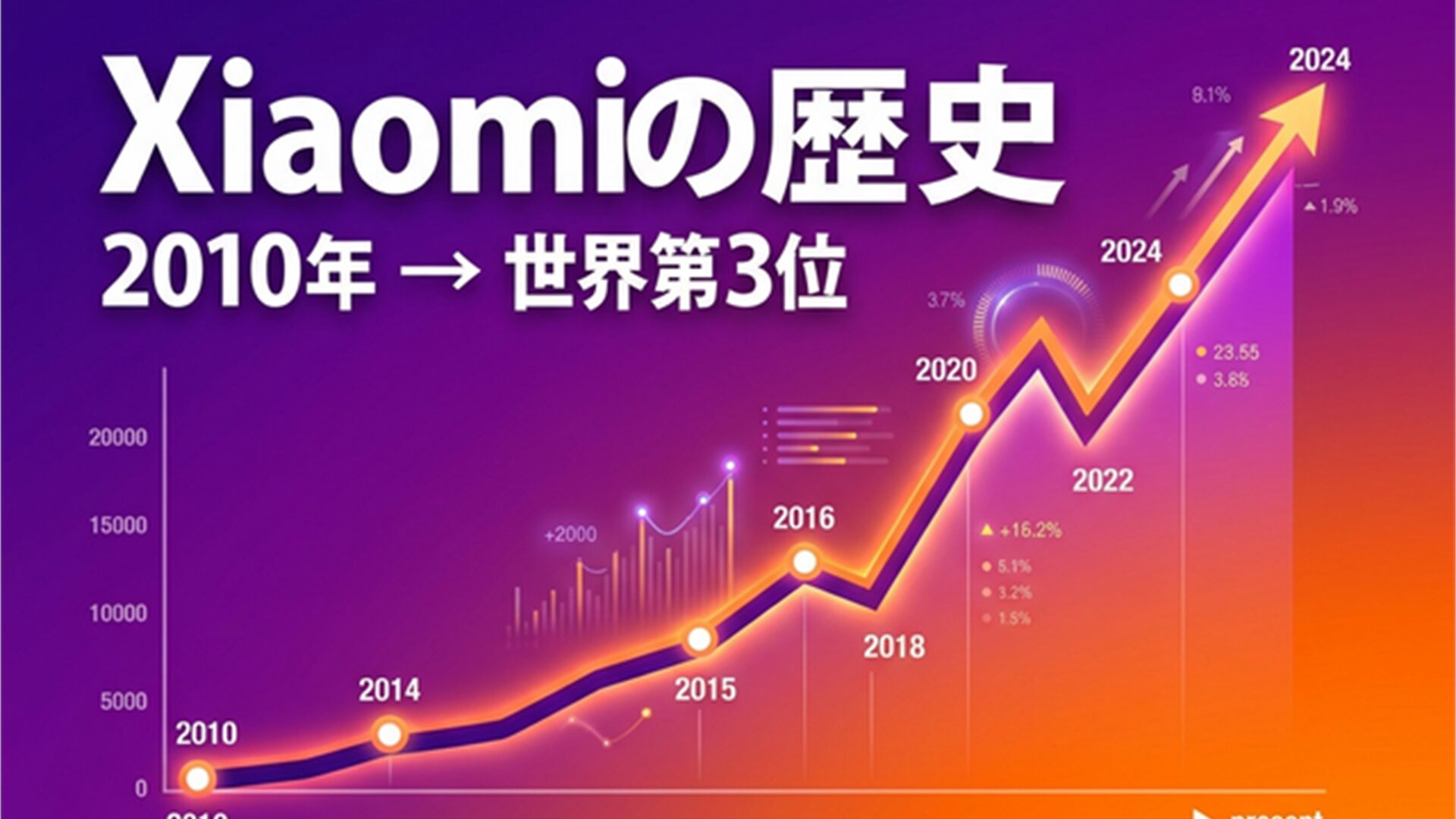
Xiaomi grew into the world’s third-largest smartphone manufacturer in just 15 years since its founding. Behind this rapid growth is also a track record of a V-shaped recovery after overcoming a period of stagnation. Here, we look back at that trajectory based on official information.
The Origin of the Brand Name “Xiaomi”

In “Xiaomi,” the “Xiao” means “small,” and “mi” refers to the grain “millet.” In a 2011 interview, founder Lei Jun said the name was inspired by a Buddhist teaching: “A grain of rice is as great as Mount Sumeru.” Creating great value from a small grain—that philosophy represents Xiaomi’s corporate stance of delivering high-quality products at affordable prices.
“Mi” also carries multiple meanings. Lei Jun has stated it stands for “Mobile Internet,” while also embodying “Mission Impossible.” Considering that at the time of its founding, the smartphone market was dominated by Apple and Samsung, and entry by an emerging manufacturer was considered a “mission impossible,” it conveys the ambition behind the name.
Ms.ガジェットSo there was such a deep meaning in a grain of millet.
Mr.ガジェットThe corporate philosophy of carefully accumulating small things is reflected in the brand name.
The Journey of Xiaomi

- April 2010: Lei Jun and seven others establish “Xiaomi Technology” in Haidian District, Beijing. Initially, it started with the development of MIUI (a custom Android ROM).
- August 2011: Announces the first smartphone, “Mi 1.” It achieved flagship-level specs for roughly half the price, becoming a massive hit that consistently sold out despite being sold exclusively online.
- 2014: Rises to the world’s 3rd largest in smartphone shipments (per IDC). Valued at $45 billion, it becomes one of the world’s most valuable startups.
- 2015–2016: Sales stagnate due to the rise of competitors strong in offline sales like OPPO and Vivo. Experiences a “winter period” but focuses on quality control and supply chain reform.
- 2017: Sales recover. Lei Jun describes it as a “miracle recovery.” Significantly expands market share in India.
- April 2018: Officially declares “Hardware net profit margin under 5%.”
- July 2018: Listed on the Hong Kong Stock Exchange (HKEX: 1810). Raises approximately $4.7 billion in the IPO.
- 2019: First inclusion in the Fortune Global 500. Enters the 5G market with its first high-end model, “Mi 9 Pro 5G.”
- February 2020: Establishes the Japanese subsidiary “Xiaomi Technology Japan Co., Ltd.” and enters the Japanese market in earnest.
- March 2021: Officially announces entry into the EV (Electric Vehicle) business. Announces a plan to invest $10 billion over the next 10 years.
- October 2023: Announces “HyperOS,” the new OS replacing MIUI, positioned as the foundational OS integrating smartphones, IoT, and EVs.
- March 2024: Launches the first EV, “Xiaomi SU7.” Records over 50,000 orders within 27 minutes of launch.
- 2025: Ranks 297th in the Fortune Global 500. Maintains 3rd place in global smartphone market share.
Ms.ガジェットGrowing this much in just 15 years is an incredible speed.
Mr.ガジェットThe V-shaped recovery from the 2015–2016 stagnation is particularly noteworthy. A company with a track record of overcoming crises has inherent organizational strength.
Reliability Backed by Awards and Global Rankings
Xiaomi products have also received high praise in global awards and rankings.
- Fortune Global 500 — Included for 7 consecutive years since its first inclusion in 2019. Ranked 297th in 2025, demonstrating its world-class status in both revenue and corporate scale.
- Global Smartphone Market Share 3rd Place — Maintains 3rd place after Samsung and Apple for several years in studies by IDC and Counterpoint Research (13.6% in 2024).
- Red Dot Design Award — Received awards in multiple product categories. An international design award from Germany where functionality and beauty are key criteria.
- iF Design Award — Received for smartphones and IoT products. Also a prestigious German design award.
These achievements are objective evidence that Xiaomi is not “just cheap,” but internationally recognized for both technology and design.
Ms.ガジェットIf they are in the Fortune 500 and winning design awards, they are a legitimate manufacturer.
Mr.ガジェットYes. Objective evaluation from third-party institutions is a key indicator for judging brand reliability. The point is that it is backed by data, not just personal impressions.
Summary
Xiaomi is a technology brand headquartered in Haidian District, Beijing, China, which has grown into a major Fortune Global 500 corporation in just 15 years since its founding in 2010. While some may feel anxious because it is a “Chinese manufacturer,” there is sufficient objective evidence of reliability, such as the transparency of being listed on the HKEX, the sale of official products that have obtained the Technical Conformity Mark, and a full Japanese-language support system.
- Headquarters: Haidian District, Beijing, China
- Japanese Subsidiary: Xiaomi Technology Japan Co., Ltd. (Akasaka, Minato-ku, Tokyo; established 2020)
- Listing: Hong Kong Stock Exchange (HKEX: 1810)
- Revenue: RMB 365.9 billion (approx. 7.7 trillion yen, FY2024)
- Global Market Share: 3rd in smartphones (13.6%)
- Technology: HyperOS / Proprietary Surge chips / Leica collaboration cameras
- EV: Xiaomi SU7 (launched March 2024)
Xiaomi’s greatest feature is its ability to continue providing high-quality products at affordable prices based on its unique corporate philosophy of a “hardware net profit margin of 5% or less.” It is also making serious commitments to the Japanese market, including the establishment of a Japanese subsidiary, the expansion of physical stores, and the sale of official products with the Technical Conformity Mark.
If you are interested in their “Human x Car x Home” ecosystem, which includes not just smartphones but also IoT appliances and EVs, please check out Xiaomi’s products.
Thank you for reading until the end!
- The evaluation in this article is unique to this site.
- Unless otherwise specified, product prices and information are current as of the time of writing.
- Please note that this site cannot be held responsible for any inaccuracies in this information.
- Product and service names mentioned on this site are trademarks of their respective companies.
コメント