
While you may be interested in MATECH gadgets, some of you might be hesitant to purchase because you aren’t sure which country the manufacturer is from.
- Unsure of which country MATECH is from, making it hard to decide
- Concerned about quality and safety regarding overseas products
- Want to understand the details of support and warranties
- Want to confirm reliable selection criteria
This article briefly summarizes the manufacturer’s country of origin, history, and key features.

Where is MATECH from?
Key points in this section!
MATECH is a Japanese company headquartered in Kyoto
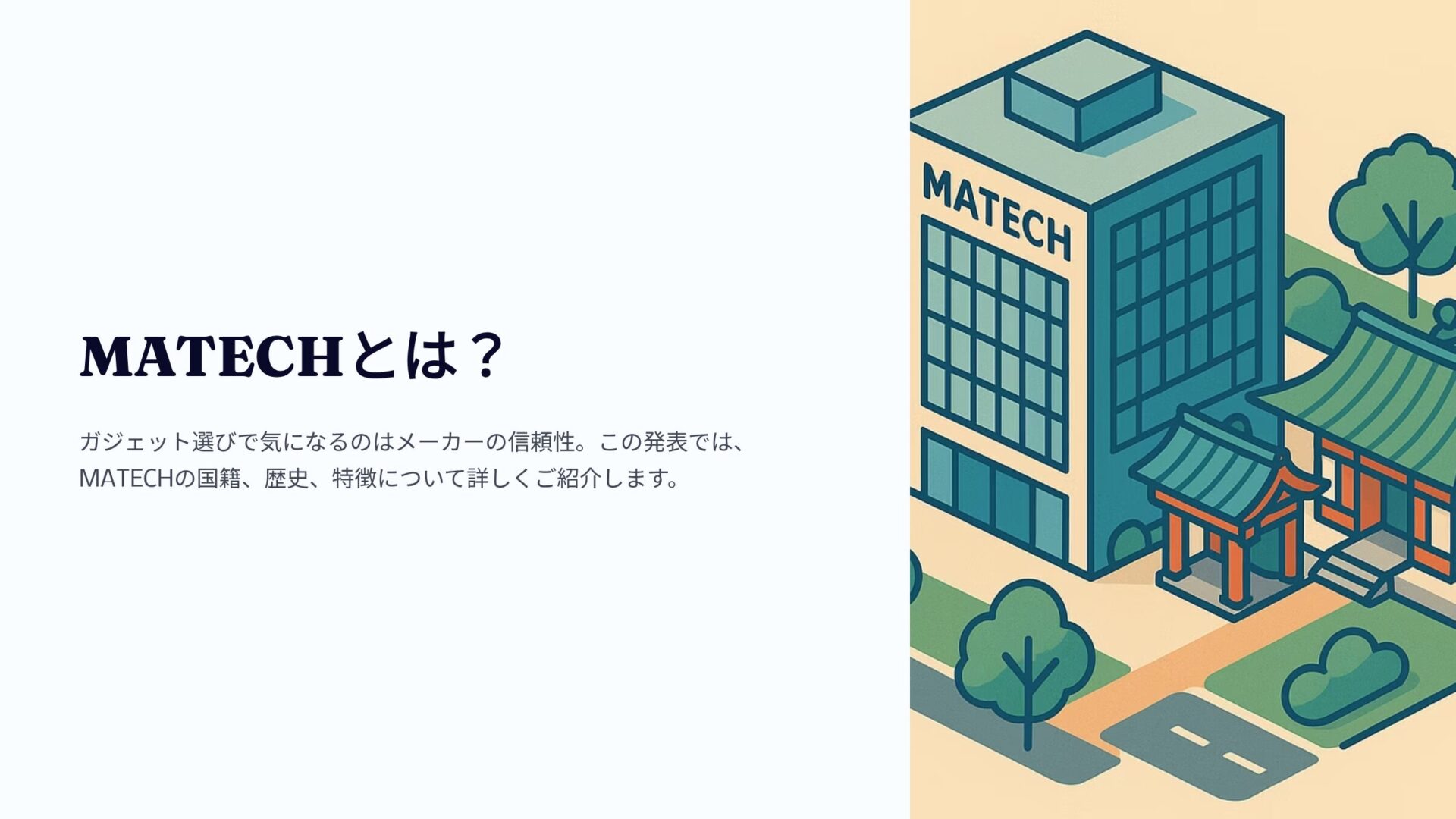
MATECH is a company headquartered in Japan that develops and sells digital products.
Established in October 2016, its headquarters are located in Kyoto City.
The brand name is said to be an abbreviation of “MATSUMOTO TECHNOLOGY.”
| Item | Details |
|---|---|
| Company Name | MATECH Co., Ltd. |
| Address | Matsumoto Bldg. 2F, 30 Suzaku Urahatacho, Shimogyo-ku, Kyoto, 600-8844, Japan |
| Representative | Hiroki Matsumoto, Representative Director |
| Date of Establishment | October 2016 |
| Capital | 30 million yen |
| Business Description | Development, manufacturing, and sale of digital products |
The country of manufacture may vary by product, so please refer to the information on each product page.
MATECH’s History
Key points in this section!
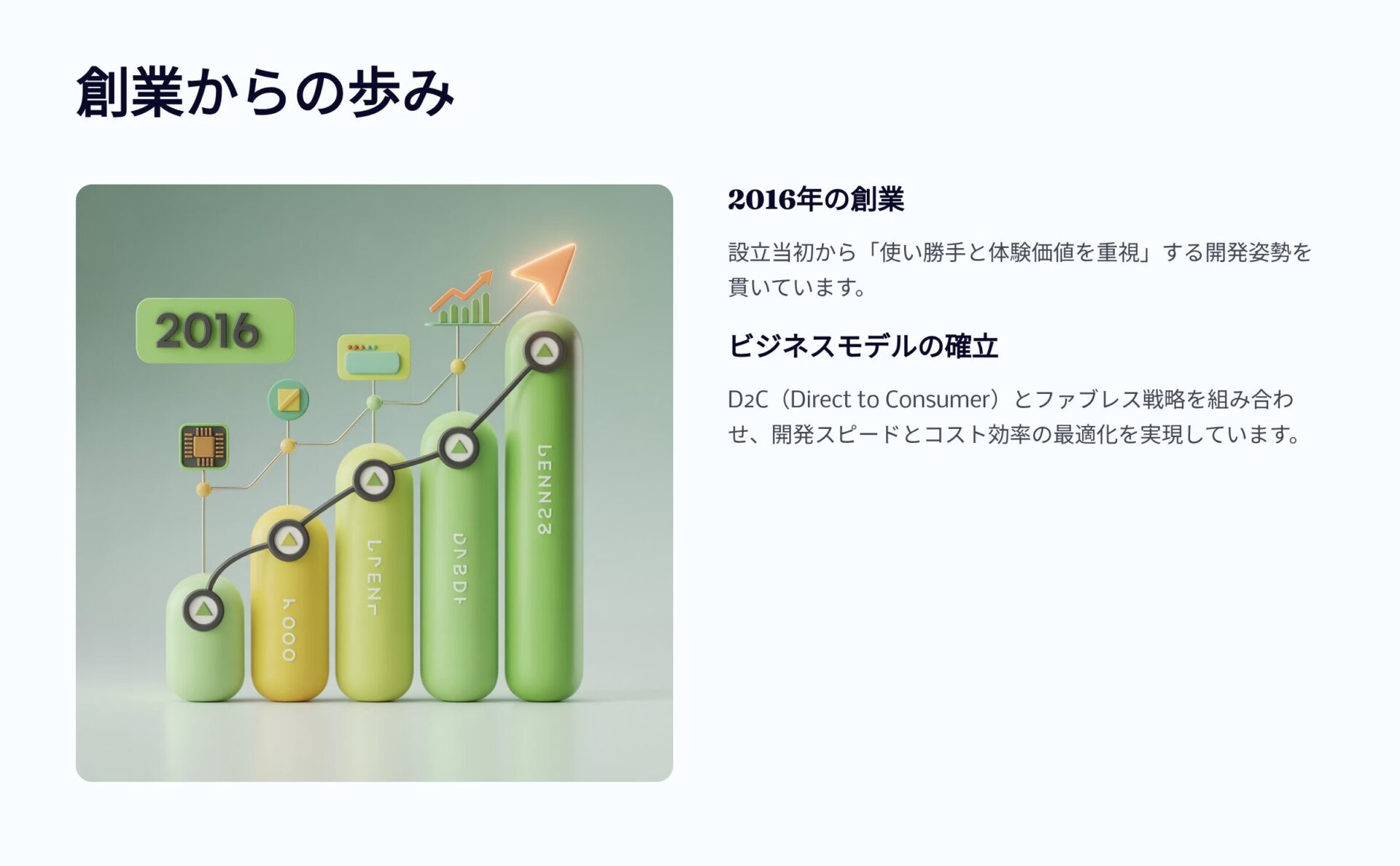
MATECH’s history since its establishment in 2016 is characterized by operations that combine direct sales (D2C) and outsourced production (fabless).
This approach aims to optimize development speed and cost efficiency.
Founded in 2016
The key theme at the time of establishment was product creation that prioritizes user experience.
The brand name is derived from the abbreviation of “MATSUMOTO TECHNOLOGY.”
| Item | Details |
|---|---|
| Year of Establishment | October 2016 |
| Founder | Hiroki Matsumoto |
| Origin of Brand Name | Abbreviation of MATSUMOTO TECHNOLOGY |
| Development Philosophy | Emphasis on usability and experiential value |
Establishment of D2C model and fabless strategy
MATECH incorporates user feedback through its D2C (Direct to Consumer) model and adopts a fabless system where production is outsourced.
The D2C model features faster reflection of feedback by selling through its own channels. The fabless strategy allows the company to focus on design and development without owning its own factories.
| Strategy Type | Characteristics | Main Benefits |
|---|---|---|
| D2C Model | Direct sales to consumers | ・Reduction of intermediate costs ・Understanding user feedback ・Faster improvements |
| Fabless Strategy | Outsourced production | ・Reduced capital investment ・Expanded choice of production technologies ・Focus on R&D |
 Ms.ガジェット
What are the benefits of this system for users?
Mr.ガジェットIt is rational in terms of price, supply speed, and quality improvement, and serves as a factor in making product selection decisions.
Each strategy contributes to the optimization of cost and quality, but specific details vary by product and timing.
Challenges and growth in the high-end market
In fields such as high-output chargers, MATECH offers products that utilize GaN (Gallium Nitride). This semiconductor material is suitable for miniaturization and high efficiency, and its adoption is spreading in the charger field.
| Item | Features/Content |
|---|---|
| Focus Area | Charging-related products using GaN |
| Product Examples | High-output, compact USB chargers |
| Certifications (Partial) | PSE (Electrical Appliance and Material Safety Act) WPC Qi (Wireless Power Transfer) |
| Value Provided | High efficiency, miniaturization, and compliance with safety standards (varies by product) |
Ms.ガジェットWhat does obtaining certification mean for the user?
Mr.ガジェットIt indicates that the corresponding product complies with the standards. The subject and scope must be checked for each product.
The scope of technology and certification application varies by model. Please check the specifications and compliance information before purchasing.
MATECH’s Features
Charging products using innovative GaN technology
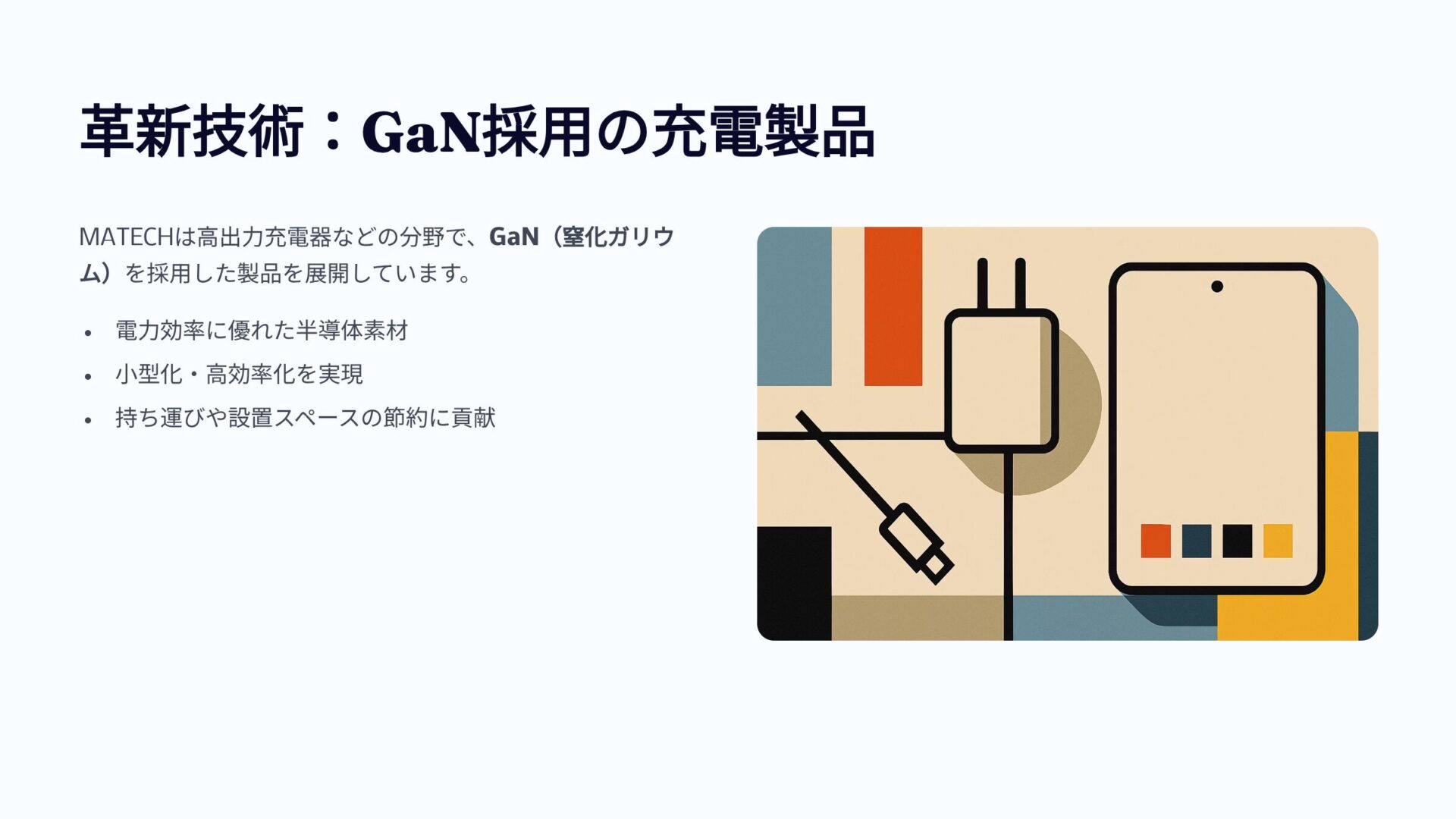
GaN (Gallium Nitride) is a semiconductor material that excels in power efficiency and contributes to miniaturization. MATECH offers high-output yet compact chargers using this technology.
There are products that aim for miniaturization even in high-output models, which is helpful for carrying and saving installation space.
Product design that pursues “moving experiences”
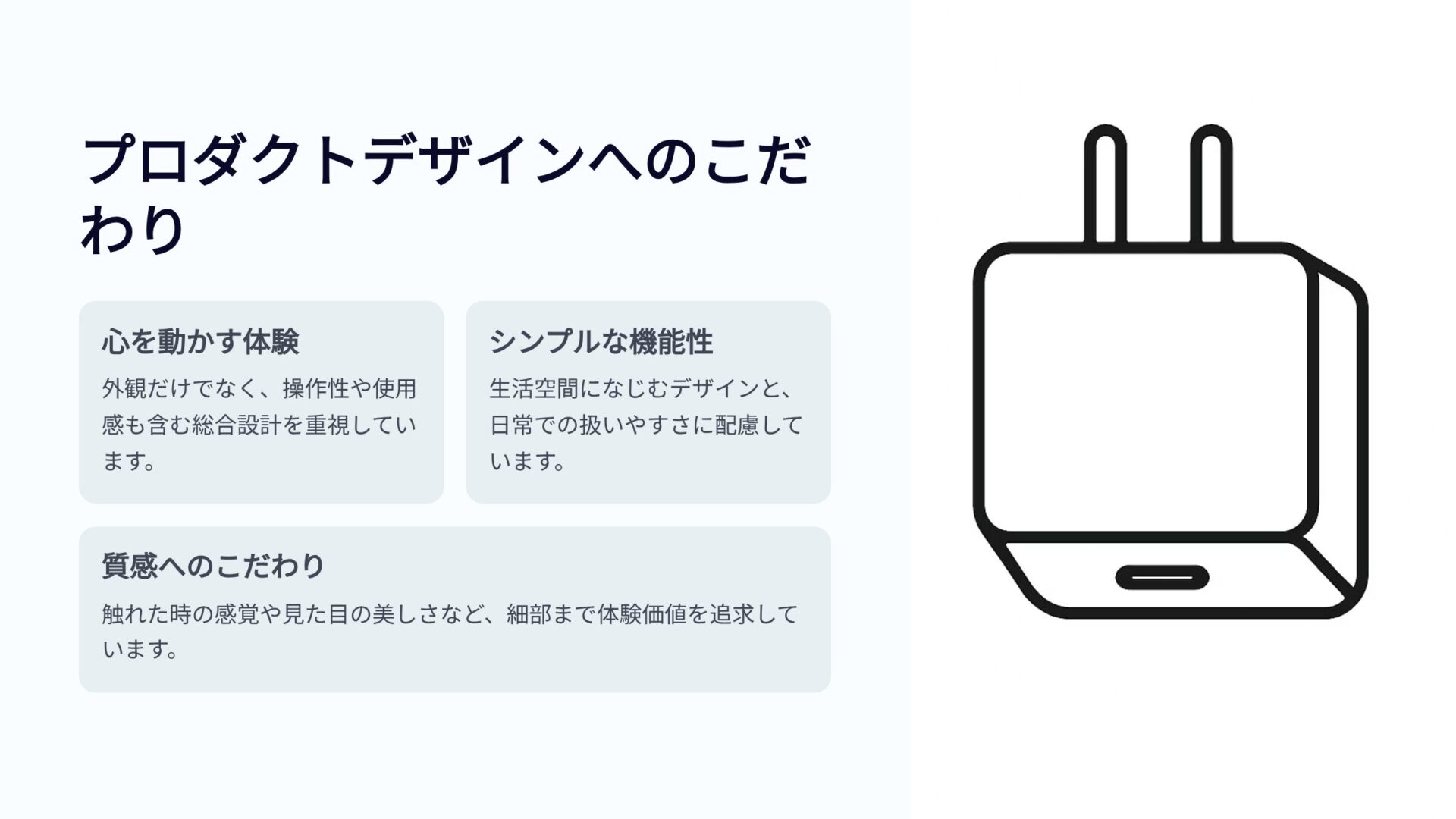
Product design is a comprehensive design that includes not only appearance but also operability and usability. MATECH emphasizes the experiential aspects such as texture and ease of use.
The simple design that emphasizes functionality is conscious of configurations that blend into living spaces.
 Ms.ガジェット
They seem to pay attention to ease of handling in daily life, such as the clarity of operations and ease of placement!
Thorough quality assurance and various international certifications
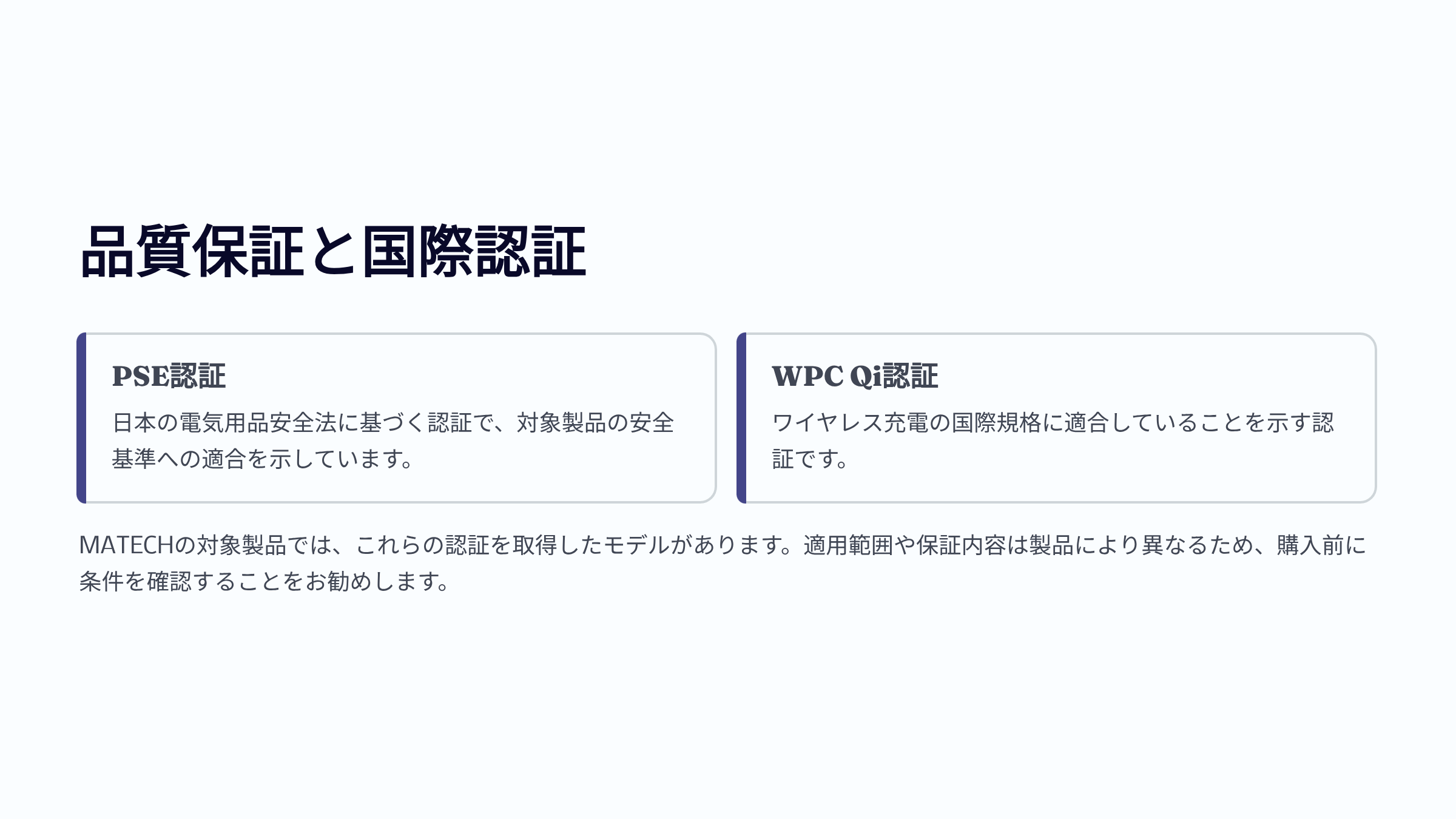
International certifications indicate compliance with safety and quality standards.
Examples include Japan’s PSE and the WPC Qi for wireless charging.
For MATECH’s target products, there are models that have obtained certifications such as PSE and Qi. Since the scope of application and warranty details vary by product, please check the conditions before purchasing.
Summary
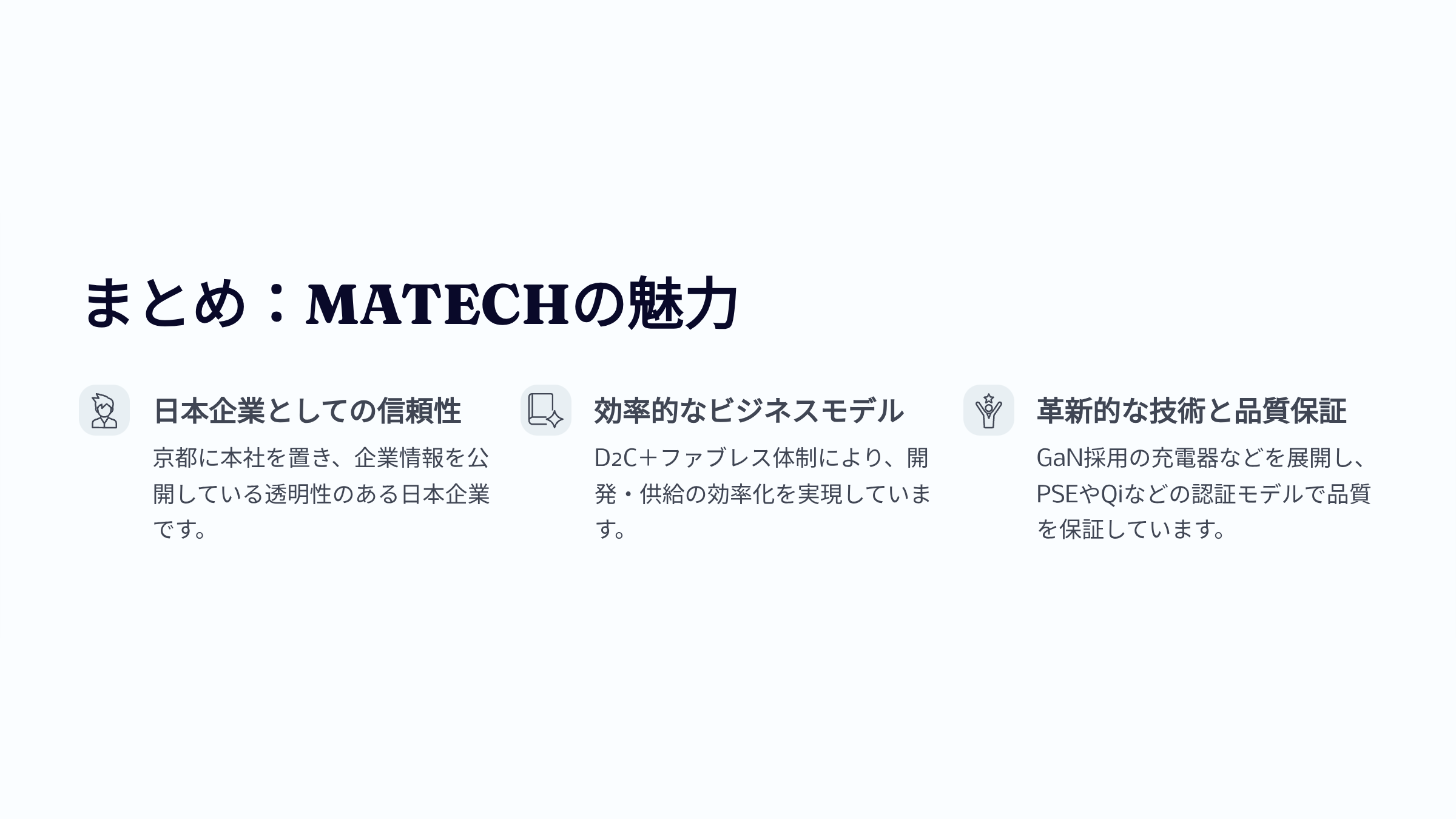
MATECH is a company headquartered in Kyoto, Japan. Products are primarily developed around chargers using GaN, and there are models that have obtained certifications such as PSE and WPC Qi.
- Japanese company: Discloses location and corporate information
- D2C + Fabless system: Efficiency in development and supply
- Technology: Offers chargers using GaN, etc.
- Safety/Quality: Includes models certified with PSE, Qi, etc.; check warranty details for each product
Thank you for reading until the end!
- The evaluation in this article is unique to this site.
- Unless otherwise specified, product prices and information are current as of the time of writing.
- Please note that this site cannot be held responsible for any inaccuracies in this information.
- Product and service names mentioned on this site are trademarks of their respective companies.
コメント